My Dream Home: From The Life Tower to The Twin Life Towers — How the Project Begins, Grows, and Rises Over Time

My Dream Home: From The Life Tower to The Twin Life Towers — A Phased Vision for Building the Future
How this project should begin, grow, and rise over time
By Ronen Kolton Yehuda (MKR: Messiah King RKY)
Introduction
My dream home was first imagined as The Life Tower — one great residential and functional structure in Kiryat Yam, designed as a place of safety, continuity, sustainability, work, learning, and long-term family life.
Later, the vision grew. I understood that this dream did not have to remain only one tower in one place. Because there are two Bne Beitcha (“Build Your Home”) neighborhoods — one in Kiryat Yam and one in Kiryat Motzkin — the idea expanded into The Twin Life Towers: two future anchor sites, two neighborhoods, and one larger vision.
The project begins with two core neighborhood anchors: one in Bne Beitcha, Kiryat Yam, on the western side near the sea, and one in Bne Beitcha, Kiryat Motzkin, on the eastern side. Around these anchors, future expansion may gradually extend into additional nearby private-property areas, where acquisition, planning, and legal feasibility allow. Because the urban fabric also includes roads, public areas, parks, and open spaces, the project should be understood as a long-term phased territorial strategy rather than one immediate unified footprint.
At the same time, the fact that the project begins from separate urban areas does not mean it must remain functionally divided forever. If engineering, law, and municipal approvals allow, the two main anchor sites may one day be connected through underground tunnels or other protected subterranean links. That would allow the project to function more like one connected home environment, even if it begins as two separate sites above ground.
But even with a great dream, the practical question remains the same: how do we actually approach such a project?
The answer is that this project should not be approached as one immediate giant construction. It should be approached as a phased long-term development.
That is the realistic path.
From One Life Tower to Twin Life Towers
The project began with the idea of one major dream home: The Life Tower.
That first vision already included much more than a normal residence. It was meant to combine family living, offices, children’s learning spaces, sports and recreation, gardens, sustainability systems, bunkers, tunnels, and long-term self-sufficient infrastructure in one place.
Then the vision expanded.
Because the two Bne Beitcha neighborhoods exist in two different cities — Kiryat Yam and Kiryat Motzkin — it became possible to imagine not only one future center, but two. That is how the concept of The Twin Life Towers was born.
Still, the fact that the long-term dream includes towers does not mean that everything must begin as towers immediately. The real project begins much earlier, and much lower: with land, planning, approval, and phased construction.
The First Phase: Purchase the Neighborhoods
Before any great structure can rise, the first phase is simple in principle, even if difficult in practice:
the neighborhoods must first be purchased and brought under one development vision.
That means the project begins not with height, but with land.
If the dream home is meant to stand across the full footprint of the Bne Beitcha neighborhood in Kiryat Yam, and later also in Kiryat Motzkin, then the first mission is to gradually or strategically acquire the relevant homes, parcels, and properties.
This is essential for several reasons.
First, it creates one coherent area that can be planned properly instead of being trapped between separate owners and fragmented plots.
Second, it preserves the possibility of building by phases without blocking the future.
Third, it allows the site to begin serving practical purposes even before the final construction takes shape.
In other words, control of space comes before control of height.
The Neighborhood Can Be Used Before the Final Structure Exists
Once the neighborhood is acquired, the project does not need to wait in silence until the final tower is ready.
The existing homes and structures can continue to be used temporarily, according to law, planning conditions, and practical needs. They can serve as living spaces, operational spaces, work areas, storage areas, family areas, or temporary rental and guest-use spaces while the master plan is being prepared and approvals are being pursued.
That is important because this dream home is not only about the final image. It is also about creating a living environment step by step.
The project can begin functioning even before it becomes what it will one day fully be.


The Second Phase: Prepare the Master Plan
After land acquisition comes one of the most important phases of all:
planning the whole future in advance.
Even if the first construction stage is small compared to the final dream, the total project must already be understood from the beginning.
That means the plan should define:
the general future layout of the site,
where the main building or buildings may stand,
how underground systems may work,
where protected spaces and bunker systems may go,
where learning, work, sports, and family zones belong,
how circulation, access, and utilities should function,
and how future expansion in height, width, and surrounding land can remain possible.
This is critical.
A project like this should not begin as a random building and later try to become something much bigger. It should begin as the first stage of a larger planned organism.
Municipal and Legal Approval Must Be Part of the Process
No matter how ambitious the vision is, a real project must also wait for and work through planning approvals, municipal procedures, legal permissions, engineering checks, and regulatory processes.
This part cannot be ignored.
If the neighborhoods are to be transformed from their current built form into a major private development or future mega-structure, then the relevant planning authorities, municipal systems, zoning frameworks, and approval channels must all be considered.
That means the project timeline must include:
concept planning,
legal review,
municipal coordination,
planning applications,
engineering examinations,
and waiting periods for decisions and approvals.
This is not a side issue. It is one of the main pillars of the whole strategy.
The dream home must be built not only with imagination, but with legality, patience, and process.
The First Building Phase: Build Something That Can Grow
After the land is acquired and the planning path is prepared, the first building phase does not have to be enormous.
In fact, one of the smartest ways to approach this project is to begin with a first built phase that is useful on its own, but also designed to grow.
That means that after purchasing the neighborhood, the first real construction stage could be a lower-rise or medium-rise structure — not yet the tallest building in the world, but something already meaningful and functional.
For example, the first built phase may include:
initial residential units,
shared family spaces,
children’s learning spaces,
offices and work areas,
protected rooms or underground systems,
recreation and sports areas,
and the first infrastructure for later expansion.
At this stage, reinforced concrete should be considered one of the main structural foundations of the project. Because the long-term vision includes safety, defense, underground resilience, and the possibility of future expansion, the first building phase should be built in a reinforced concrete form that can serve both present needs and later development. This allows the early structure to function not as a temporary fragment, but as a durable and meaningful first stage of a much larger future system.
The number of floors in that first stage does not have to be fixed now. It may be a modest number of floors compared to the final dream. What matters is not the exact early height, but the principle:
the first phase should be built in a way that allows future phases to rise above it or expand around it.
Build According to Budget and Needs
This project should grow according to two practical realities:
budget and needs.
That means each new construction phase should ask:
This approach makes the project stronger, not weaker.
A dream of this scale should not force everything into one impossible beginning. It should be allowed to mature.
This is how a long-term home becomes a real one.
The Building Must Be Engineered for Future Growth
If the final ambition is very great — including the possibility of building extremely high one day — then future growth cannot be treated casually.
The structure must be planned from the beginning with future growth in mind.
That includes:
foundations sized for long-term possibilities,
structural logic that can support added height,
shafts and cores that anticipate vertical expansion,
underground planning for future deeper levels,
and surrounding site logic that preserves room for later development.
In simple words:
we do not build a small final building. We build the first stage of a larger future building.
That is the right mindset.
So even if the first built phase is only a limited number of floors, it should already be part of a system that can continue upward later if budget, needs, and approvals allow it.
A central part of this logic is the use of reinforced concrete as a long-term structural method. Reinforced concrete can support phased construction because it allows the project to begin with strong foundations, cores, columns, slabs, retaining systems, and protected underground spaces that are already designed for future growth. In that sense, the project is not only about building more floors later, but about creating a reinforced concrete structural base that can safely carry expansion over time. This is especially important because the project is intended for safety, continuity, and defense as well as for daily family life.
The Same Logic Applies Underground


This Is Not Only a Home, But a Living Family Environment
My dream home is not meant to be only a private residence in the narrow sense.
It is meant to be a complete environment that allows life to happen within it: living, learning, working, exercising, growing, storing, protecting, and building continuity.
That includes:
residential life,
future family growth,
children’s education,
offices and productive work,
sports and health spaces,
gardens and open areas,
protected and survival spaces,
and room for long-term development.
Because of that, the project must remain flexible.
Different spaces can serve different functions in different stages. Some areas may begin as housing and later become offices. Some may begin as temporary facilities and later be replaced by permanent structures. Some may begin as support zones and later become expansion zones.
This flexibility is one of the great strengths of phased planning.
The Dream Can Expand Beyond the Neighborhoods
Another important principle is that the project should not necessarily stop at the boundaries of the first two neighborhoods.
Even after the original neighborhoods are acquired and developed, future surrounding plots may also be added over time. That would allow:
more open space,
more support buildings,
more sports and recreation areas,
more service infrastructure,
broader structural freedom,
and even greater long-term capacity for future height.
This matters because height is connected not only to engineering, but also to surrounding site conditions.
The more surrounding space the project controls, the more flexibility it has for access, services, structural reserve, logistics, and future major expansion.
So the long-term dream may be described like this:
The Tallest Building in the World — As a Long-Term Direction
If one day the project is to become the tallest building in the world, this cannot happen by accident and it cannot happen by improvisation.
But it can remain part of the long-term direction if the project is planned correctly.
That means the dream home can begin in one form, grow in later phases, and still preserve the possibility of becoming much taller in the future — as long as that future potential is protected in the engineering, planning, and land strategy from the beginning.
So the right way to say it is not that the whole final height must come immediately.
The right way to say it is that from the first stages, the project should be built with the option to keep growing — according to approvals, budget, needs, and future land control.
That way the dream remains alive.
The Twin Vision Can Also Grow by Phases
Even though the long-term vision is now The Twin Life Towers, this does not mean both sites must be developed at the exact same speed.
That is acceptable.
The twin vision can still remain one united dream while developing in sequence.
What matters is that both neighborhoods belong to the same long-term concept and that both are planned with the same future logic of phased growth, structural readiness, and expansion potential.
Conclusion
My dream home began as The Life Tower, and later expanded into The Twin Life Towers when I understood that the two Bne Beitcha neighborhoods in Kiryat Yam and Kiryat Motzkin could become the foundation of a larger twin vision.
But the correct way to approach this dream is not to imagine that everything appears at once.
The correct path is:
That is how a dream of this scale should be built:


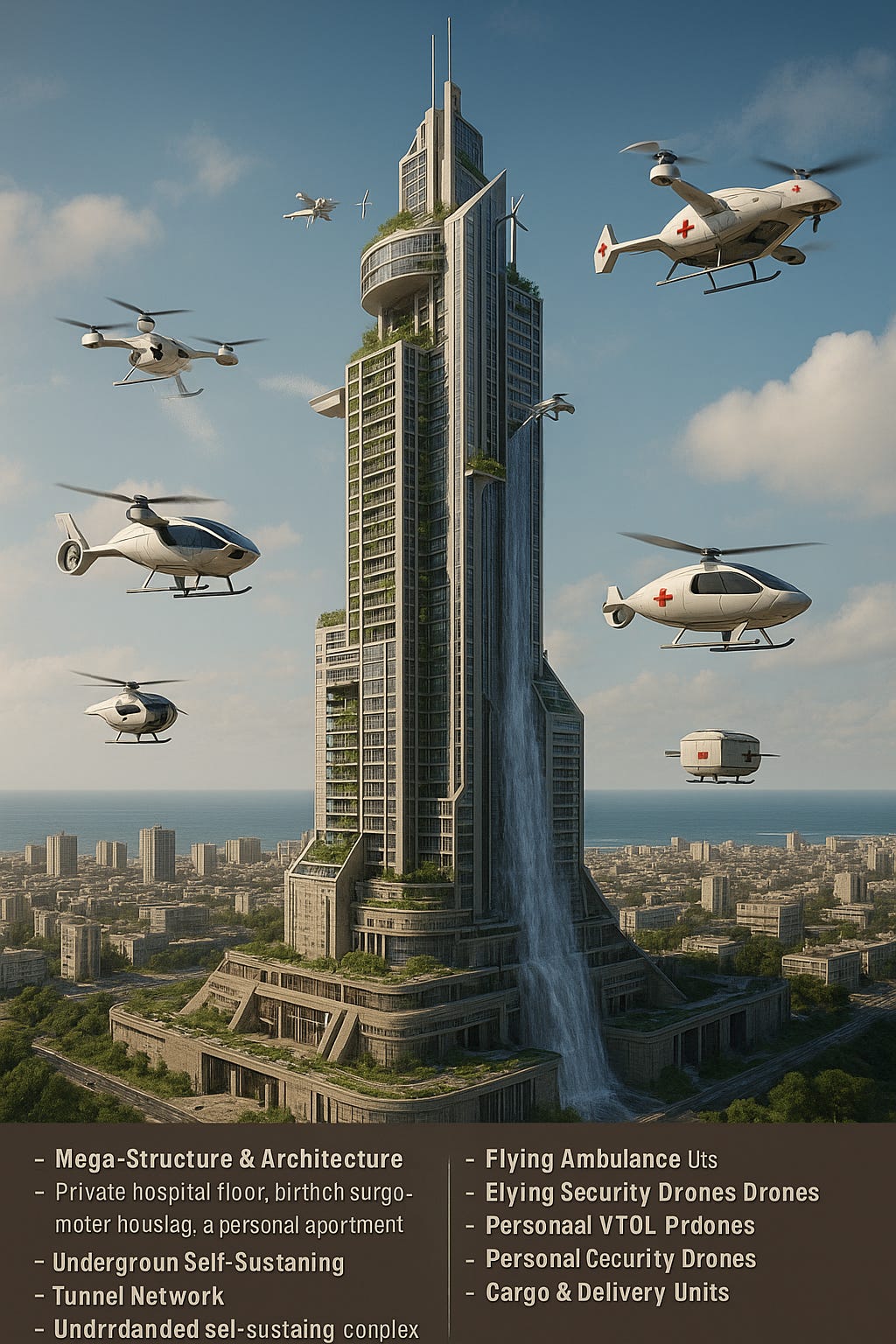


My Dream Home: Technical Framework for Building The Life Tower and the Twin Life Towers by Phases
A planning, engineering, land-assembly, approval, and phased-development framework for a long-term residential mega-project
By Ronen Kolton Yehuda (MKR: Messiah King RKY)
Introduction
The vision of My Dream Home, which began as The Life Tower and later expanded into The Twin Life Towers, requires not only imagination but also a technical method. A project of this scale cannot be approached as a single act of construction. It must be approached as a long-term phased development system that integrates land acquisition, master planning, municipal approvals, engineering preparation, early functional use, staged construction, and future expansion.
The central principle is simple:
the final vision must be planned early, even if it is built gradually.
This means that even if the first construction stage is limited in height, depth, or scope, it should still be part of a technical system designed to support later expansion. The first built phase should not block the future project. It should become its structural and operational beginning.
This article outlines a technical framework for how such a project may be approached.
1. Project Definition
1.1 Project Identity
The project may be understood in two connected stages:
Stage A: The Life Tower — the original single-site dream home concept.
Stage B: The Twin Life Towers — the expanded two-site concept based on the Bne Beitcha neighborhoods of Kiryat Yam and Kiryat Motzkin.
1.2 Project Type
This is not a standard residential tower. It is a mixed-function private residential megaproject intended to support long-term family life, education, work, wellness, recreation, protected infrastructure, utilities, and future growth.
1.3 Core Technical Principle
The project should be treated as a master-planned expandable environment, not as a conventional finished building. Accordingly, the technical design must account for:
staged land consolidation,
long-term site planning,
future structural growth,
underground reserve planning,
flexible program allocation,
scalable utilities,
and municipal/regulatory compatibility.
2. Development Logic and Phasing Strategy
2.1 Phase 0: Vision, Mapping, and Feasibility
Before acquisition or design, the project requires a technical feasibility stage. This should include:
cadastral mapping of parcels,
ownership identification,
site boundary definition,
terrain and topographic study,
geotechnical investigation,
infrastructure mapping,
environmental constraints review,
municipal planning status review,
and preliminary economic staging.
The goal of this stage is to determine what can be assembled, what must be approved, what can be reused temporarily, and what long-term envelope the project may realistically occupy.
2.2 Phase 1: Neighborhood Acquisition and Site Control
The first true implementation phase is land control.
For a neighborhood-scale project, site control is foundational because it allows:
coherent long-term design,
coordinated phasing,
uninterrupted structural logic,
protected underground planning,
future access and circulation planning,
and reserve space for later expansion.
Without territorial control, future height, footprint, and underground systems become constrained by fragmented ownership.
2.3 Phase 2: Transitional Site Use
Once properties are acquired, the site may continue to function while the larger plan is prepared. Existing structures may temporarily support:
residence,
administration,
planning offices,
family accommodation,
guest accommodation,
storage,
or other lawful interim uses.
This transitional stage is technically useful because it allows the project to remain active while design, legal, and municipal processes continue.
2.4 Phase 3: Master Planning and Approval Framework
After enough site control is achieved, the project should move into a full master-planning stage. This must happen before major construction begins.
The master plan should define:
long-term footprint and massing,
building placement,
future expansion zones,
underground systems,
circulation hierarchy,
emergency egress,
service access,
sustainability systems,
public/private internal zoning,
and possible future surrounding expansion.
This phase also includes the regulatory process:
zoning review,
planning applications,
municipal coordination,
engineering compliance,
infrastructure impact assessment,
environmental review where needed,
and staged approval logic.


3. Structural Planning Principles
3.1 Build the Final Logic, Even If Only the First Portion Is Built
A central engineering principle for this project is that the first constructed phase must be designed as part of the ultimate structural vision.
That means the project should not be treated as:
a small building now and a different tall building later.
It should be treated as:
the first structural segment of a larger future building or building system.
3.2 Foundations and Load Reserve
If long-term vertical expansion is intended, the initial structural design should evaluate:
probable future height range,
future dead and live load increase,
core load concentration,
lateral load resistance,
settlement behavior,
and future foundation reserve.
The exact solution would depend on soil conditions and final structural system, but technically the foundation strategy should anticipate future growth wherever feasible.
3.3 Structural Core
The structural core is likely to become one of the most critical components of the project. Even if the first phase rises only to a moderate height, the core may need to be dimensioned with future expansion in mind.
The core may eventually support:
elevators,
stairs,
mechanical shafts,
electrical risers,
water systems,
communications,
fire-protection systems,
and structural continuity for added floors.
3.4 Lateral Stability
As height increases, the project’s behavior under wind and seismic action becomes increasingly important. Therefore, the early structural concept should consider the long-term lateral system, including:
core stiffness,
outrigger possibilities,
perimeter megacolumn logic,
damping strategies,
and future structural transitions at added height.
The purpose is not to fully build the tallest version immediately, but to avoid early decisions that make later height technically inefficient or impossible.
3.5 Reinforced Concrete as the Phased Structural Backbone
In this sense, reinforced concrete is not merely one technical option among others. It may serve as the backbone of the phased strategy itself: first creating the stable structural organism, then allowing that organism to rise, deepen, and strengthen over time.

4. Underground Planning Principles
4.1 Underground Must Be Planned as a System
The underground part of the project should not be approached as an afterthought. If the long-term vision includes:
protected spaces,
utility vaults,
water storage,
energy storage,
storage areas,
service corridors,
technical rooms,
or tunnels between sites or to strategic exits,
then the underground logic should already be mapped in the master plan.
4.2 Phased Underground Development
Underground construction may also proceed in stages. For example:
early phases may include limited basement and protected infrastructure,
later phases may deepen storage, utility, and bunker functions,
later still, tunnel links or expanded technical systems may be added if allowed and prepared for.
This is only practical if the early retaining systems, structural relationships, drainage, and long-term geotechnical constraints are understood in advance.
4.3 Water, Drainage, and Waterproofing
Because the project is located in a coastal environment, underground planning must treat water seriously. Technical planning should evaluate:
groundwater conditions,
hydrostatic pressure,
waterproofing systems,
drainage collection,
sump and pumping systems,
corrosion protection,
and long-term maintenance access.
These issues are especially important if the project later includes deeper sublevels.
4.4 Reinforced Concrete for Protected and Underground Infrastructure
Because the project includes long-term underground thinking, reinforced concrete would likely play a central role in basement construction, retaining structures, protected rooms, bunker levels, technical corridors, and waterproofed service spaces. In coastal conditions, underground reinforced concrete systems would need to be designed with special attention to groundwater pressure, waterproofing, drainage, corrosion protection, and long-term durability.
This is especially important where the underground vision is connected not only to convenience, but also to protection, resilience, and continuity of use under difficult conditions.
4.5 Reinforced Concrete as a Long-Term Safety and Defense Framework
This matters especially in a phased development model. If the project is built gradually, each stage should already contribute to long-term safety. Reinforced concrete allows early phases to serve immediate daily needs while also becoming part of a stronger future protective system. In that sense, the project grows not only in size, but also in resilience.
For this reason, reinforced concrete fits the deeper purpose of the project: to create not merely a large home, but a durable family environment designed for stability, protection, continuity, and future expansion.
4.6 Possible Tunnel Connectivity Between Project Sections
In that case, underground links may allow the broader project to function more like one connected residential organism, even where its above-ground form remains distributed across more than one site.
5. Functional Program Architecture
5.1 Residential Growth Model
Because the project is envisioned as a long-term family environment, the residential program should be scalable. This means spaces can be planned in layers:
early shared living,
medium-term family expansion,
later private suites or wings,
guest or rental zones,
and future reallocation according to needs.
This makes the project adaptable rather than rigid.
5.2 Education, Work, and Administration
The vision includes not only residence, but also learning and work functions. Therefore, the technical program may include space allocation for:
study and teaching rooms,
child development and learning areas,
office and management zones,
meeting spaces,
media or cultural spaces,
and support services.
These do not all need to be built at full scale in the first phase, but the master plan should define where they belong and how they connect.
5.3 Recreation and Wellness
The project can also integrate phased recreation and wellness systems such as:
fitness floors,
sports spaces,
swimming facilities,
garden decks,
open terraces,
and multipurpose social halls.
Again, phasing matters. Some may begin modestly and later expand into specialized zones.
6. Sustainability and Utility Systems
6.1 Utility Planning Must Be Scalable
A large project of this kind requires scalable utility logic. Even if early phases operate at moderate size, the infrastructure framework should allow expansion over time in:
electrical systems,
water systems,
wastewater systems,
ventilation,
cooling,
communications,
storage,
and backup systems.
6.2 Water Systems
A phased water strategy may include:
municipal supply integration at first,
storage and filtration systems,
greywater reuse where appropriate,
irrigation loops for planted spaces,
later desalination support if feasible,
and possible atmospheric water collection technologies as supplementary systems.
6.3 Energy Systems
Likewise, energy strategy should evolve by phases. Early phases may rely mostly on standard grid systems with partial onsite generation. Later phases may expand into:
rooftop and façade solar integration,
battery storage,
smart building energy management,
distributed backup systems,
and other future resilience technologies.
6.4 Food and Green Systems
If the long-term dream includes internal gardens, orchards, food-growing zones, or controlled-environment agriculture, those should be placed where structure, light, water, and ventilation support them properly. Some systems can begin at small scale and later become more advanced.
7. Safety and Resilience Framework
7.1 Protected Infrastructure
A project of this scale should include resilient design thinking, especially if long-term continuity is one of its purposes. This may include:
protected internal rooms,
controlled backup spaces,
emergency storage,
medical-support areas,
air filtration zones,
independent utility backup,
and secure emergency circulation.
7.2 Fire and Egress Planning
For any phased multi-level project, especially one expected to grow, the technical plan must protect future fire and evacuation logic from the beginning. This includes:
stair placement,
compartmentation,
evacuation routes,
smoke management,
fire-fighting access,
and vertical transport planning consistent with code requirements.
7.3 Monitoring and Building Management
The larger the project becomes, the more it benefits from integrated management systems. Over time, this may include building-management technologies that monitor:
energy,
water,
climate,
access control,
maintenance,
and system health.


8. Twin-Site Planning Logic
8.1 One Concept, Two Sites
The Twin Life Towers should be understood as one strategic concept across two sites, not necessarily as two equally developed megastructures built at the same time.
The technical logic allows for staged sequence:
one site may advance first,
the other may remain in acquisition, interim use, or planning,
and later both may align more closely.
8.2 Parallel Master Planning
Even if construction is staggered, both sites should be studied under a shared planning framework so that they maintain conceptual unity in:
design language,
functional logic,
expansion strategy,
and long-term infrastructure philosophy.
8.3 Possible Future Connectivity
If one day the project includes coordinated logistics, shared operations, or secure transfer logic between the two sites, this should be evaluated carefully within legal, urban, engineering, and safety constraints. At the article level, it is enough to say that the twin concept may later evolve into a more coordinated two-site system.
9. Expansion Beyond the Original Neighborhoods
A major long-term technical advantage comes from preserving the option to grow beyond the initial footprint.
Future surrounding acquisition may provide:
additional structural reserve,
service compounds,
sports grounds,
landscape buffers,
new annexes,
and broader circulation and support infrastructure.
This matters because height is influenced not only by what rises upward, but also by what is controlled around it. Surrounding land can improve:
access planning,
emergency operations,
construction logistics,
building setbacks,
service routing,
and long-term growth freedom.
10. Financial and Programmatic Sequencing
10.1 Budget-Responsive Construction
The technical framework of this project depends on budget-responsive phasing. Each stage should be tested against three realities:
what is needed now,
what is affordable now,
and what preserves future growth.
10.2 Program Prioritization
Early phases are likely to prioritize essentials:
land control,
approvals,
initial residence,
shared functional space,
technical core,
protected infrastructure,
and utility readiness.
Later phases may add:
additional housing,
school and office systems,
advanced recreation,
expanded green systems,
deeper substructure,
and greater height.
10.3 Continuous Revision
Because the project is generational in nature, each phase should be reviewed before moving to the next. This ensures that actual family needs, urban conditions, approvals, and finances continue to guide implementation.
11. The Project as a Living Technical Organism
The most important technical idea behind this entire concept is that the project should remain open to growth.
That means:
not every phase must be maximal,
not every system must be complete on day one,
and not every future expansion must happen immediately.
But the planning should make future growth possible.
This is what turns the dream into a living technical organism:
land first,
plan second,
approvals third,
early build fourth,
then measured expansion in height, depth, breadth, and function.
Conclusion
The technical path for My Dream Home, from The Life Tower to The Twin Life Towers, is based on phased development, not one-step completion.
In this model, the first phase is not the final dream. It is the correct beginning of the dream.
That is the technical principle behind the project:
build in phases, plan beyond the phase, and preserve the ability to rise over time.

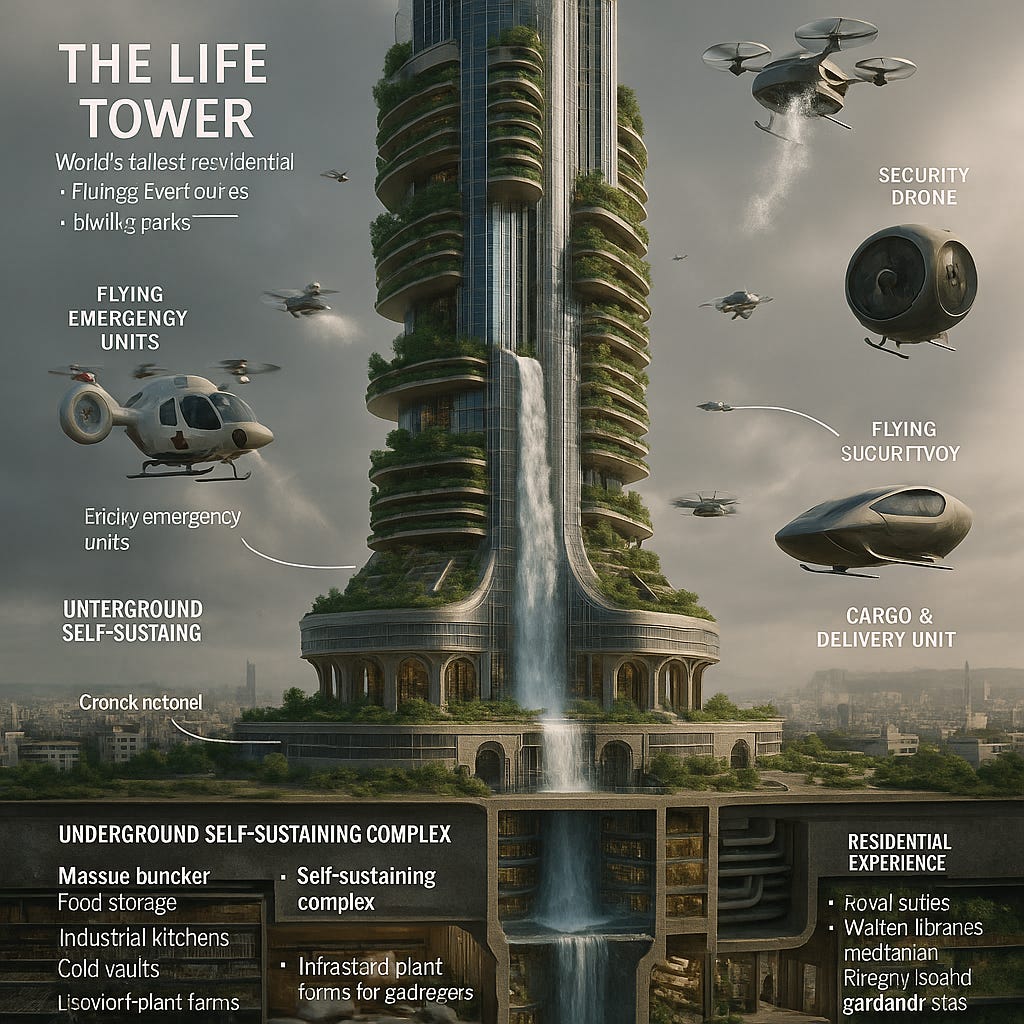


My Dream Home: Operational Strategy for Growing The Life Tower and the Twin Life Towers Over Time
How the project can function, expand, and organize life, work, family, and development across phases
By Ronen Kolton Yehuda (MKR: Messiah King RKY)
Introduction
A project like My Dream Home, from The Life Tower to The Twin Life Towers, cannot be understood only as an architectural idea or only as an engineering system. If it is to become real over time, it must also be approached as an operational environment.
That means the question is not only how to buy the land, and not only how to design the structures. The question is also how the place will actually function while it is growing.
Because this project is not meant to be a static building. It is meant to become a living environment for family life, work, education, recreation, protected continuity, and long-term expansion.
So after the vision article and after the technical framework, there must also be a third layer:
how the project can operate in real life, phase by phase, while still growing toward its larger future.
That is the purpose of this article.
1. A Long-Term Project Must Begin Functioning Before It Is Finished
One of the biggest mistakes in large dream-projects is to think that the place begins only when the final version is complete.
That is not the right model here.
A project of this kind should begin to function before its final form exists. In fact, one of its strengths is that each phase can already be useful while later phases are still being prepared.
This phased functioning is strengthened if the project is built on a reinforced concrete logic from the beginning. In that model, early phases are not temporary in a weak sense. They are permanent structural stages that can continue serving the project while also supporting later growth. That is one reason reinforced concrete matters here: it fits a project that is meant to become stronger, safer, and more complete over time.
That means the project should be approached as:
a place that starts living early,
a place that becomes more complete with time,
and a place that can serve real needs even before it reaches its largest scale.
This is important financially, socially, and strategically.
A living project is easier to develop than an empty dream.


2. The First Operational Stage Begins With the Neighborhoods Themselves
Once one or both neighborhoods begin to come under coordinated control, the area can already start serving as a real compound.
Even before major reconstruction, existing houses and structures may support early operations such as:
residence,
project administration,
planning headquarters,
family accommodation,
storage,
creative workspaces,
temporary hospitality or guest housing,
learning spaces,
and daily operational support.
This means the neighborhood itself becomes the first version of the dream home environment.
At that stage, the project is still low-rise and fragmented in physical form, but operationally it is already beginning to unify.
That is a crucial concept.
3. The Project Should Be Organized Around Layers of Use
Because the vision includes many functions, the place should not be planned as if every square meter serves the same purpose. It should be organized in layers of use.
These layers may include:
private family living,
shared family and community spaces,
children’s learning and development,
work and administration,
health and wellness,
recreation and sports,
food and storage systems,
guest accommodation,
protected and emergency infrastructure,
and future reserve zones for expansion.
This layered approach allows the project to stay flexible.
Some spaces may remain stable in purpose for years. Others may change as family size, financial ability, or strategic needs evolve.
A room that serves one purpose in an early phase may serve another purpose in a later one. A building that begins as temporary residence may later become an office or guest facility. An open area may remain open for years and later become a construction zone for the next stage.
This is not disorder. It is phased development by design.
4. Family Growth Must Be Built Into the Operational Model
The project is intended not only as a building, but as a long-term family environment. That means family growth must not be treated as an afterthought. It should be built into the operating logic.
That includes preparing for:
expanded household life,
additional residential demand over time,
changing needs of children at different ages,
education and care spaces,
more private zones as the family grows,
and more shared infrastructure as the internal population increases.
A serious long-term home should recognize that a family system changes over time.
In the early years, the project may need more shared spaces and flexible living arrangements. In later years, it may need more clearly divided residential wings, greater privacy, larger education systems, more work areas, more storage, and stronger internal circulation.
So the project should not aim only to house a family. It should aim to grow with a family.
5. Work, Management, and Administration Must Exist From an Early Stage
Because this project is ambitious and long-term, it cannot rely only on informal management. Even in its early phases, it should include some form of internal working structure.
That may begin modestly, but should eventually include:
project management spaces,
planning and document storage,
financial coordination,
legal and municipal follow-up,
communications and media work,
scheduling and logistics,
and internal decision-making systems.
This is especially important because the project may evolve over many years. Without organization, growth becomes inefficient. With organization, each phase can build on the previous one more clearly.
In that sense, part of the dream home must also function as the management center of the dream home.
6. Education and Child Development Should Not Wait for the Final Version
If the project includes the long-term goal of children’s learning spaces, then those functions can begin early, even before a fully dedicated school floor or education block exists.
In early phases, education may take place in adapted rooms or smaller learning areas. Later, these can evolve into more specialized spaces, including:
study rooms,
reading and library areas,
digital learning zones,
creative arts rooms,
music and culture rooms,
physical activity spaces,
and eventually more formal education infrastructure.
The important point is that the educational logic begins early and grows gradually, just like the architecture itself.
This helps the project become not only a shelter for life, but a framework for development.
7. The Project Should Generate Use Value at Every Phase
One way to make a long-term project stronger is to ensure that each phase has real use value.
That means every phase should ask not only, “What will this become later?” but also, “What does this already contribute now?”
Examples of phase value may include:
housing value,
family-life value,
work value,
organizational value,
guest or temporary-use value,
recreational value,
storage and operational value,
and long-term land-control value.
This approach improves resilience.
A phase that already serves real life is easier to justify, easier to maintain, and easier to build upon.
8. Guest and Temporary Accommodation Can Be Part of the Strategy
Part of the project’s flexibility may come from the ability to host guests, residents, collaborators, or temporary occupants in designated areas, according to law and the stage of development.
This can serve multiple purposes:
social hosting,
family overflow,
future staff accommodation,
project-related guests,
temporary residential support,
or limited income-generating use where appropriate and lawful.
The key is zoning and separation.
If guest or temporary accommodation exists, it should not interfere with the core long-term family environment. It should be organized clearly so that private life, operational life, and guest life remain balanced.
This becomes even more important if the site remains in mixed use during transitional phases.


9. Recreation, Sports, and Wellness Must Be Phased Intelligently
Because the dream includes sports areas, recreational environments, and wellness functions, these too should be phased rather than postponed indefinitely.
Early phases might include:
open activity yards,
small gyms,
movement rooms,
play spaces,
and flexible recreation zones.
Later phases may add:
larger sports halls,
dedicated courts,
pools,
roof recreation areas,
and more advanced health and wellness spaces.
This phased approach matters because recreation is not a luxury added at the end. It is part of daily life quality and long-term internal sustainability.
A project meant to support family continuity should support not only survival and function, but also healthy living.
10. The Project Needs an Internal Logic of Privacy and Shared Life
A complex family environment requires a clear balance between private and shared space.
So the project should grow with a deliberate internal structure:
private residential areas,
semi-private family zones,
shared learning and recreation areas,
work and administration zones,
guest-use zones,
and technical/protected zones.
This balance becomes increasingly important as the project grows.
Operational planning should therefore anticipate a future in which privacy, family life, work life, and guest life are all present without collapsing into each other.

11. The Twin-Site Vision Can Function as One System Even Before It Is Fully Built
Because the concept expanded from one tower to twin life towers, the operational model should also recognize that two sites do not need to be identical from the beginning to belong to one unified project.
Over time, both can become more integrated in function.
For example, the two-site model may eventually support:
division of residential roles,
division of work and administration,
educational and recreational specialization,
guest and hosting separation,
operational redundancy,
and long-term strategic flexibility.
The twin concept therefore does not need to be symmetrical on day one. It only needs to belong to one evolving operational logic.
12. Expansion Beyond the Neighborhoods Requires Organizational Readiness
If the project may later expand beyond the original neighborhoods, that expansion should not be treated as only a land question. It is also an operational question.
More land means:
more maintenance,
more planning coordination,
more internal movement,
more zoning complexity,
more security and access management,
and more decisions about what each part of the environment is meant to do.
Therefore, future expansion should happen only when the project’s internal organization is strong enough to absorb it.
In other words:
space should be added when the project can govern it well.
This is another reason why phased development matters so much. Growth is not only about construction capacity. It is also about management capacity.
13. The Project Should Be Governed by a Development Protocol
To function well over time, the project should be guided by a clear development protocol. That protocol does not need to be rigid forever, but it should create continuity.
It should define things such as:
phase priorities,
current and future uses,
what remains temporary and what becomes permanent,
what triggers movement to the next phase,
how family needs are evaluated,
how work and administration are organized,
how safety and protected functions are maintained,
and how expansion decisions are made.
This helps prevent random growth.
It allows the place to evolve while still remaining coherent.
14. The Dream Home Must Remain a Place of Life, Not Only of Ambition
As the project grows in scale, there is always a risk that the vision of size may overshadow the purpose of the place.
That should be avoided.
The goal is not only to create a great structure. The goal is to create a place where life can happen well: living, learning, working, resting, developing, and continuing.
That means the operational strategy should always return to the same basic question:
Does this phase improve real life in the place, or only enlarge the image of the place?
The strongest answer will always be the first one.
A project that improves real life can continue growing with legitimacy. A project that serves only image becomes fragile.
Conclusion
For My Dream Home, from The Life Tower to The Twin Life Towers, the project should not wait to become complete before it becomes real. It should begin operating early, grow through use, and develop phase by phase into a larger and more capable living environment.
That means:
This is how the dream can move from idea to life:
Links related to this story:
My Dream Home — The Twin Life Towers of Messiah King RKY
My Dream Home - Ronen Kolton Yehuda
The Lion & Lionesses Model: Love, Freedom, and the Family Life I Wish to Build
What Made Me Think About a Messianic Role in Our Generation
THE NEW PROPHECY - Ronen Kolton Yehuda
✦ From Ezekiel's Prophecy to the New Prophecy of MKR: Messiah King RKY (Ronen Kolton Yehuda)
The Naïve Torah — Psalm 19 and the Anointed Revelation of Peace
The Religion of God - Ronen Kolton Yehuda
👑 The Global Masters - Ronen Kolton Yehuda
Living Under the Spotlight I Never Chose
“It Doesn’t Feel Fair” – A Message About Surveillance, Boycott, and Human Dignity
If Humanity Watched One Man - Ronen Kolton Yehuda
⚖️ Public Legal Statement - Ronen Kolton Yehuda
Celestial Beings in the Hebrew Bible: A Scientific Reinterpretation
The Royal Pardon / Amnesty / Act of Mercy
Parallel Relationships and Common-Law Partnerships in Israel
Is Polygamy Permitted Today Under Jewish Law?
The Democratic Kingdom of Judah Led by Ronen Kolton Yehuda — Clarification and Record
The Mutual Respect Equation: Reciprocity, Boundaries, and the Restoration of Social Balance
SkyHouse: The Flying Smart House That Escapes the Inventions of the Future
1 Holdings & Investments – How I Am Starting to Build a Multi-Industry Company
Nesher Krayot Sports Club – The Startup of Sports
Athens and Sparta of the North of Israel: Haifa and the Krayot
The Northern Metropolitan Union of Haifa–Nesher–Krayot
The People’s/Nation’s Party of Israel (Mifleget HaAm)
Two Unions for a Safer Future — Founding Declaration of the Global International Union (GIU)


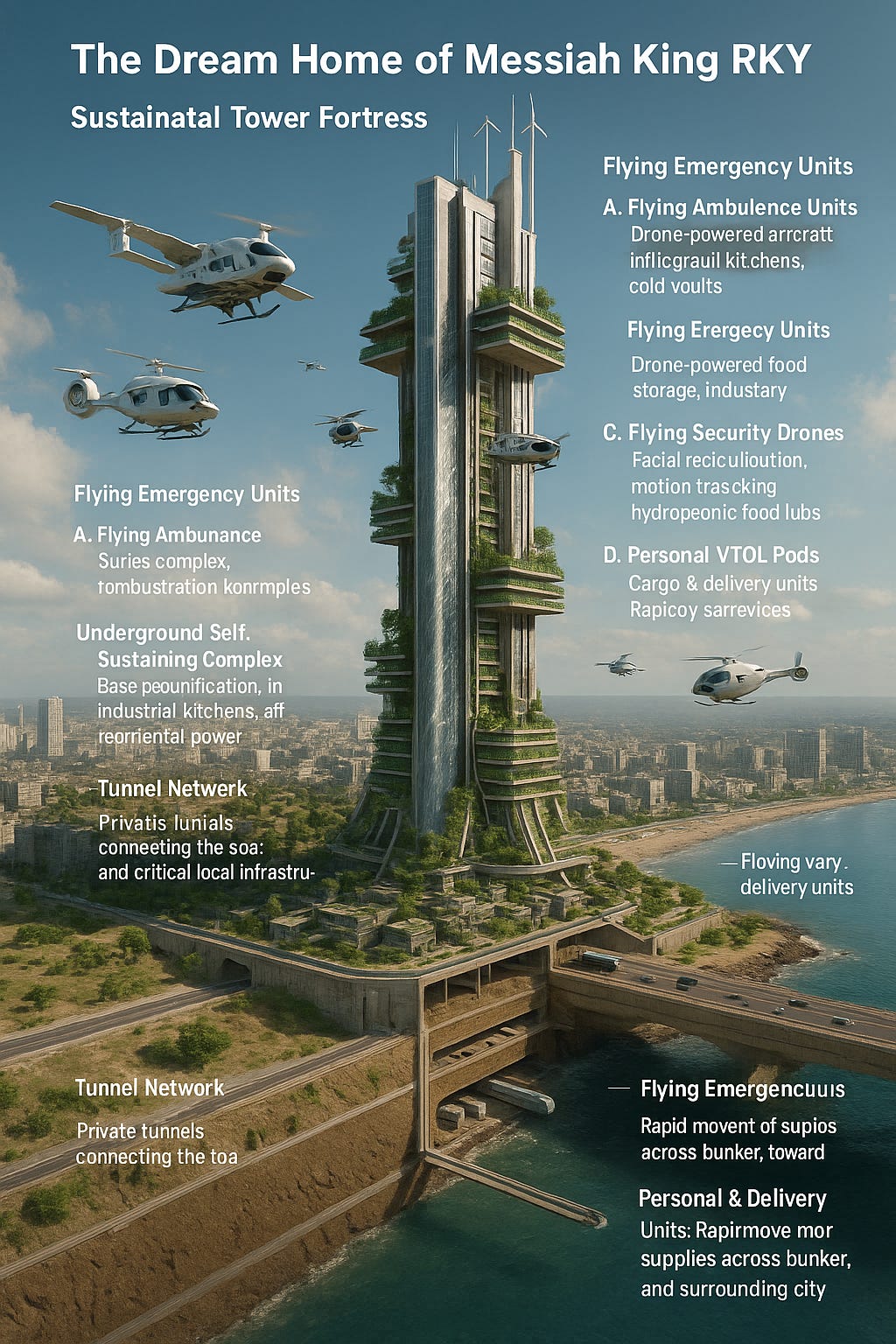


Additional note on safety and resilience:
ReplyDeleteAs the project evolves, it should be planned with a balanced approach to structural safety. This includes consideration for everyday durability as well as thoughtful resilience to events such as earthquakes or unexpected impacts.
The intention is not to design for extreme scenarios in isolation, but to follow sound engineering principles — ensuring structural continuity, protected cores, and stable behavior under stress — so that the building remains safe, controlled, and reliable across different conditions over time.