Ronen Kolton Yehuda 👑💜🦁
MKR: Messiah King RKY
Phone: +972-58-404-0879 | Telegram: @ronenkoltonyehuda1 | Email: ronenkoltonyehuda@gmail.com
The articles and illustrations are made by artificial intelligence, based on the instructions and creative input of MKR.
Flight-Ready Intelligence: Smart Glasses, Helmets, and Shoes in Advanced Aviation Suits
Get link
Facebook
X
Pinterest
Email
Other Apps
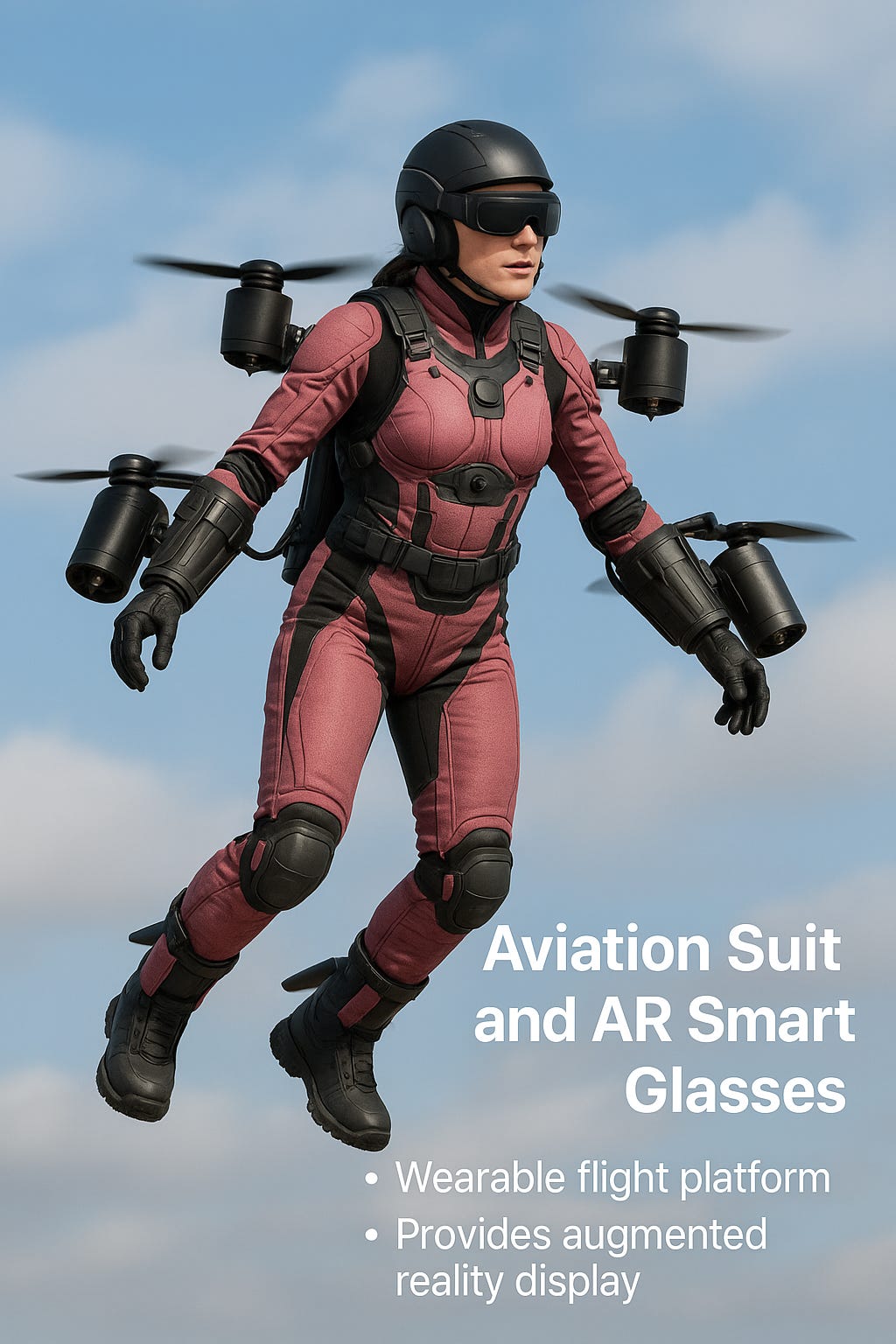
Flight-Ready Intelligence: Smart Glasses, Helmets, and Shoes in Advanced Aviation Suits
By Ronen Kolton Yehuda (Messiah King RKY), June 2025
🔧 Introduction: A New Era of Integrated Flight Gear
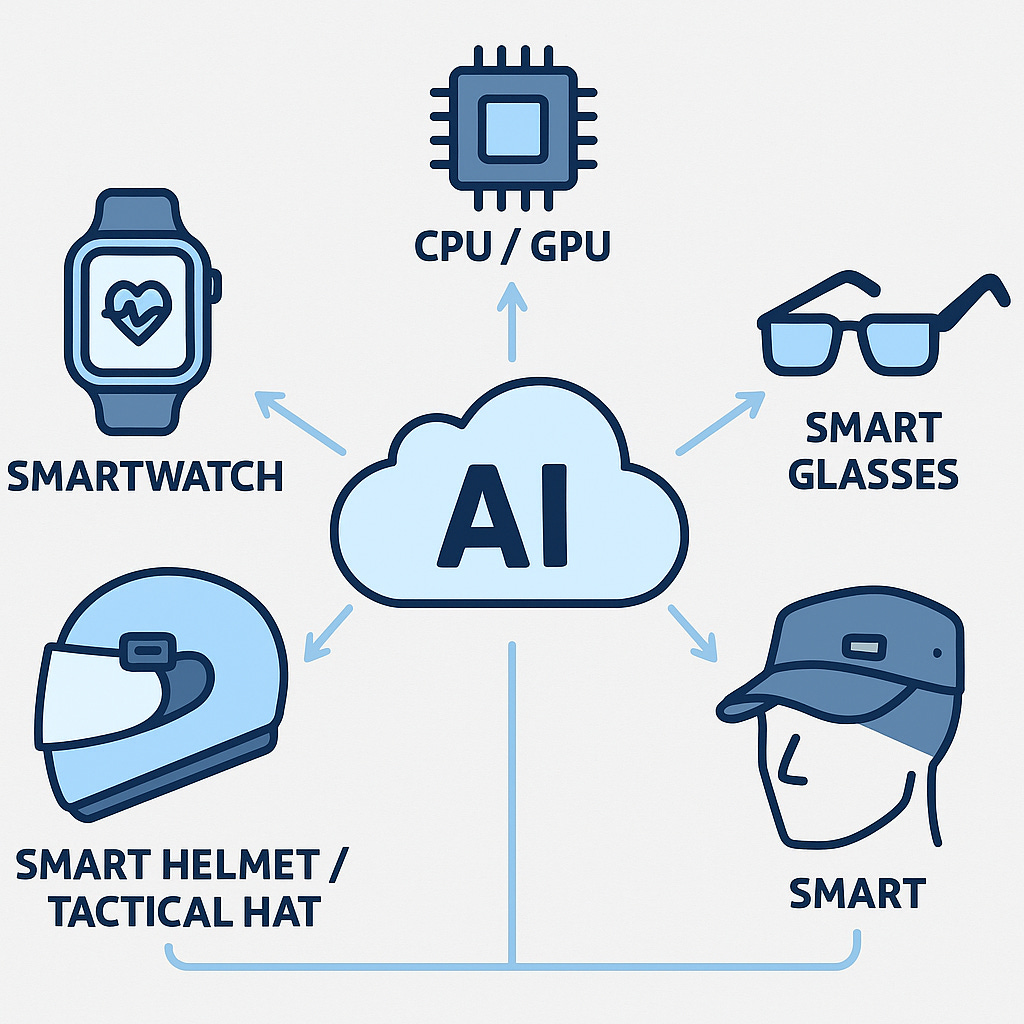
As personal aviation suits become operational in tactical, emergency, and industrial scenarios, the systems surrounding them must evolve too. The suit alone is not enough—it must be supported by a cognitive, connected ecosystem. This article explores three core smart systems integrated into the modern aviation operator’s gear: Smart Glasses, Smart Helmets, and Smart Shoes—each forming a critical link in the Augmented Human platform.
These are not accessories. They are networked control interfaces, sensory extensions, and operational processors—essential components in modern airborne intelligence and mobility.
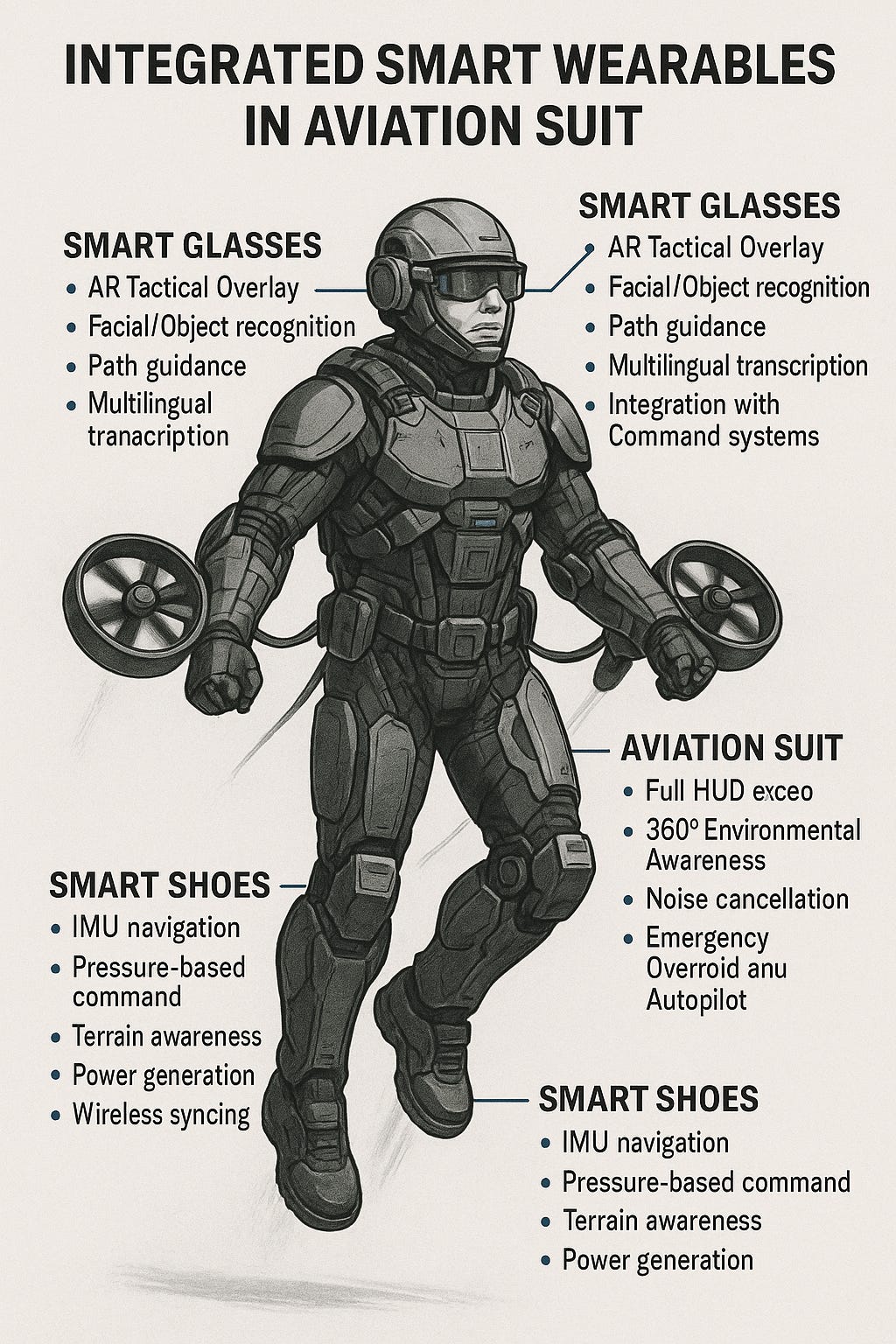
🥽 Smart Glasses: Augmented Vision in Flight
Smart AR/VR glasses deliver live data directly to the user’s eyes—overlaying real-time mission-critical information on the physical world or transitioning into full VR for simulation and command operations.
Core Capabilities:
AR Tactical Overlay: Live maps, object markers, drone feeds, altitude data, and hazard indicators
Facial/Object Recognition: For surveillance, search and rescue, or target identification
Path Guidance: Waypoint overlays, restricted airspace notifications, and return-home visuals
Multilingual Transcription: Hands-free translation of speech, signage, or commands
Integration with Command Systems: Sync with remote AI or ground control via encrypted network
Smart glasses eliminate the need for hand-held displays or wrist controllers. They deliver silent, eye-controlled access to full operational intelligence.
🪖 Smart Helmet: Flight Safety and Control in One Headgear
The smart helmet is the central physical protection and control hub for high-speed flight and AI-supported navigation. More than armor, it is a hybrid of sensory system, protection module, and real-time AI node.
Features:
Full HUD (Heads-Up Display) projected on internal visor
360° Environmental Awareness via onboard LiDAR, radar, and audio sensors
Head Motion Input: Used for drone camera panning or mid-flight direction control
Emergency Override & Autopilot: Eye blink or chin-tap patterns initiate return-home or hover
Built to withstand impact, wind shear, and rapid altitude change, the helmet houses onboard microprocessors and an AI safety layer—making every flight both human-driven and AI-supported.
👟 Smart Shoes: Navigational and Computing Power at Ground Level
Smart shoes in an aviation suit are not just footwear—they are independent computing and sensor platforms that track movement, stabilize balance, and serve as silent command systems for mid-air operations.
Key Capabilities:
IMU Navigation: Inertial measurement unit compensates for GPS loss and detects body vector
Pressure-Based Command: Tap or heel-press triggers specific commands (hover, record, lock position)
Terrain Awareness: Auto-adjusts gait before/after flight on sand, rock, water, or stairs
Power Generation: Motion-based energy harvesting and solar-charge insoles
Wireless Sync with Glasses/Helmet: Continuous positional and biofeedback integration
Additionally, smart shoes contribute to the flight stabilization matrix, working alongside AI to maintain posture and adjust orientation with micro-feedback from the feet.
🔄 Unified Intelligence: Smart Wearables as One System
When combined, these three smart systems transform the operator into a networked flying platform:
Helmet ensures visual security, head-based control, and emergency response
Glasses provide tactical and cognitive information flow
Shoes anchor the body’s computing and navigational baseline
Each is powered by modular processors, protected by security protocols, and equipped for encrypted syncing, AI logic inference, and adaptive learning. All systems remain fully operable during motion, acceleration, and signal disruption.
⚖️ Ethics, Safety, and Oversight
To protect users and the public, all systems include:
Biometric Locking and personal encryption
Flight Zone Restriction Alerts based on geopositioning and airspace law
Fail-Safe Manual Override across helmet, glasses, and shoes
Transparent AI Logs for post-mission audit or accountability
Custom AI Policy Layers for civilian, military, rescue, or corporate environments
🔚 Conclusion: A Fully Intelligent Flight Operator
Smart helmets, smart glasses, and smart shoes are no longer futuristic gear—they are mission-ready augmentations designed to merge vision, motion, cognition, and safety into a seamless whole. Together with advanced aviation suits, they form the basis of next-generation air mobility, enabling the operator to fly, process, decide, and adapt in real-time.
The Augmented Human is no longer on the ground.
She’s airborne—and intelligent by design.
Here is the technical version of the article, structured for engineers, military technologists, and smart wearable developers:
Integrated Smart Wearables in Personal Aviation Suits: Technical Architecture and System Interoperability
By Ronen Kolton Yehuda (Messiah King RKY), June 2025
Abstract
This paper provides a technical overview of smart wearable subsystems—AR/VR glasses, smart helmets, and smart shoes—as integrated components of advanced personal aviation suits. These units function as distributed computing, navigation, and control systems, operating in real time across airborne, urban, and tactical scenarios. Their synchronized function establishes a modular and adaptive Augmented Human platform, optimized for mobility, safety, and mission cognition.
1. System Overview
A modern personal aviation suit integrates flight propulsion (electric ducted fans, micro-turbines, or VTOL propellers) with onboard AI and modular smart wearables. The three essential wearable systems are:
Smart AR/VR Glasses: Optical interface and visual-data overlay
Smart Helmet: Sensor fusion, cognitive safety, and control node
Black Box Recorder: All wearable systems log telemetry to onboard encrypted drive
Manual Disconnect: Helmet button or verbal phrase triggers system-wide shutdown
8. Conclusion and Forward Outlook
The integration of smart AR/VR glasses, helmets, and shoes into personal aviation suits creates a distributed AI-human system capable of autonomous, cooperative, and mission-adaptive behavior. This architecture extends human capabilities in combat, disaster response, logistics, and remote operation.
Future developments include:
Cross-suit AI networking between operators
Modular battery packs with AI-controlled power shifting
Civilian variants for firefighting, engineering, and urban transport
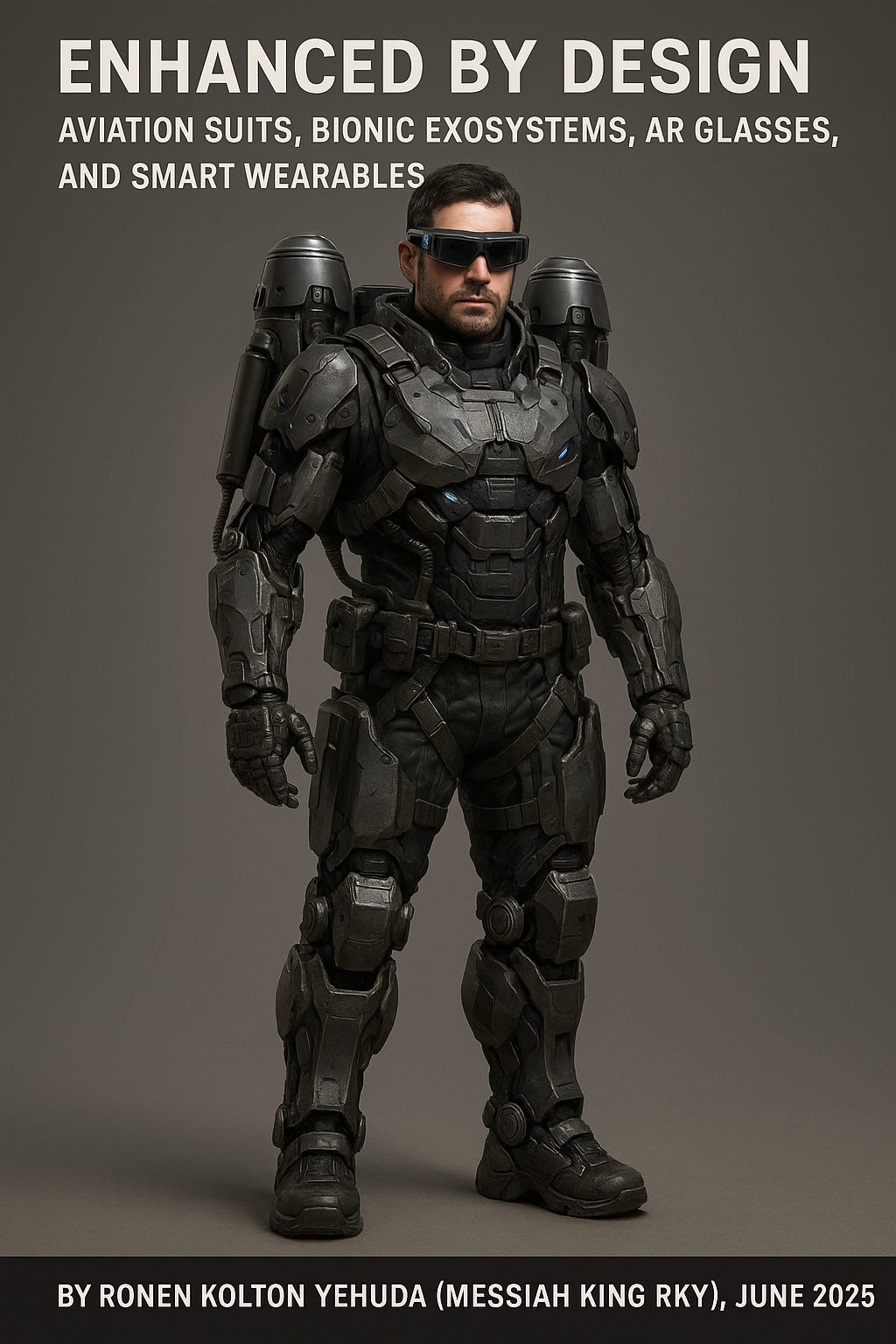
Enhanced by Design: The Rise of Aviation Suits, Bionic Exosystems, AR/VR Glasses, and Smart Wearables
By Ronen Kolton Yehuda (Messiah King RKY), June 2025
🔧 Introduction: Beyond the Human Body
In today’s rapidly transforming world—where conflict, disaster, mobility, and data are fused in real time—the human body, unaided, is no longer sufficient for frontline operations. Enter a new era of human augmentation: aviation suits that give personal flight, bionic exosystems that boost strength and stamina, AR/VR glasses that merge virtual insight with physical reality, and smart wearables that provide continuous computing from head to toe.
These technologies are not accessories. They are extensions of the body—and the foundations of a new operational class: the Augmented Human.
✈️ Aviation Suits: Personal Flight with Tactical Intelligence
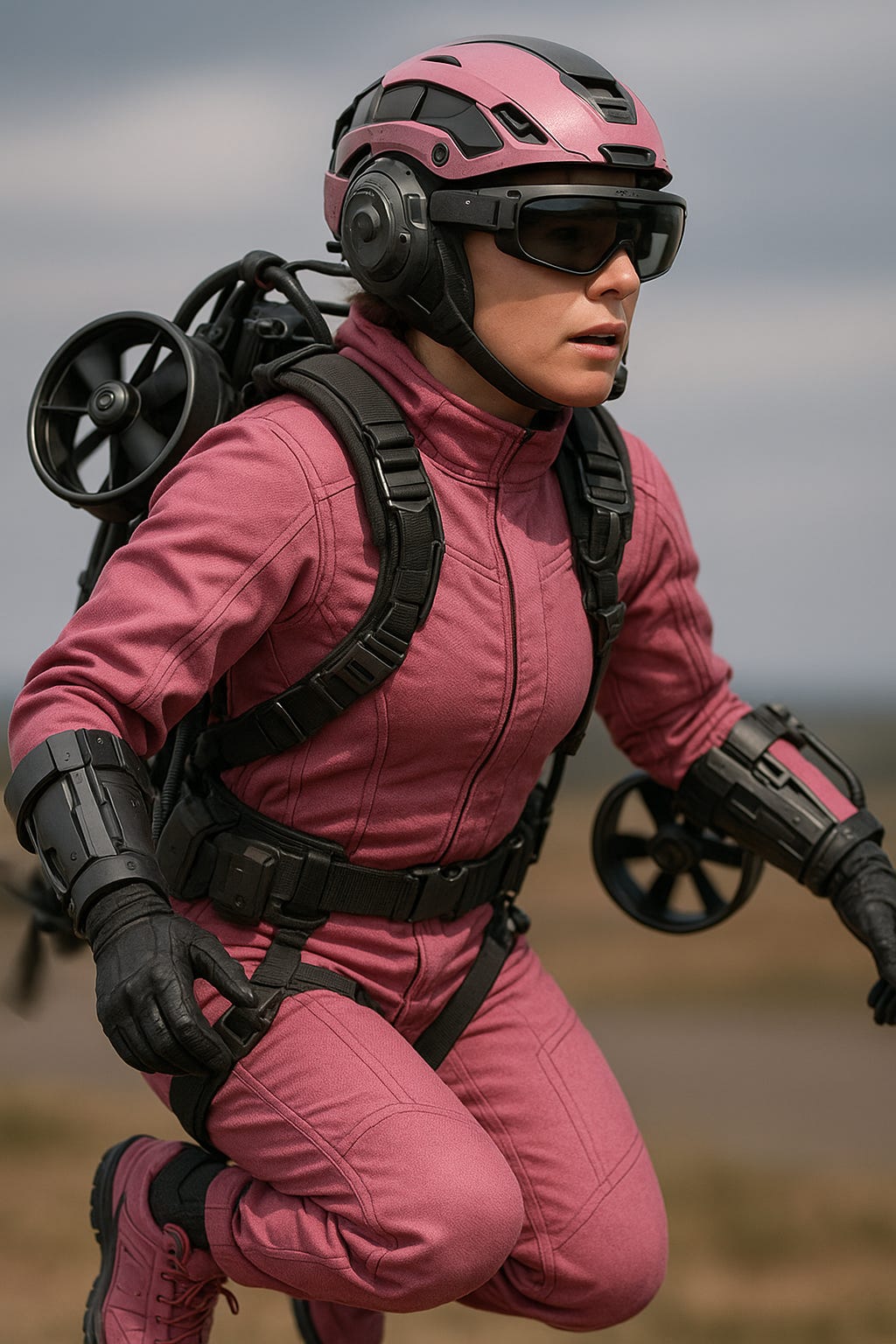
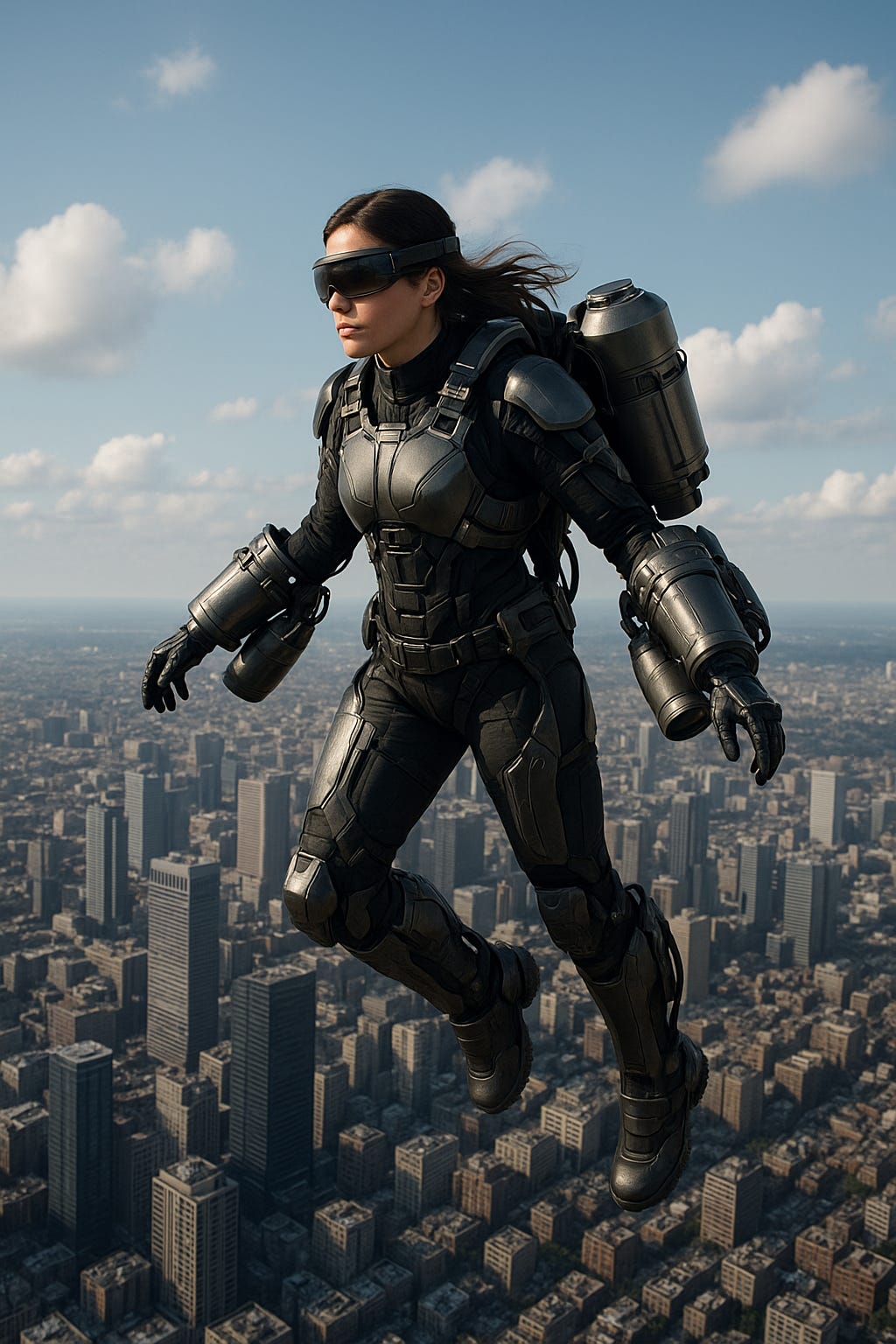
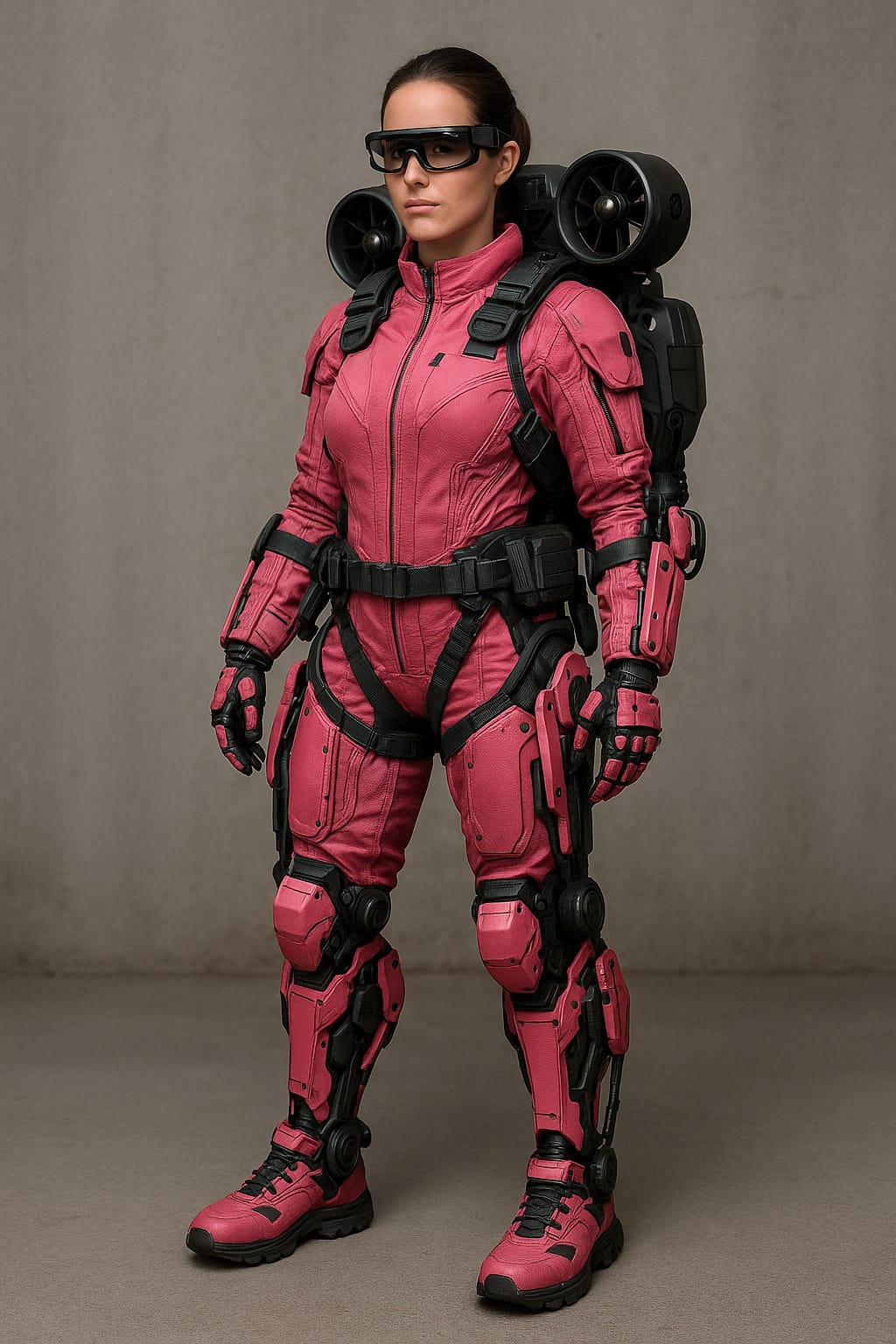
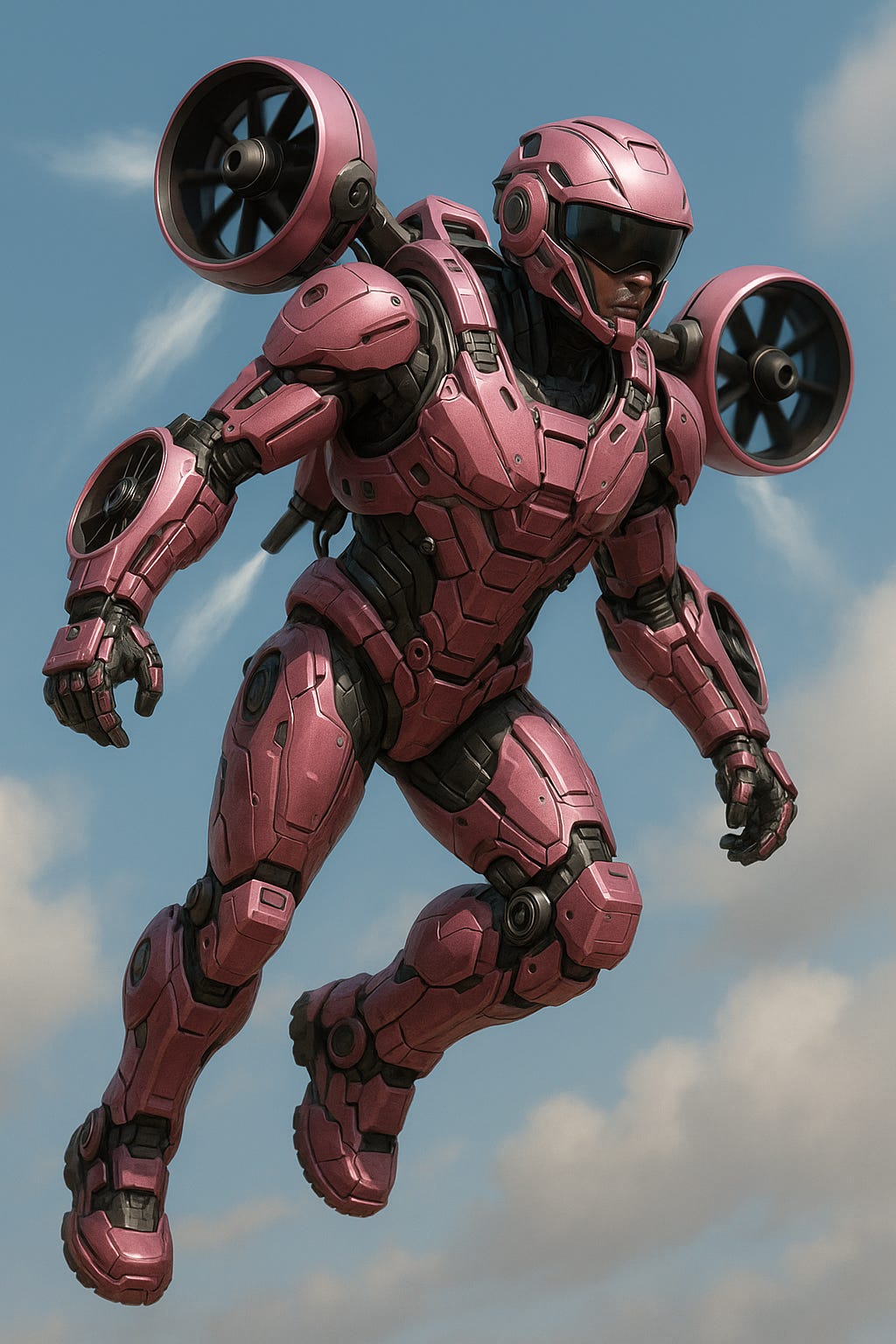
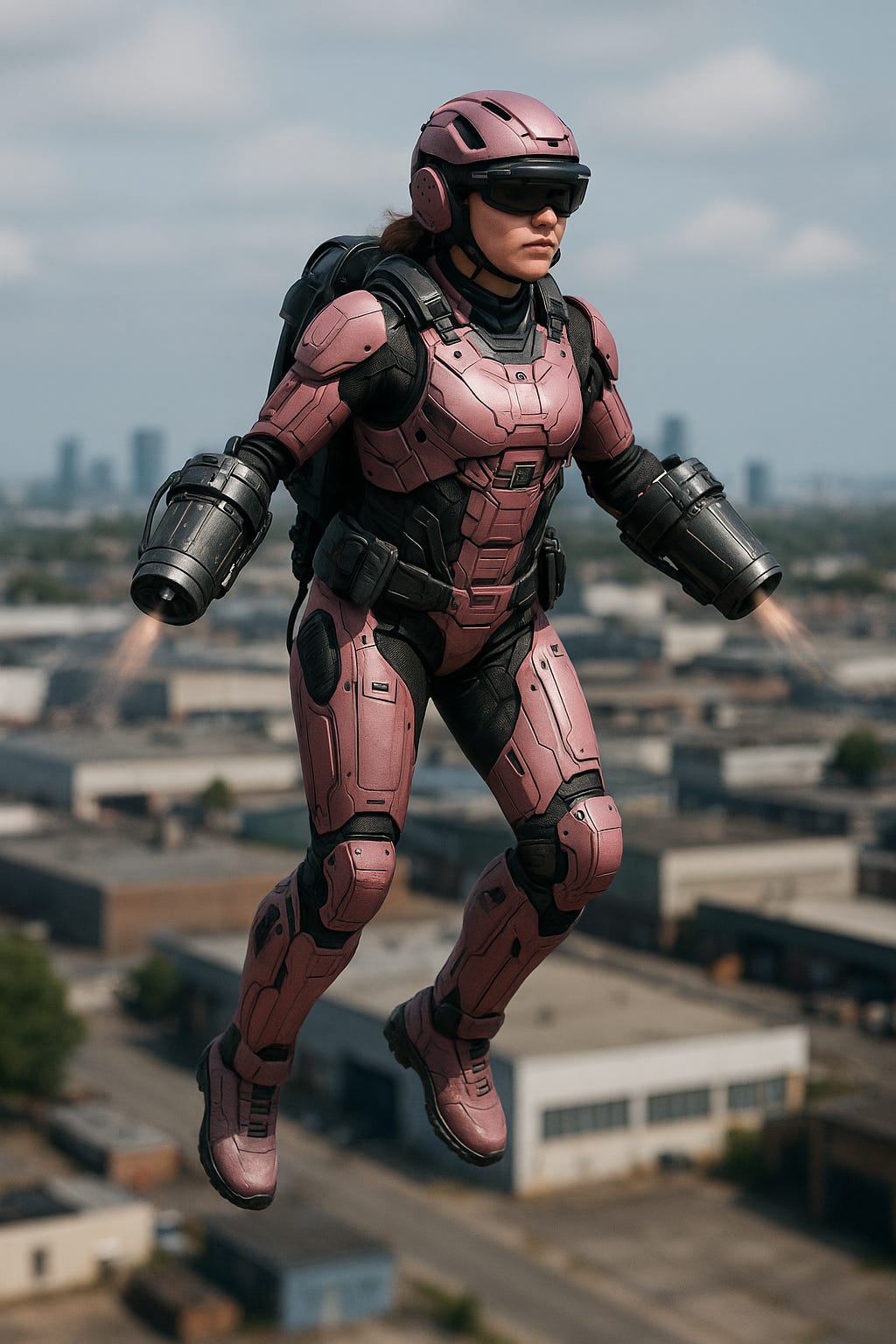
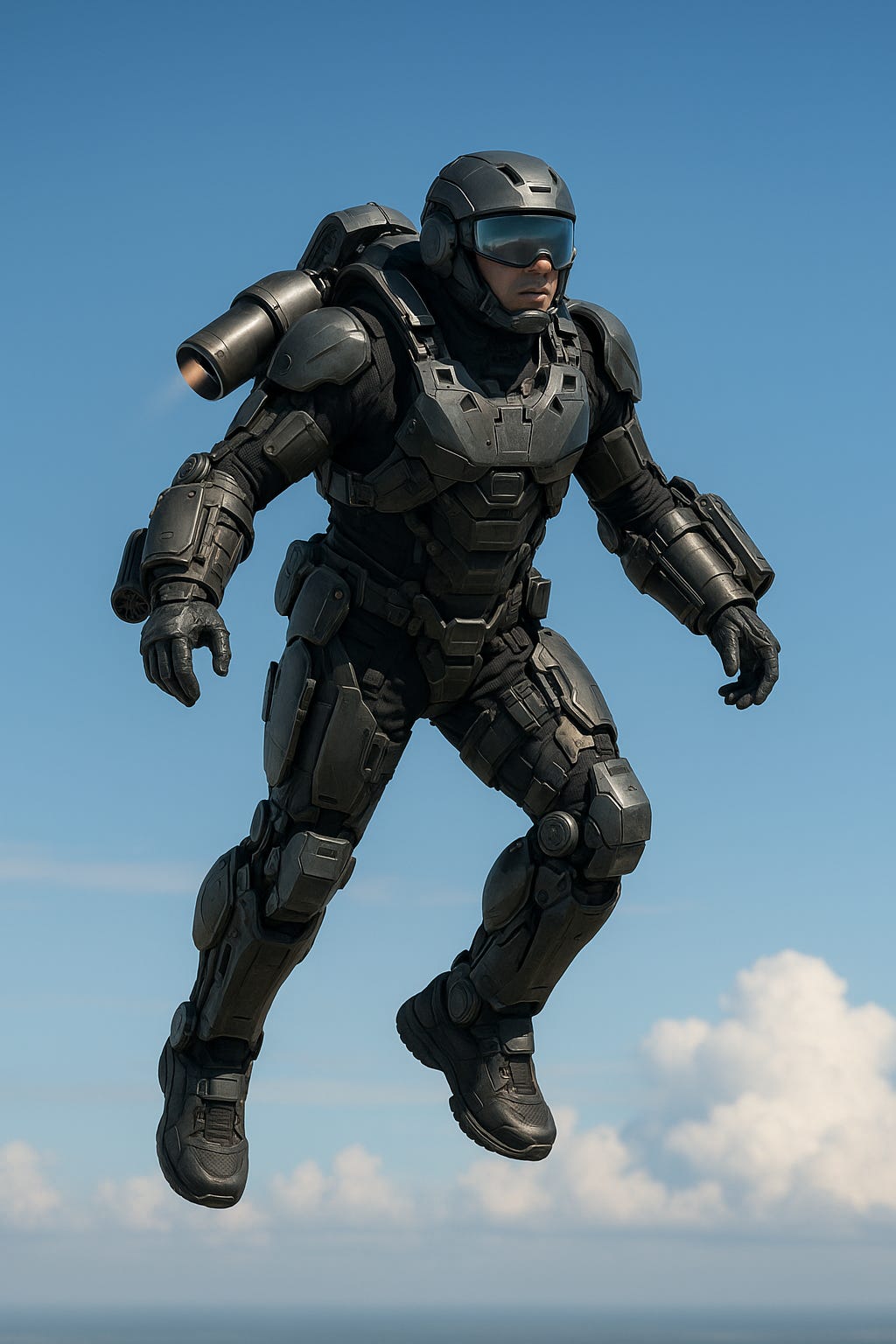
Aviation suits are wearable flight platforms that allow a single operator to take off vertically, maneuver midair, and land autonomously—without entering a cockpit.
Core Components:
Electric ducted fans or mini-turbines
AI-powered balance and vectoring controls
Armor-rated body frame and air brakes
Live navigation, HUD, and comms integration
Use Cases:
High-speed insertion (military/special ops)
Mountain or sea rescue without rotorcraft
Urban fire suppression from above
Tactical surveillance in high-rise zones
Unlike jetpacks of the past, modern aviation suits combine sensor AI, vertical stabilization, and drone coordination, making them safe, intelligent, and operationally flexible.
🦾 Bionic Exosystems: Mechanical Strength with Human Control
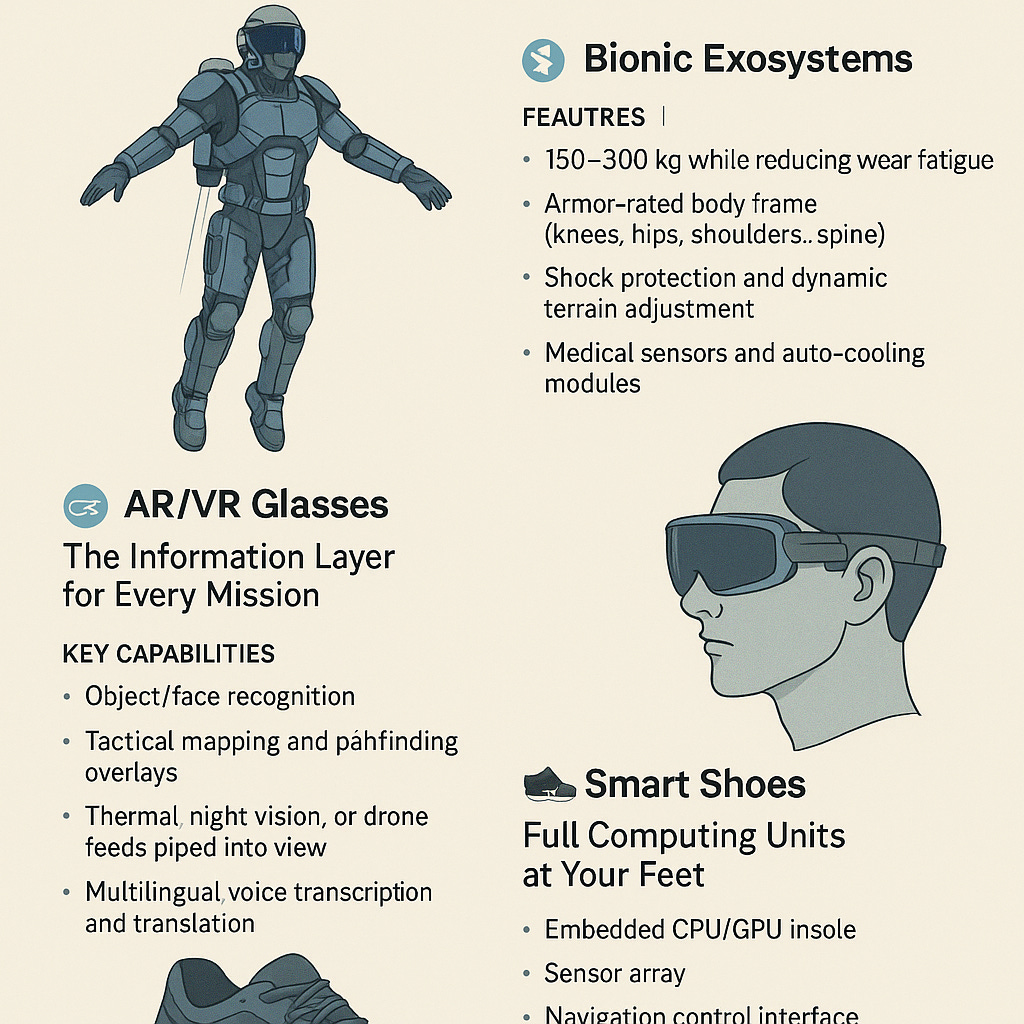
Bionic suits are servo-actuated exoskeletons that amplify human motion and endurance. These systems attach externally and synchronize with muscular or neural signals to create fluid, powerful movement.
Construction, logistics, or firefighting under load
Long-duration foot operations (military/civilian)
Some versions integrate embedded processors, biomonitoring, and health AI, making them not just tools—but protective, health-aware partners.
🥽 AR/VR Glasses: The Information Layer for Every Mission
Augmented and Virtual Reality glasses allow the operator to see data, instructions, and mission context overlaid directly on the physical world—or enter a fully virtual command environment.
Key Capabilities:
Object/face recognition
Tactical mapping and pathfinding overlays
Thermal, night vision, or drone feeds piped into view
Multilingual voice transcription and translation
In AR mode, data is layered onto real-world vision. In VR mode, operators can train, plan, or remotely control other systems.
These smart glasses replace tablets, radios, and field maps—giving the operator instant, unobtrusive situational intelligence with eye-tracking, voice command, and gesture input.
👟 Smart Shoes: Full Computing Units at Your Feet
Today’s smart shoes are no longer just accessories—they are complete computing units, capable of processing, storing, and transmitting data independently. As wearables migrate away from hands and heads, the foot becomes the foundation for a fully integrated computing architecture.
Core Capabilities:
Embedded CPU/GPU modules for localized computing power
Onboard OS with wireless syncing to glasses, suits, and external systems
Sensor array: accelerometer, gyroscope, altimeter, pressure, and temperature
Navigation system: real-time GPS, IMU path correction, dead reckoning in GPS-denied zones
Foot-based control interface: step gestures, pressure toggles, silent command inputs
AI cores running inference tasks for gait optimization, terrain recognition, and biometric feedback
Energy harvesting through motion and solar-insole integration to power internal systems or charge accessories
Smart shoes are also equipped to serve as signal relays, emergency distress broadcasters, and motion-capture units for telepresence or remote analysis.
🧠 Unified System Design: The Body as a Platform
When all these elements are worn together, the operator becomes a complete human-machine platform:
Aviation Suit for flight
Bionic Suit for load mobility and endurance
AR/VR Glasses for cognitive interface
Smart Shoes for balance, power, sensory feedback, and edge computing
Each system is synchronized via encrypted wireless networks, with onboard AI cores optimizing resource sharing, command inputs, and mission coordination. Some architectures even support modular replacement or real-time upgrades mid-mission, forming an adaptive, living platform.
⚖️ Ethics, Safety, and Oversight
To ensure safety and dignity, each system includes:
Fail-safe shutdowns in case of malfunction or biofeedback warning
Mission-specific ethical AI policies (e.g., non-combat zones, crowd environments)
International coordination bodies and defense institutions are now developing standard operating protocols and legal frameworks to ensure lawful deployment.
🔚 Conclusion: The Augmented Human Is Already Here
What was once confined to concept art is now walking, flying, lifting, and thinking in the real world. Aviation suits, bionic exosystems, AR/VR glasses, and smart computing footwear are not siloed products—they are the parts of a single, interoperable human-augmentation ecosystem.
Whether protecting civilians, executing critical missions, or navigating hostile terrain, the future operator is no longer limited by biology—but empowered by design.
Enhanced by Design: The Rise of Aviation Suits, Bionic Exosystems, AR/VR Glasses, and Smart Wearables
By Ronen Kolton Yehuda (Messiah King RKY), June 2025
🔧 Introduction: Beyond the Human Body
In today’s rapidly transforming world—where conflict, disaster, mobility, and data are fused in real time—the human body, unaided, is no longer sufficient for frontline operations. Enter a new era of human augmentation: aviation suits that give personal flight, bionic exosystems that boost strength and stamina, AR/VR glasses that merge virtual insight with physical reality, and smart wearables that provide continuous computing from head to toe.
These technologies are not accessories. They are extensions of the body—and the foundations of a new operational class: the Augmented Human.
✈️ Aviation Suits: Personal Flight with Tactical Intelligence
Aviation suits are wearable flight platforms that allow a single operator to take off vertically, maneuver midair, and land autonomously—without entering a cockpit.
Core Components:
Electric ducted fans or mini-turbines
AI-powered balance and vectoring controls
Armor-rated body frame and air brakes
Live navigation, HUD, and comms integration
Use Cases:
High-speed insertion (military/special ops)
Mountain or sea rescue without rotorcraft
Urban fire suppression from above
Tactical surveillance in high-rise zones
Unlike jetpacks of the past, modern aviation suits combine sensor AI, vertical stabilization, and drone coordination, making them safe, intelligent, and operationally flexible.
🦾 Bionic Exosystems: Mechanical Strength with Human Control
Bionic suits are servo-actuated exoskeletons that amplify human motion and endurance. These systems attach externally and synchronize with muscular or neural signals to create fluid, powerful movement.
Construction, logistics, or firefighting under load
Long-duration foot operations (military/civilian)
Some versions integrate embedded processors, biomonitoring, and health AI, making them not just tools—but protective, health-aware partners.
🥽 AR/VR Glasses: The Information Layer for Every Mission
Augmented and Virtual Reality glasses allow the operator to see data, instructions, and mission context overlaid directly on the physical world—or enter a fully virtual command environment.
Key Capabilities:
Object/face recognition
Tactical mapping and pathfinding overlays
Thermal, night vision, or drone feeds piped into view
Multilingual voice transcription and translation
In AR mode, data is layered onto real-world vision. In VR mode, operators can train, plan, or remotely control other systems.
These smart glasses replace tablets, radios, and field maps—giving the operator instant, unobtrusive situational intelligence with eye-tracking, voice command, and gesture input.
👟 Smart Shoes: Full Computing Units at Your Feet
Today’s smart shoes are no longer just accessories—they are complete computing units, capable of processing, storing, and transmitting data independently. As wearables migrate away from hands and heads, the foot becomes the foundation for a fully integrated computing architecture.
Core Capabilities:
Embedded CPU/GPU modules for localized computing power
Onboard OS with wireless syncing to glasses, suits, and external systems
Sensor array: accelerometer, gyroscope, altimeter, pressure, and temperature
Navigation system: real-time GPS, IMU path correction, dead reckoning in GPS-denied zones
Foot-based control interface: step gestures, pressure toggles, silent command inputs
AI cores running inference tasks for gait optimization, terrain recognition, and biometric feedback
Energy harvesting through motion and solar-insole integration to power internal systems or charge accessories
Smart shoes are also equipped to serve as signal relays, emergency distress broadcasters, and motion-capture units for telepresence or remote analysis.
🧠 Unified System Design: The Body as a Platform
When all these elements are worn together, the operator becomes a complete human-machine platform:
Aviation Suit for flight
Bionic Suit for load mobility and endurance
AR/VR Glasses for cognitive interface
Smart Shoes for balance, power, sensory feedback, and edge computing
Each system is synchronized via encrypted wireless networks, with onboard AI cores optimizing resource sharing, command inputs, and mission coordination. Some architectures even support modular replacement or real-time upgrades mid-mission, forming an adaptive, living platform.
⚖️ Ethics, Safety, and Oversight
To ensure safety and dignity, each system includes:
Fail-safe shutdowns in case of malfunction or biofeedback warning
Mission-specific ethical AI policies (e.g., non-combat zones, crowd environments)
International coordination bodies and defense institutions are now developing standard operating protocols and legal frameworks to ensure lawful deployment.
🔚 Conclusion: The Augmented Human Is Already Here
What was once confined to concept art is now walking, flying, lifting, and thinking in the real world. Aviation suits, bionic exosystems, AR/VR glasses, and smart computing footwear are not siloed products—they are the parts of a single, interoperable human-augmentation ecosystem.
Whether protecting civilians, executing critical missions, or navigating hostile terrain, the future operator is no longer limited by biology—but empowered by design.
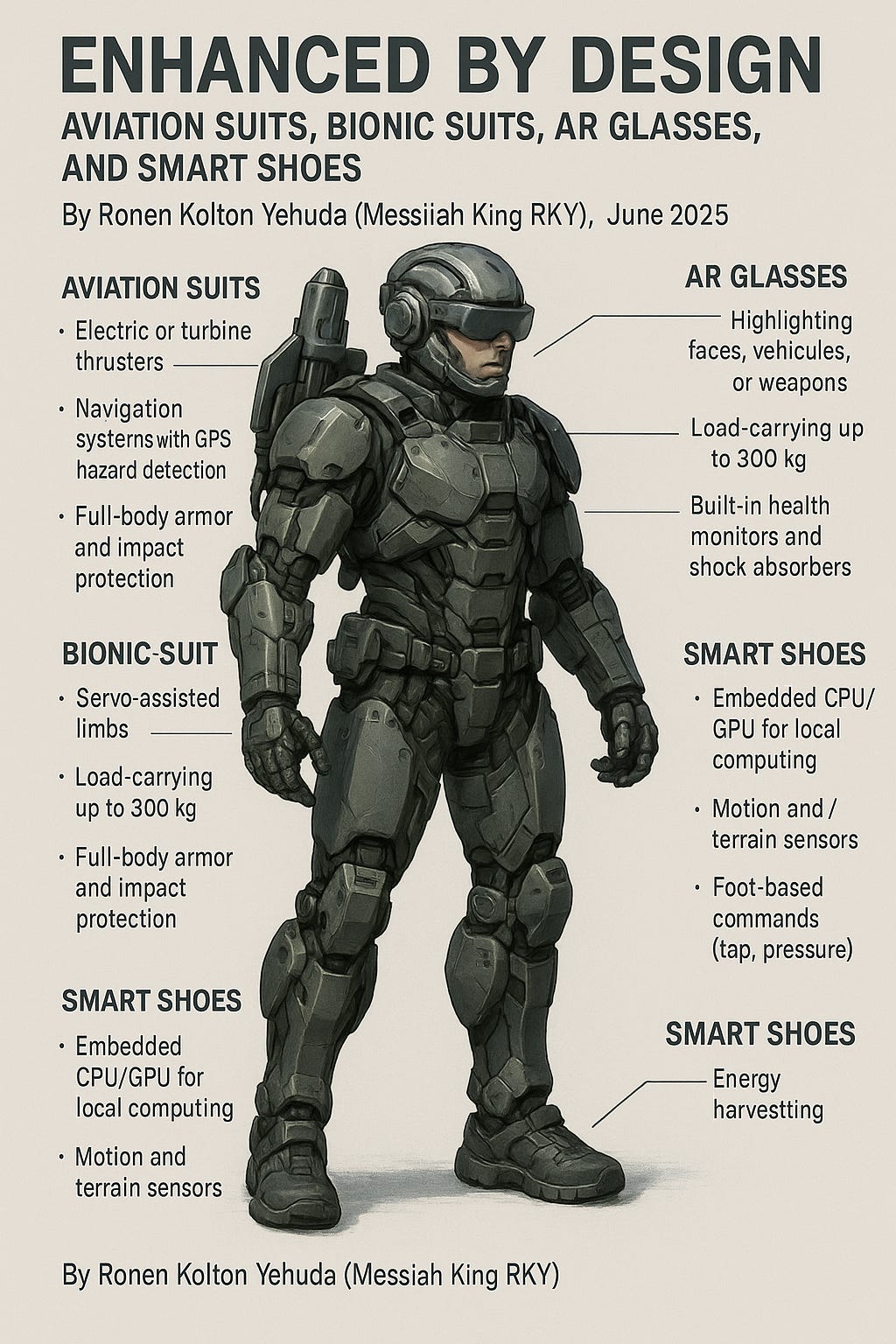
Enhanced by Design: Aviation Suits, Bionic Suits, AR Glasses, and Smart Shoes
By Ronen Kolton Yehuda (Messiah King RKY), June 2025
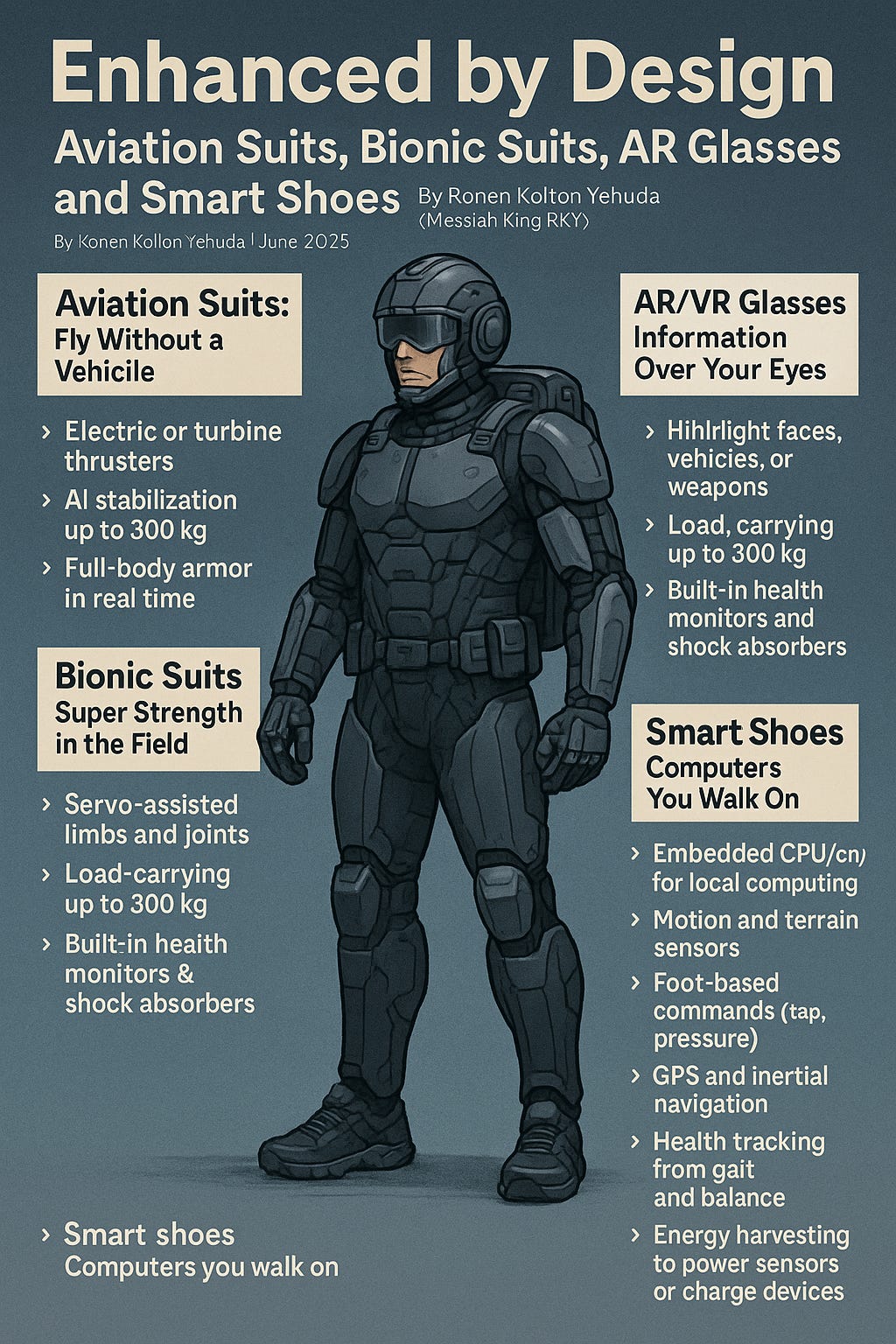
In a future shaped by rapid emergencies, smart warfare, and dynamic mobility, the way we protect, move, and perform is being redefined by design. From aviation suits that allow personal flight to bionic suits that give humans super strength, and from AR/VR glasses to smart shoes that function as wearable computers, the era of augmented operators is here.
These systems don’t just support the body—they expand it.
✈️ Aviation Suits: Fly Without a Vehicle
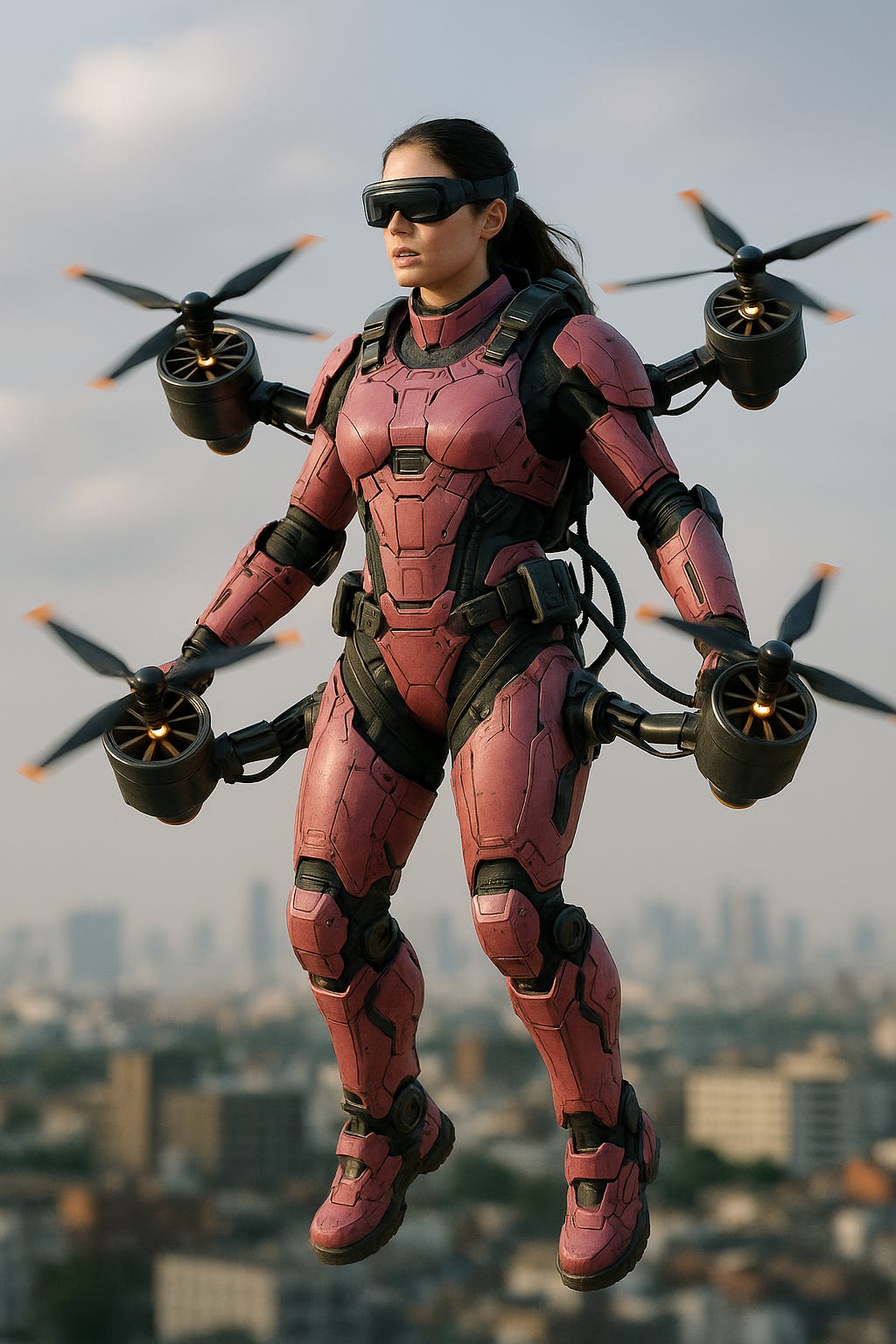
Imagine taking off vertically from a rooftop, maneuvering mid-air, and landing safely—without a jet or helicopter. Aviation suits make this real. Worn like a backpack and leg harness, they include:
Electric or turbine thrusters
AI stabilization and auto-balancing
Navigation systems with GPS and hazard detection
Full-body armor and impact protection
Used by special forces, rescue units, and surveillance teams, these suits let a single person cover distances, climb vertically, or enter disaster zones without delay.
🦿 Bionic Suits: Super Strength in the Field
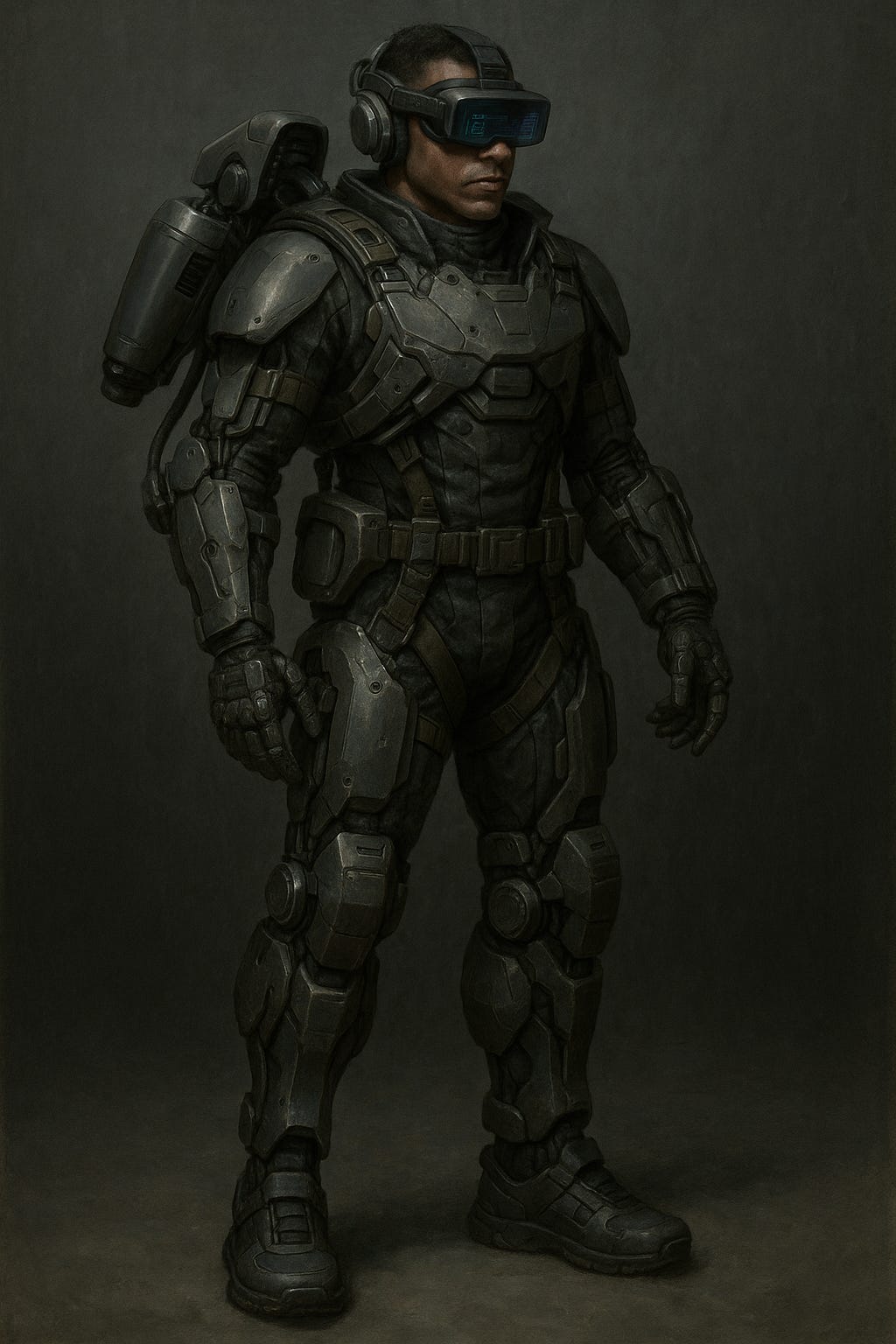
Bionic exosuits give the human body mechanical power and endurance. They assist your legs, arms, and back—so you can carry heavy loads, run longer, and resist injury or fatigue.
Main features include:
Servo-assisted limbs and joints
Load-carrying up to 300 kg
Built-in health monitors and shock absorbers
Configurable for military, rescue, and industrial tasks
These suits are used by frontline responders, soldiers, disaster workers, and even airport crews.
🥽 AR/VR Glasses: Information Over Your Eyes
Instead of holding a tablet or phone, what if you could see maps, threats, or messages overlaid on reality—right in front of your eyes?
AR/VR glasses do exactly that:
Highlight faces, vehicles, or weapons
Show maps, paths, or drone feeds
Translate language in real time
Use eye or voice commands to control systems
In AR mode, they enhance the real world. In VR mode, they simulate it. These glasses are used by pilots, commanders, medics, and first responders.
👟 Smart Shoes: Computers You Walk On
Today’s most advanced smart shoes do more than track steps—they are small, wearable computers with sensors, chips, and real-time data systems.
They include:
Embedded CPU/GPU for local computing
Motion and terrain sensors
Foot-based commands (tap, pressure)
GPS and inertial navigation
Health tracking from gait and balance
Energy harvesting to power sensors or charge devices
Smart shoes help operators move smarter, detect slippery ground, alert to fatigue, or guide silent foot patrols—hands-free.
🧠 When It All Works Together
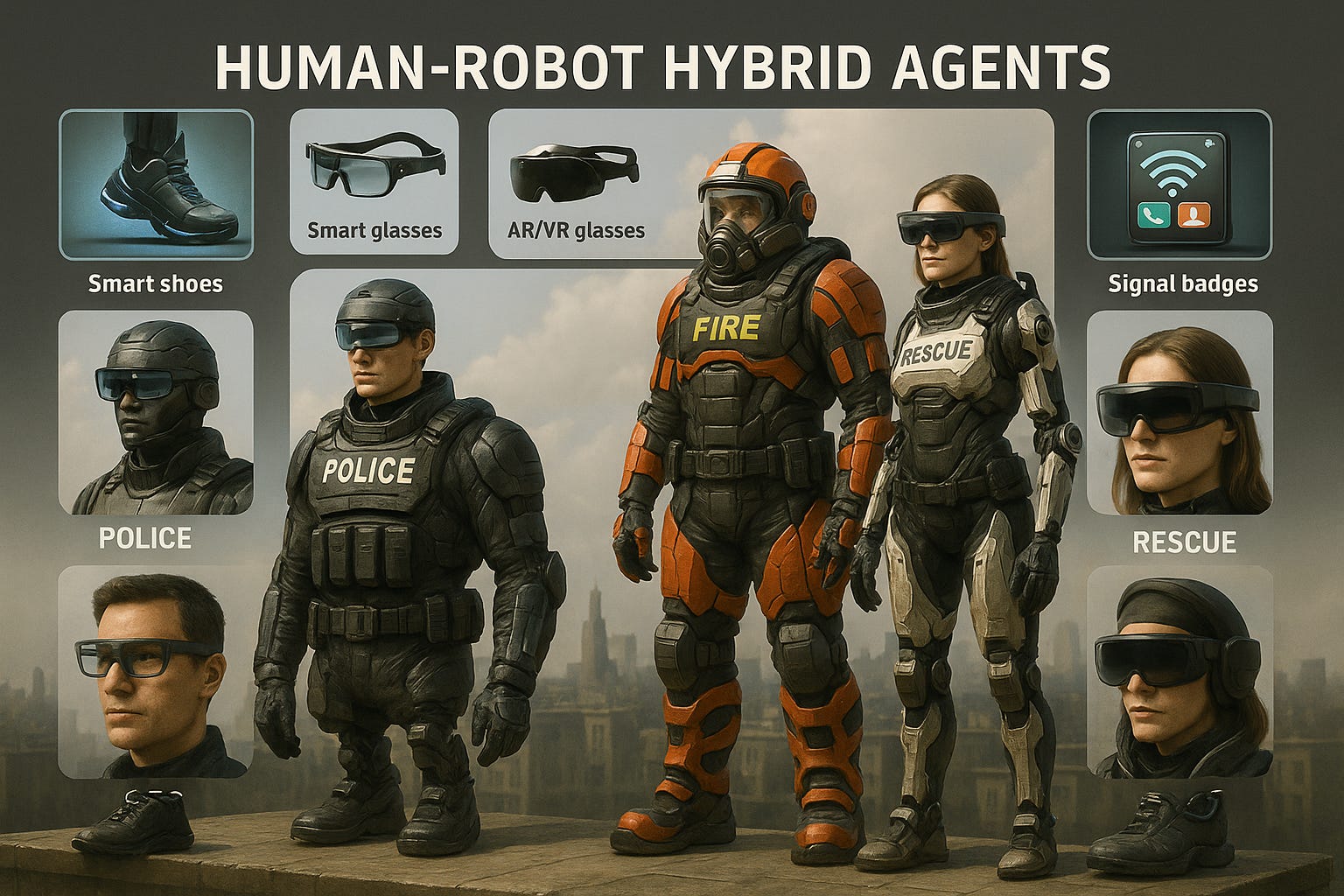
When worn together, these technologies connect wirelessly, creating a fully augmented person.
The aviation suit provides flight
The bionic suit gives power
The AR glasses deliver information
The smart shoes process movement and terrain
This body-tech system can operate independently, or link to command centers, drones, or emergency networks.
🛡️ Built-In Safety
Every system includes:
Manual shutdown
Secure data encryption
Medical monitoring
AI guardrails to avoid misuse
Governments and organizations are developing laws to protect privacy and ensure ethical use.
🔚 Conclusion
Human performance is no longer just about muscle or training—it’s about smart, wearable tools designed to expand what people can do. Aviation suits, bionic suits, AR/VR glasses, and smart shoes are not future concepts. They are real tools, already used by elite teams worldwide.
We are entering a world where people and machines are no longer separate—they’re united by design.
\
Smart Gear for Personal Flight: Glasses, Helmets, and Shoes That Think
By Ronen Kolton Yehuda (Messiah King RKY), June 2025
🛫 Introduction: More Than a Suit—An Intelligent System
The personal aviation suit has come a long way from science fiction. Today, it’s not just about jetpacks or powered armor—it’s about an intelligent ecosystem worn on the body. That ecosystem includes smart glasses, a smart helmet, and smart shoes—each packed with advanced computing, AI, and real-time data tools.
Together, these devices allow a person to fly, navigate, communicate, and respond to complex missions with precision, safety, and awareness.
Let’s take a closer look at how each part works.
🥽 Smart Glasses: Information Without Distraction
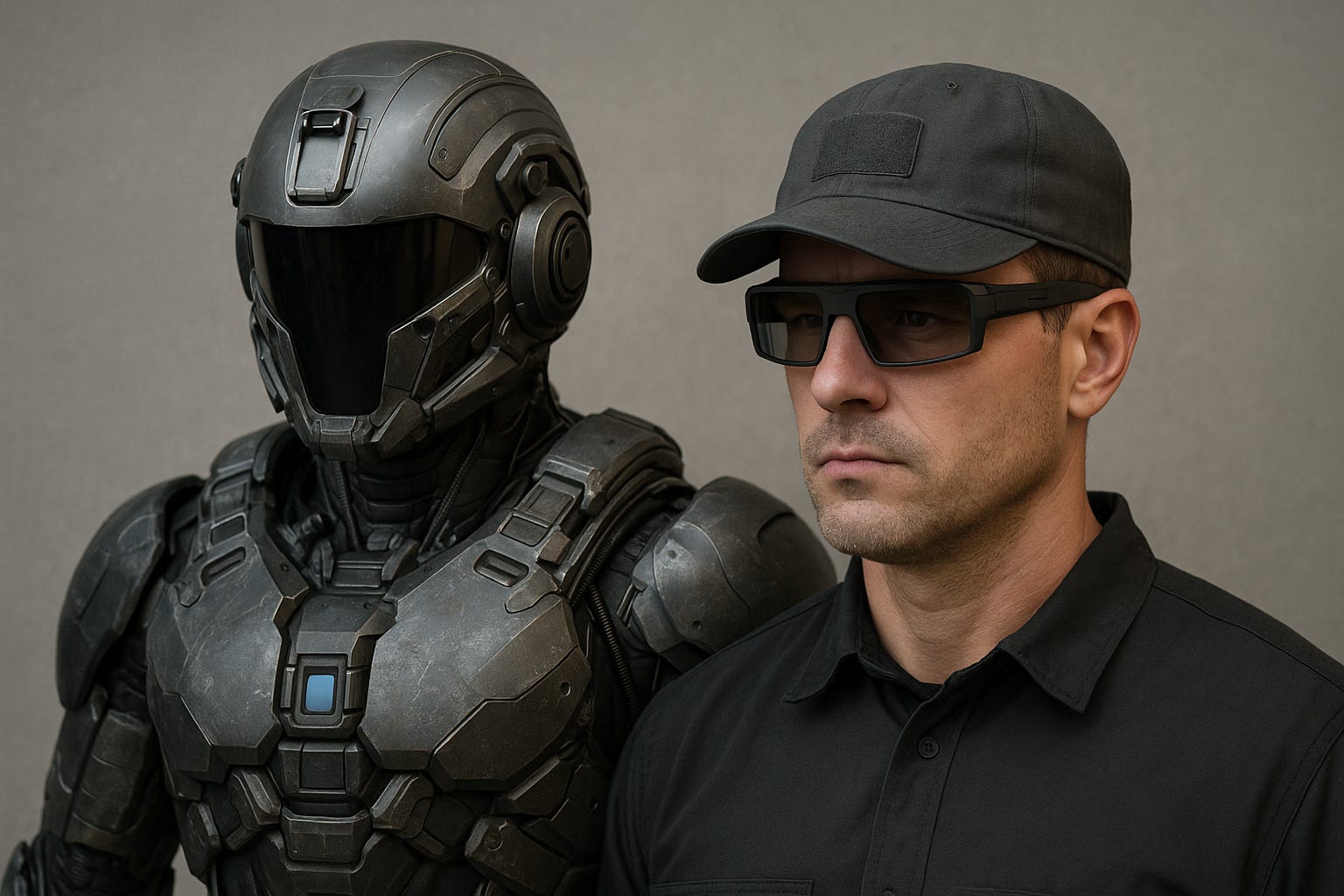
Smart AR/VR glasses allow you to see data directly on your environment without ever taking your eyes off the mission.
Imagine:
Maps and paths floating in front of you
Facial recognition tagging people as you look at them
Real-time translations of signs or speech
Drone feeds and thermal views shown in your lens
In AR mode, the glasses enhance the real world. In VR mode, they let you train, simulate missions, or remotely control systems. All this happens hands-free, with inputs triggered by eye movement, voice, or simple gestures.
🪖 Smart Helmet: Protection and Command Center
The helmet isn’t just for head protection—it’s a sensor-rich command unit that helps you fly safely and stay in control.
Key features include:
A full heads-up display (HUD) inside the visor
Sensors that detect obstacles, heat, sound, and motion
Auto-hover or return-home commands activated by head gestures
Encrypted audio for quiet, clear communication even in flight
Built-in overrides in case of injury, shock, or system failure
The helmet listens to your voice, tracks your surroundings, and acts as your flight control assistant—all while keeping you protected.
👟 Smart Shoes: Ground Power in Every Step
Yes—your feet are part of the brain now.
These smart shoes are small computers that support movement, gather environmental data, and help stabilize flight and landing.
What they do:
Use sensors to understand the ground you’re walking on
Trigger silent commands with toe taps or pressure (like “hover” or “record”)
Guide your movement in the dark or on rough terrain
Harvest energy from walking or sunlight to power the system
Help with emergency direction if GPS is lost
They’re also part of the flying experience—adjusting posture, angle, and balance in real time.
🔁 All Together: A Connected Body System
These three pieces—glasses, helmet, and shoes—work together as one system:
The glasses show you what’s happening
The helmet protects you and helps make decisions
The shoes guide your movement and collect data from the ground up
They all connect wirelessly, syncing with the aviation suit and each other to keep your operations smooth, safe, and smart.
🛡️ Safety First: Built-In Ethics and Protection
These devices aren’t just powerful—they’re also built with rules and safety in mind.
They include:
Biometric locks to prevent unauthorized use
Emergency overrides by gesture, voice, or remote command
Mission-specific rules that stop dangerous or unethical behavior
Secure data logs for transparency and review
This isn’t just about tech—it’s about responsibility and human dignity.
🔚 Conclusion: The Sky Is Not the Limit
We’re entering a time when people fly not with vehicles, but with systems built into their own suits. And it’s not the suit alone that makes it possible—it’s the intelligence worn on your eyes, your head, and your feet.
Whether you're a rescue worker, a security agent, or an explorer in a new terrain—this gear gives you the edge.
It’s not just a flight suit. It’s a smart body system, designed for the future.
📜 DV Language: A Universal Code for Art, Education, and AI By Ronen Kolton Yehuda (Messiah King RKY) 🌍 Introduction Art has always been humanity’s universal language — through music, dance, theater, rhythm, and performance . Yet, the ways we write and preserve these forms have remained fragmented and specialized: Music requires staff notation , a system complex for beginners. Dance uses codes like Labanotation , known only to experts. Theater separates dialogue, stage cues, and emotions into different layers of script . Percussion grooves and DJ sets often remain unwritten , passed orally or hidden in software. AI and robots can generate art, but lack a clear symbolic grammar that connects them with human tradition. The DV Language offers a new solution: a universal, text-based, typable, and machine-readable notation system . It unites all performance arts into one coherent script — equally readable by humans, teachable in schools, and interpretable by AI. 📖 For m...
Need to update/ edit the article Note: The companies I describe here (such as Villan, Fast Food Inc., 1 Holdings, etc.) are projects I created and am working to establish . When I write “CEO” or “President”, it refers to my role as their founder and creator , not to a large public or registered corporation unless clearly stated. Note: “A Pear / A Pear by Villan” 🍐 is an experimental concept name currently under legal review. The name and logo may change or be removed, and it is not affiliated with Apple Inc. or any other existing company. Additional Note This article reflects an earlier conceptual stage of thought and remains published only as part of that development history. Since then, I have come to better understand that certain directions, names, comparisons, branding approaches, or design ideas could create unnecessary legal, commercial, branding, or legitimacy-related risk. For that reason, I have decided clearly and definitively not to move forward in any directi...















Comments
Post a Comment