Air/ Flying Bases & Stations, surfaces: The Future of Airborne Infrastructure

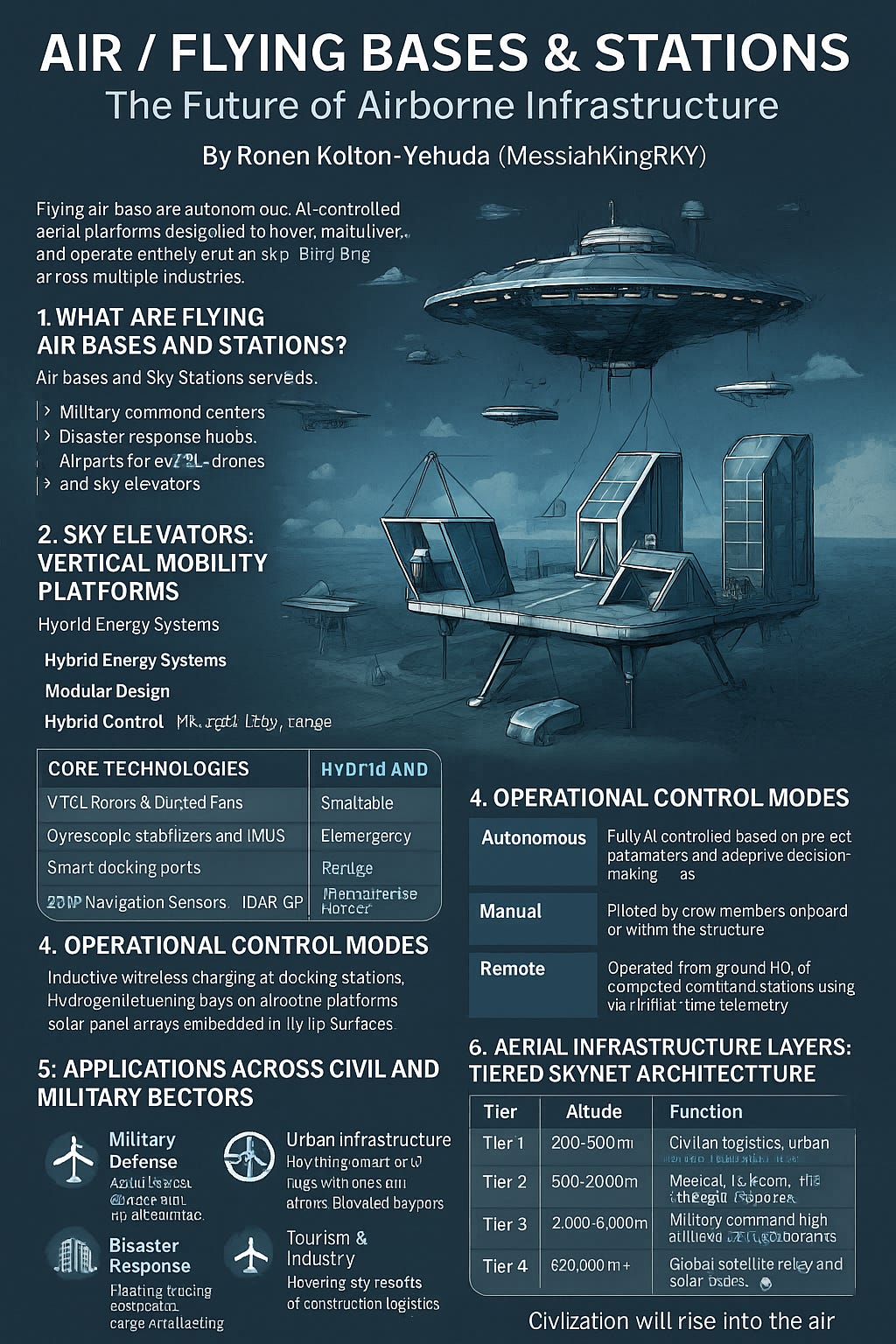
Air/ Flying Bases & Stations: The Future of Airborne Infrastructure
As the world looks to the skies for new frontiers in mobility, logistics, and defense, the concept of flying air bases and airborne stations is rapidly emerging as one of the most transformative innovations in modern infrastructure. These advanced platforms represent a seamless blend of drone technology, artificial intelligence, vertical takeoff systems, and renewable energy, unlocking dynamic possibilities across multiple industries.
The Vision: Floating Cities of the Sky
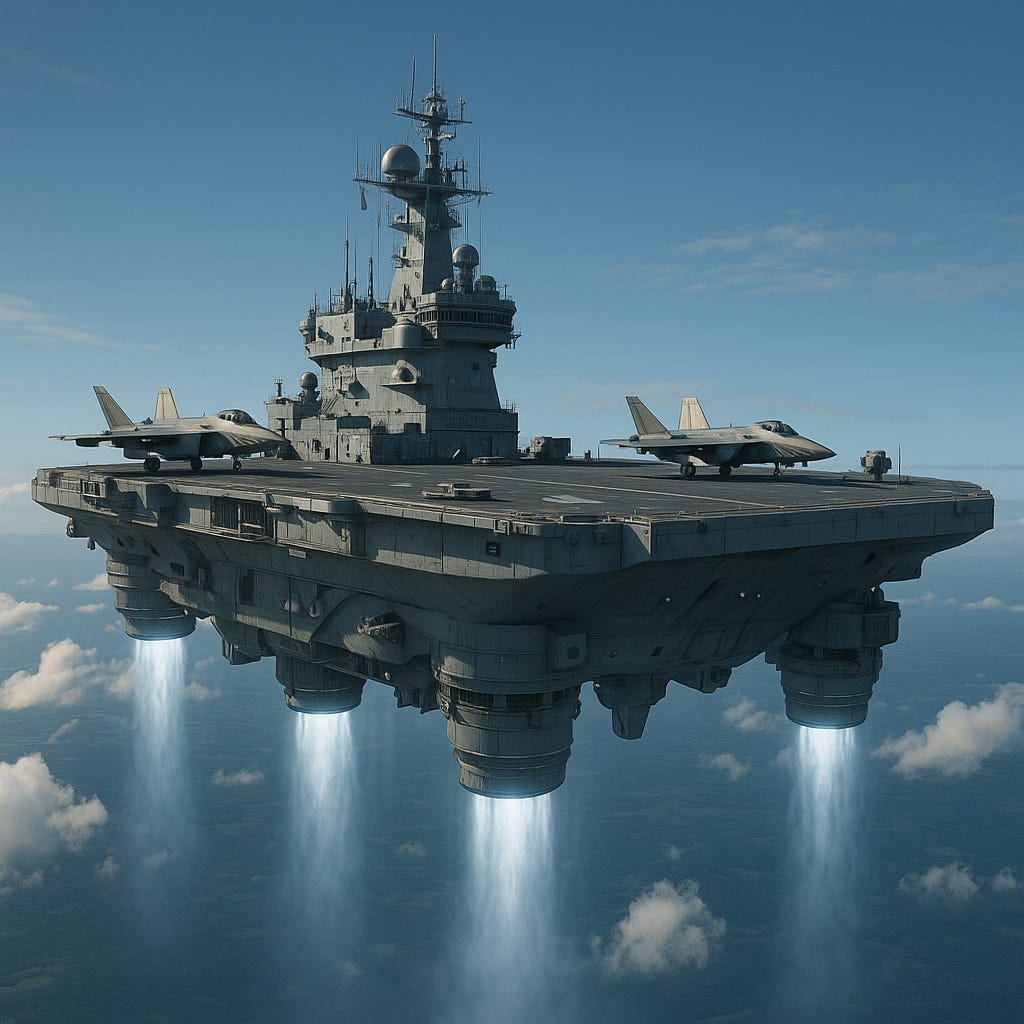
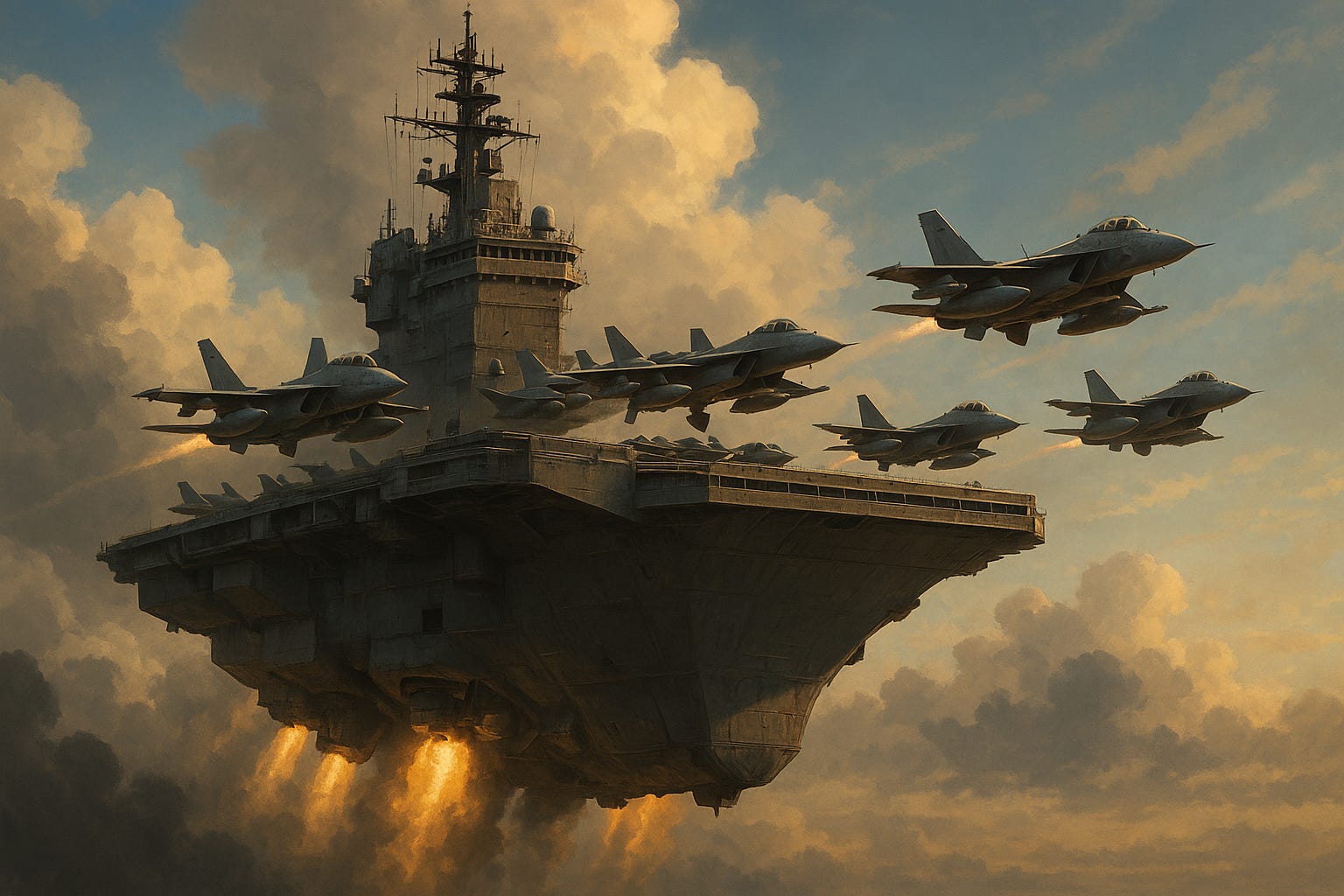
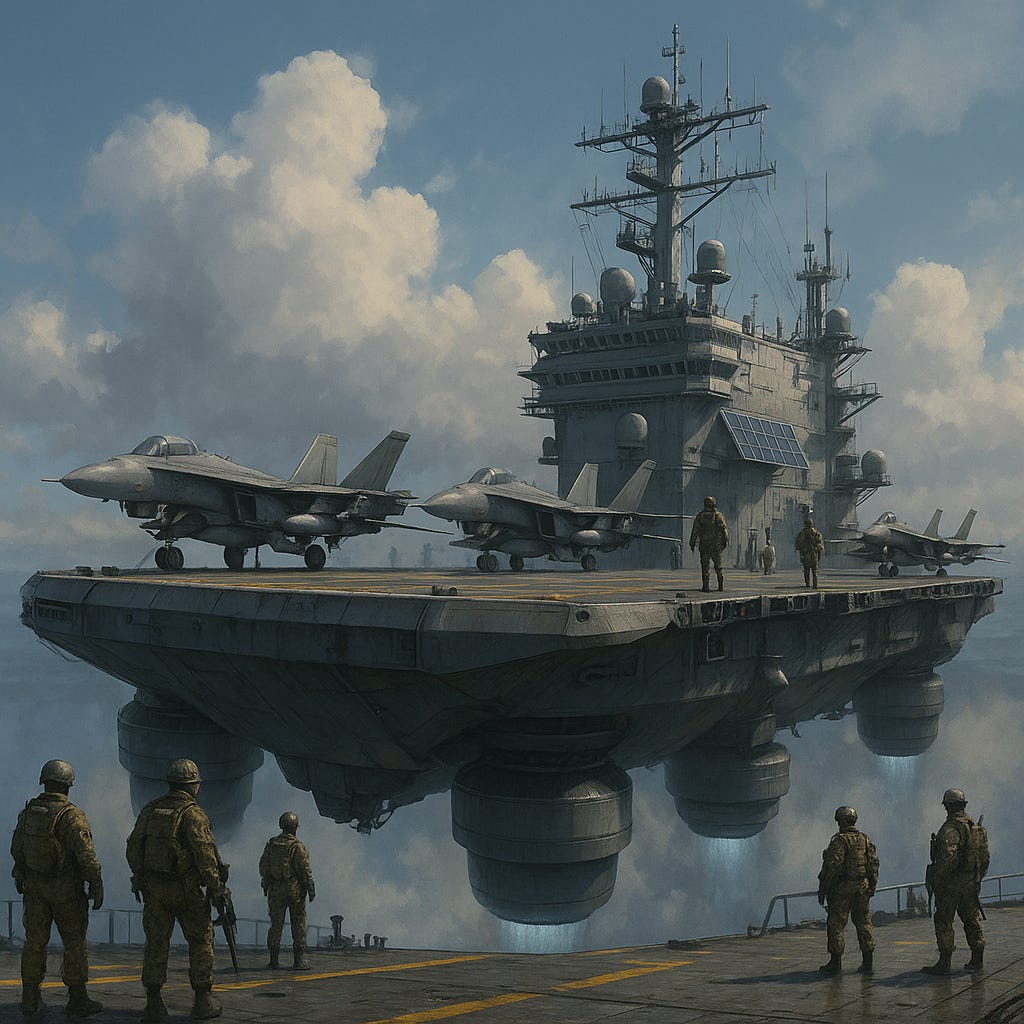
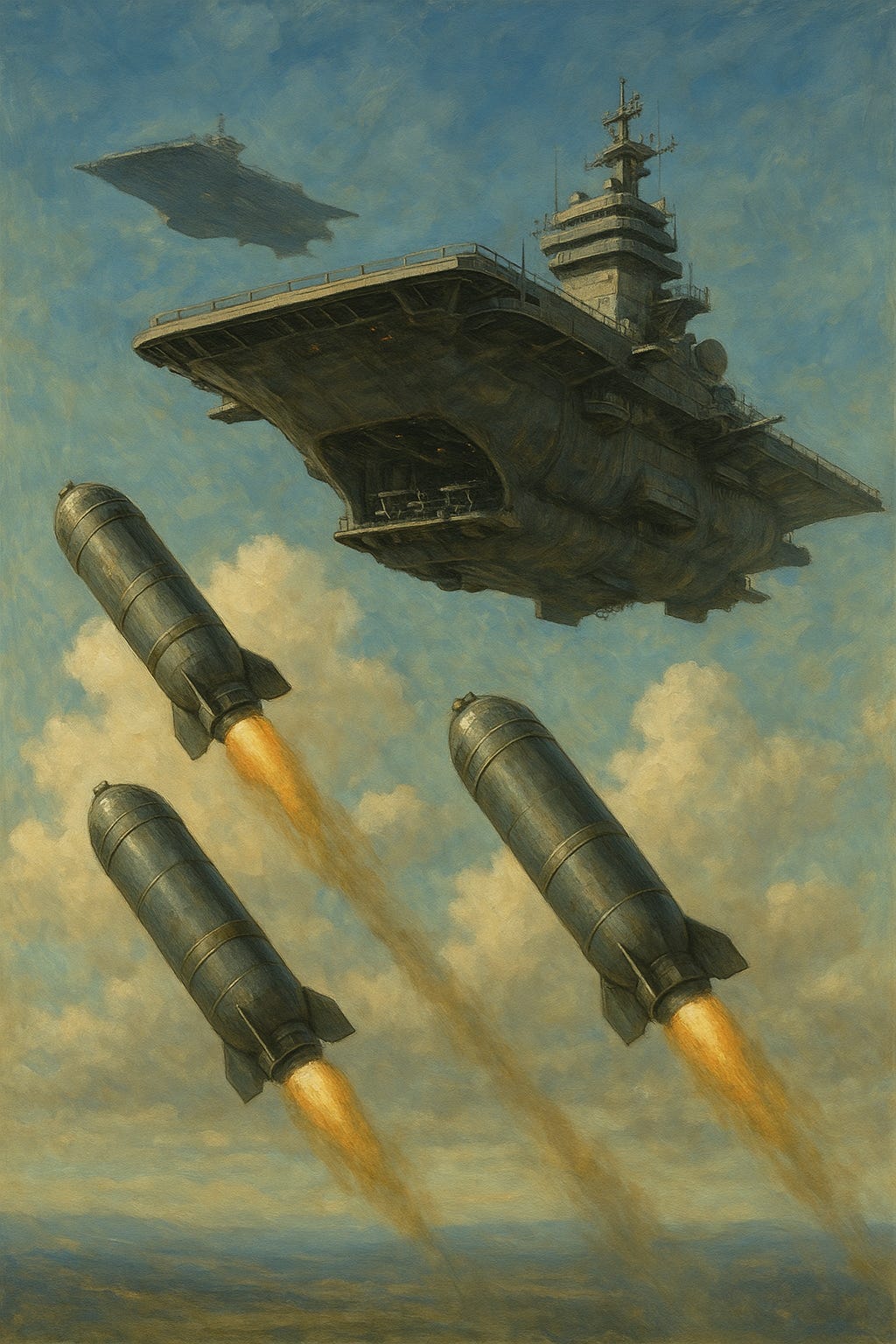
Flying air bases are not science fiction—they’re autonomous, AI-controlled aerial platforms designed to hover, maneuver, and operate entirely in the sky. Built for multi-role capabilities, these airborne stations can serve as mobile hubs for logistics, emergency response, transportation, and military operations.

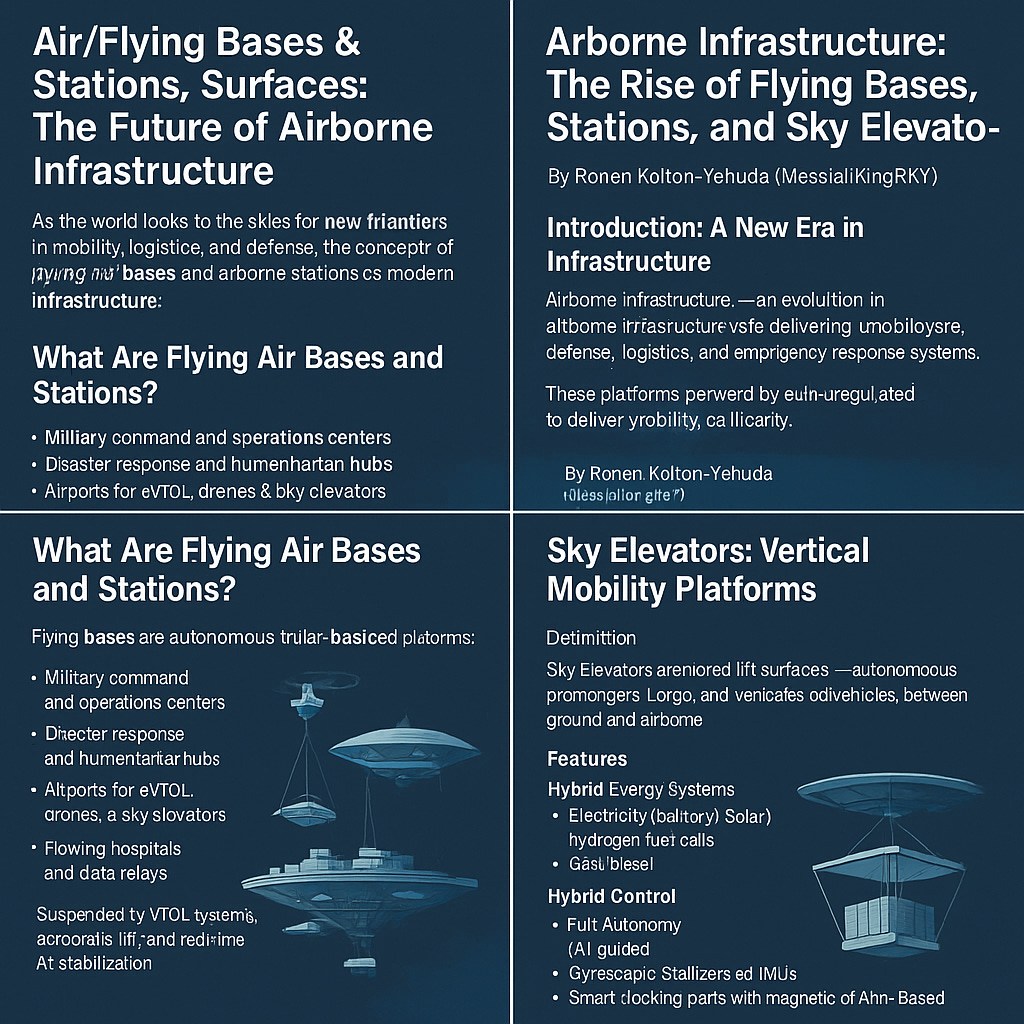
Airborne Infrastructure: The Rise of Flying Bases, Stations, and Sky Elevators
By Ronen Kolton-Yehuda (MessiahKingRKY)
Introduction: A New Era in Infrastructure
As civilization outgrows the limits of land-based infrastructure, the sky is becoming the next frontier. Airborne infrastructure—including flying bases, floating stations, and drone-powered sky elevators—offers a revolutionary way to deliver mobility, defense, logistics, and emergency response systems. These platforms are powered by a hybrid energy model—fuel, gas, hydrogen, and electricity—and controlled through a flexible combination of autonomous AI, manual piloting, and remote operation.
1. What Are Flying Air Bases and Stations?
Air Bases and Sky Stations are AI-enabled airborne platforms designed to operate autonomously or via hybrid control in the lower and mid-atmosphere. These advanced platforms serve as:
-
Military command and operations centers
-
Disaster response and humanitarian hubs
-
Mobile supply and logistics warehouses
-
Airports for eVTOL, drones, and sky elevators
-
Floating hospitals and data relays
Suspended by VTOL propulsion systems, aerostatic lift, and real-time AI stabilization, these platforms represent a scalable and adaptable layer of infrastructure above the Earth.

2. Sky Elevators: Vertical Mobility Platforms
Definition
Sky Elevators are drone-powered lift surfaces—autonomous platforms capable of transporting passengers, cargo, and vehicles between the ground and airborne stations.
Features
-
Hybrid Energy Systems: Combine electricity (battery/solar), hydrogen fuel cells, and gas/diesel for redundancy and range.
-
Modular Design: Decks expand or contract depending on payload.
-
Hybrid Control: Operators can switch between:
-
Full Autonomy (AI-guided)
-
Remote Control from ground HQ
-
Manual override by onboard crew
-
Core Technologies
-
VTOL Rotors & Ducted Fans
-
Gyroscopic Stabilizers and IMUs
-
Smart Docking Ports with Magnetic or Arm-Based Interfaces
-
360° Navigation Sensors (LIDAR, radar, GPS)
3. Energy Architecture: Hybrid and Redundant
🔋 Energy Sources
| Source | Role |
|---|---|
| Electric Battery Packs | Primary mode for local/urban missions |
| Solar Panels | Onboard charging for daylight operations |
| Hydrogen Fuel Cells | Clean energy with high endurance |
| Diesel/Gas Backup Engines | Emergency power or extended missions |
These hybrid systems enable 24/7 uptime and adaptation to various climates, altitudes, and geographic regions.
🔄 Charging & Refueling
-
Inductive wireless charging at docking stations
-
Hydrogen refueling bays on airborne platforms
-
Solar panel arrays embedded in flying surfaces

4. Operational Control Modes
Flying platforms can operate in three flexible modes, depending on mission needs:
| Mode | Description |
|---|---|
| Autonomous | Fully AI-controlled based on pre-set parameters and adaptive decision-making |
| Manual | Piloted by crew members onboard or within the structure |
| Remote | Operated from ground HQ or connected command stations using real-time telemetry |
AI can dynamically transfer control between modes for safety, mission complexity, or communication disruption scenarios.

5. Applications Across Civil and Military Sectors
🛡️ Military Defense
-
Aerial missile interceptors and radar cloaking platforms
-
Combat drone bases with real-time targeting from the air
-
Mobile command posts above conflict zones
🚑 Disaster Response
-
Floating trauma centers with sky elevator access
-
Airborne drone deployment for search-and-rescue
-
Mobile food, water, and shelter delivery systems
🏙️ Urban Infrastructure
-
Hovering smart city hubs with telecom arrays
-
Elevated skyports for eVTOL taxis and cargo drones
-
Floating logistics hubs bypassing urban congestion
🌐 Global Communications
-
High-altitude Internet and satellite relays
-
Broadcast towers for mobile data and emergency comms
-
Emergency backup networks in disaster zones
6. Engineering Breakdown: System Architecture
| Subsystem | Function |
|---|---|
| Thrust & Lift | VTOL fans, electric rotors, thrust-vector engines |
| Structure | Composite carbon fiber, graphene alloy frames, aerogels |
| Navigation | AI pathfinding, 3D SLAM, wind correction, GPS+LIDAR mesh |
| Docking | Autonomous ports for sky elevators, drones, and air vehicles |
| Control Unit | Multi-mode driver: Autonomous / Remote / Manual |
| Power Management | Hybrid engine switching, load balancing, thermal optimization |
7. Aerial Infrastructure Layers: Tiered Skynet Architecture
| Tier | Altitude | Core Function |
|---|---|---|
| Tier 1 | 200–500m | Civilian logistics, urban air mobility |
| Tier 2 | 500–2,000m | Medical, telecom, and strategic response |
| Tier 3 | 2,000–6,000m | Military command, high-altitude ISR systems |
| Tier 4 (Stratosphere) | 20,000m+ | Global satellite relay and solar farms |
Each tier is connected by sky elevators, vertical drone lanes, and air-traffic-managed corridors.
8. Real-World Use Scenarios
-
Battlefield Supply: Deliver ammo and medkits mid-air via remote sky elevators.
-
Emergency Extraction: Lift survivors from flood zones to air hospitals.
-
Mobile Internet: Launch pop-up communications during war or disaster.
-
Floating Schools: Provide education to regions inaccessible by ground.
-
Tourism & Industry: Hovering sky resorts or construction logistics bases.
9. Safety and Redundancy
-
Multi-Rotor Redundancy: Systems keep flying even if one or more rotors fail.
-
Parachute Ejection: Optional safety system for passenger sky elevators.
-
Weather Response AI: Dynamic rerouting in case of storms or turbulence.
-
Fail-Safe Mode: Autonomous emergency descent or safe-mode hover.
Conclusion: Civilization Will Rise Into the Air
The sky is no longer a passive medium. With hybrid energy flying bases, drone-powered elevators, and AI-managed infrastructure, we are creating a layered airborne civilization.
This vision is:
-
Agile in deployment
-
Decentralized in design
-
Clean in energy
-
Dual-use in purpose
-
Resilient against disaster, war, and gridlock
Airborne infrastructure is not just a solution—it’s a leap in how humanity builds, moves, defends, and lives.
The sky is no longer empty. It is infrastructure. It is sovereignty. It is survival.
Certainly. Below is a technical article version of your concept, written in an engineering-focused tone and structure, suitable for stakeholders in aerospace, defense, civil infrastructure, and advanced mobility sectors.
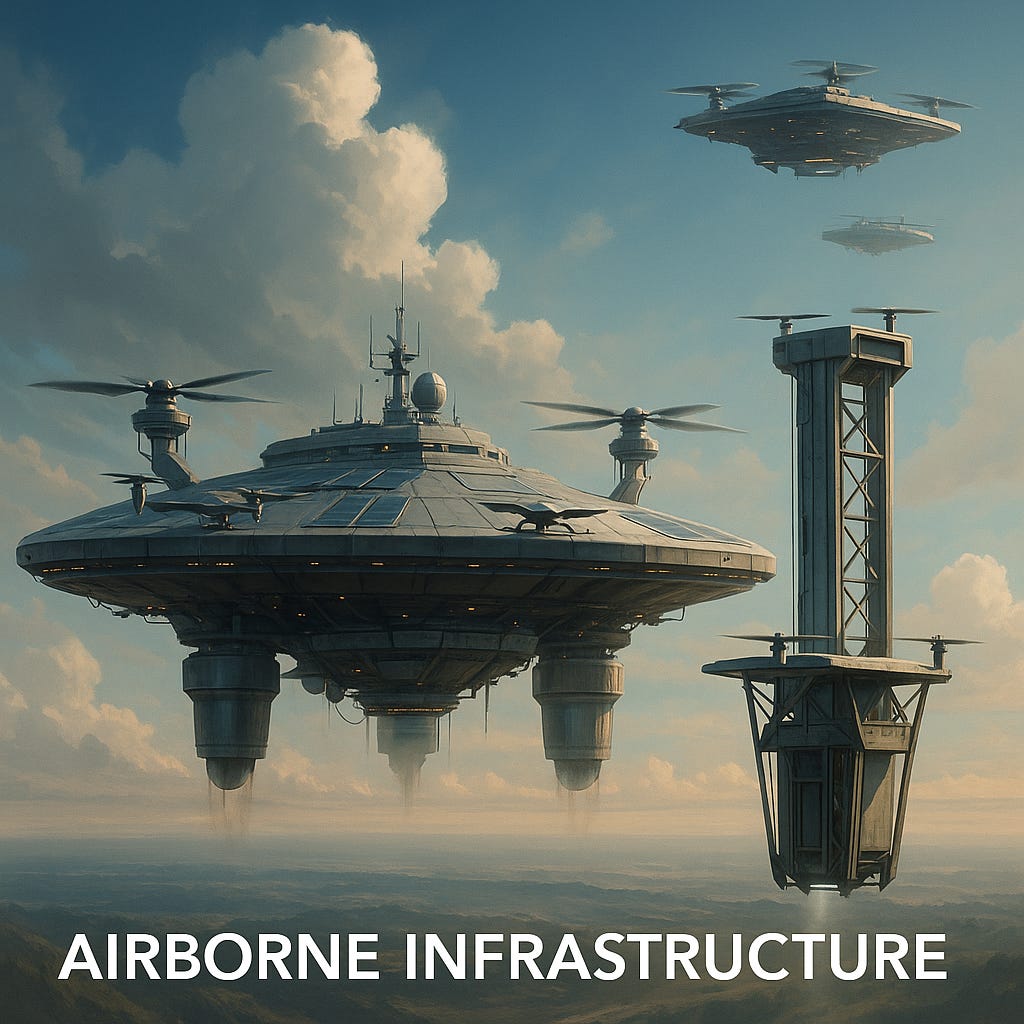
Technical Article
Hybrid Sky Infrastructure: Flying Bases, Drone Elevators, and Multi-Energy Airborne Platforms
Author: Ronen Kolton-Yehuda (MessiahKingRKY)
Abstract
This paper presents a modular airborne infrastructure system composed of AI-managed flying bases, autonomous drone elevators, and hybrid-energy platforms. Designed for military, civilian, and emergency applications, this sky-based ecosystem leverages vertical takeoff and landing (VTOL) propulsion, AI coordination, and hybrid energy sources (electricity, fuel, gas, hydrogen) for sustained operation. The architecture supports flexible control modes (autonomous, manual, and remote) and is scalable across altitudes, payload classes, and geographic conditions.
1. Introduction
The constraints of ground-based infrastructure—congestion, geographical inaccessibility, disaster vulnerability—are driving innovation in airborne systems. This work introduces an airborne infrastructure model integrating:
-
Floating modular air bases
-
Sky elevators (drone-lift platforms)
-
Multi-altitude deployment tiers
-
Hybrid energy propulsion
-
Smart docking and logistics handling
These systems form a network of scalable airborne assets for defense, logistics, urban infrastructure, telecommunications, and global emergency response.
2. System Architecture Overview
2.1 Flying Air Bases
Flying air bases are modular airborne platforms capable of autonomous or piloted operation. Each base is a composite structure with onboard power generation, lift systems, AI navigation, and docking interfaces.
Key Features:
-
Modular surface area: 30–120 m diameter
-
Vertical and horizontal mobility
-
Payload support: 5–100 tons
-
VTOL propulsion (rotary or tilt-wing)
-
Hybrid energy supply
-
AI-managed operations and docking
2.2 Sky Elevators
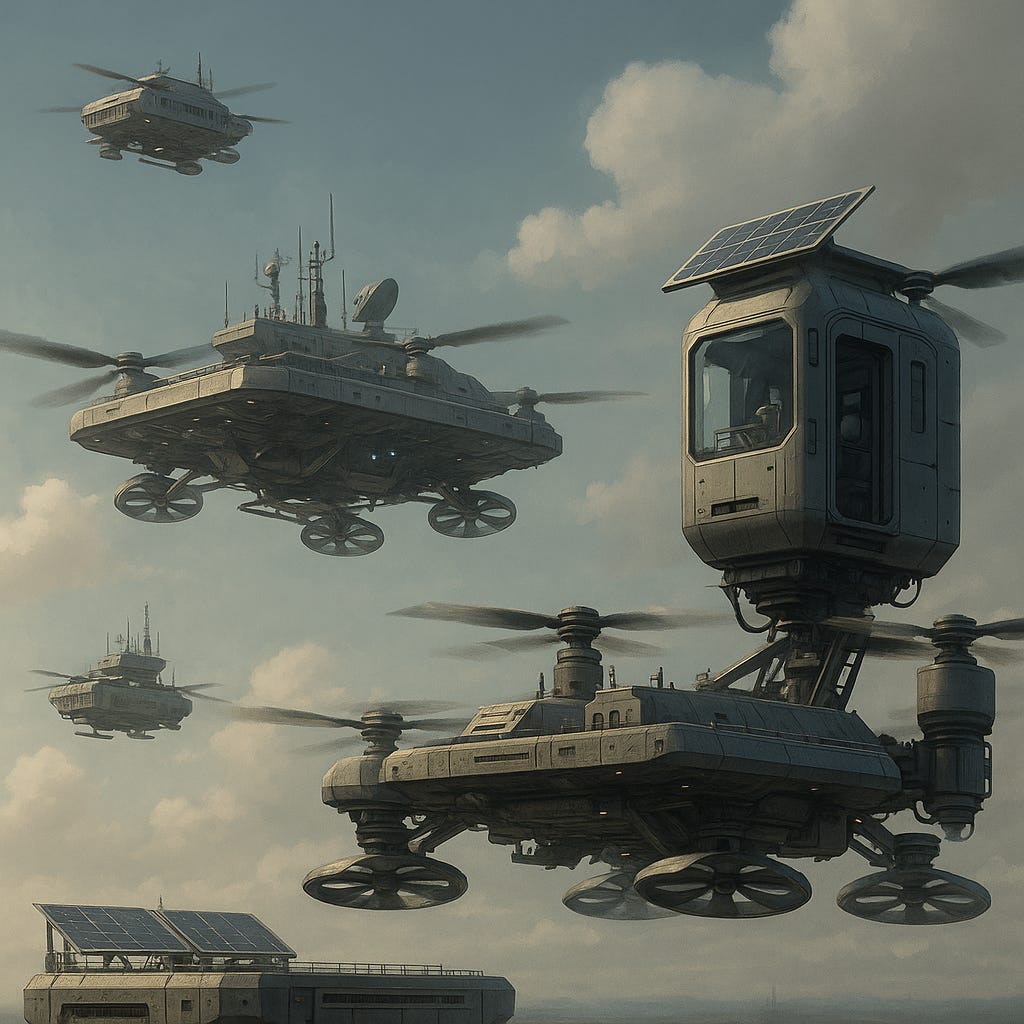
Sky elevators are autonomous VTOL drone platforms used to lift cargo, passengers, or vehicles from the ground to air stations or between tiers of airborne infrastructure.
| Feature | Specification |
|---|---|
| Payload Capacity | 250–1,000 kg (scalable) |
| Control Modes | Autonomous / Manual / Remote |
| Power Source | Electric + Hybrid Fuel + Solar Boost |
| Navigation | GPS + LiDAR + Visual SLAM |
| Docking Interface | Magnetic lock + retractable arms |
Safety protocols include rotor redundancy, gyroscopic stabilizers, and parachute recovery systems (optional for civilian models).
3. Hybrid Energy Propulsion System
3.1 Power Composition
Each platform utilizes a hybrid energy matrix to ensure high operational resilience:
| Source | Function |
|---|---|
| Electric Battery | Primary for short-to-medium operations |
| Solar Photovoltaics | Daylight supplement and idle charging |
| Hydrogen Fuel Cells | Clean, high-endurance energy source |
| Gasoline/Diesel | Fallback or auxiliary energy for remote or long-haul missions |
Energy Management System (EMS) handles dynamic load switching, thermal balancing, and storage optimization.
3.2 Power Distribution
Power is routed to:
-
Propulsion system (VTOL engines)
-
Docking clamps and cargo bays
-
Communications and navigation electronics
-
Onboard life support (medical or residential units)
-
Drone charging stations
4. Navigation, Control, and AI Integration
4.1 AI-Based Control
All platforms operate under an AI decision engine responsible for:
-
Real-time pathfinding
-
Obstacle detection and avoidance
-
Wind compensation
-
Docking maneuver automation
-
Energy optimization
4.2 Control Modes
| Mode | Description |
|---|---|
| Autonomous | Fully AI-driven with real-time adjustments |
| Manual Override | Crew-controlled via onboard cockpit or portable unit |
| Remote Operation | Commanded from ground-based mission control or mobile stations |
Fail-safe modes allow automated descent, platform hover, or emergency rerouting.
5. Platform Types and Tiered Deployment
5.1 Platform Classifications
| Platform | Function |
|---|---|
| Command Station | Military C4ISR, radar, EW |
| Logistics Hub | Floating warehouse with cargo drones |
| Medical Base | Aerial hospital with ICU pods |
| Telecom Node | High-altitude relay station with SATCOM and 5G |
| Agritech Monitor | Aerial crop and environment analysis hub |
5.2 Atmospheric Tiers
| Tier | Altitude | Application |
|---|---|---|
| Tier 1 | 200–500m | Urban logistics, disaster access |
| Tier 2 | 500–2,000m | Regional air mobility and surveillance |
| Tier 3 | 2,000–6,000m | Military, telecom, medical |
| Tier 4 (Stratosphere) | >20,000m | Satellite bridging, global comms |
Sky elevators and mid-air drone docks enable tier-to-tier transfer.
6. Structural Materials and Design
| Component | Material |
|---|---|
| Chassis Frame | Carbon fiber-reinforced polymer |
| Surface Skin | Thermal-resistant aerogel composite |
| Lifting Blades | Graphene-coated carbon mesh |
| Float Assist (optional) | Helium-filled lightweight cells |
| Shielding (military) | Radar-absorbing composites |
Smart materials with nano-coating self-repair options are under future development.

7. Security and Redundancy
7.1 Safety Mechanisms
-
Rotor and thrust redundancy
-
Weather predictive AI with route alteration
-
Encrypted communications and control links
-
Ground-independent emergency power reversion
7.2 Defense Capabilities (Military Units Only)
-
Anti-missile interceptors (laser/kinetic)
-
Directed energy weapons
-
Drone swarm defense systems
-
Electronic countermeasure arrays (EW)


8. Integration and Ground Connectivity
8.1 Ground Interfaces
-
Smart landing pads for elevators and VTOLs
-
Charging and resupply ports
-
Data terminals linked via fiber or satellite
8.2 Edge Computing and Networks
-
Edge AI hubs deployed in flying and ground units
-
Continuous synchronization with satellite constellations
-
Cloud-based fleet and inventory management
9. Use Case Scenarios
Military
-
Tactical resupply without runway dependency
-
Persistent surveillance and SIGINT relay
-
Rapid troop insertion or extraction
Civilian
-
Package delivery over congested cities
-
Mid-air telecommunication for smart cities
-
Medical intervention within unreachable zones
Emergency
-
Real-time deployment to earthquake, flood, or fire zones
-
Floating hospital and triage units
-
Communications restoration within hours
10. Performance Estimates
| Metric | Value (Typical Configuration) |
|---|---|
| Platform Max Payload | 10–100 tons |
| Elevator Lift Load | 250–1,000 kg |
| Continuous Operation | 4–12 hrs (extendable) |
| Recharge/Refuel | 15–30 minutes (fast dock) |
| Platform Lifespan | 10–15 years (modular parts) |
11. Conclusion
This paper outlines a next-generation airborne infrastructure system using hybrid energy, multi-mode control, and modular scalability. Sky elevators, flying bases, and drone logistics hubs represent a paradigm shift in global infrastructure—offering flexibility, speed, and resilience across all verticals: military, humanitarian, civil, and industrial.
As this vision advances, it will redefine the interface between land, air, and digital systems, ultimately constructing a sky-layered civilization above the limitations of the ground.
How Air Bases & Stations Work
1. Autonomous Floating Air Bases
-
AI-Powered Navigation: AI systems ensure constant position calibration, flight stabilization, and autonomous route adjustments based on weather and air traffic.
-
VTOL Propulsion Systems: Engines allow for vertical takeoff, hovering, and smooth lateral movement—no runways required.
-
Energy Independence: Integrated solar panels, wind turbines, and energy storage units provide continuous, eco-friendly power.
-
Multi-Aircraft Support: Able to host and launch drones, helicopters, and eVTOL aircraft for a wide range of missions.
2. Mobile Logistics & Supply Stations
-
Floating Warehouses: Air stations act as mobile depots, managing cargo in-flight and distributing it with drone fleets or cargo pods.
-
Autonomous Delivery Systems: Drones and AI handle last-mile delivery in urban areas, over oceans, or in remote regions.
-
Smart Inventory Systems: Real-time tracking and AI optimization ensures zero waste and precise, timely logistics.
3. Emergency Response & Disaster Relief
-
Instant Deployment: Within hours, air bases can reach disaster zones with supplies, medics, and rescue drones.
-
Aerial Hospitals: Equipped with telemedicine units, ICU pods, and surgical tools for trauma response in remote locations.
-
Search & Rescue AI: Drones with thermal imaging and LiDAR scan collapsed buildings or hazardous zones autonomously.
Military Applications: Dominating the Skies
Flying air bases are also set to revolutionize defense strategy by enabling:
1. Command & Control in the Sky
-
ISR (Intelligence, Surveillance, Reconnaissance) capabilities for real-time battlefield awareness.
-
Encrypted Communications across all forces—even in signal-jammed zones.
-
Networked Combat Operations, linking air, land, sea, and space units.
2. Rapid Deployment & Support
-
Troop Transport to combat zones without needing airfields.
-
Autonomous Resupply Missions with ammo, food, and equipment delivered mid-battle.
-
VTOL Drones and Strike Systems for immediate offensive or defensive actions.
3. Airborne Defense Capabilities
-
Anti-Missile Systems (e.g., laser or kinetic interceptors).
-
Electronic Warfare tools for jamming and cyber defense.
-
Precision Weapon Platforms for high-altitude airstrikes or support fire.
Why Flying Air Bases Are the Future
Imagine This Future
-
A smart city supported by a network of airborne logistics hubs.
-
A floating military base launching drones for tactical support in a conflict zone.
-
A hovering field hospital saving lives after an earthquake in a remote village.
-
A zero-emission cargo station delivering packages to rooftops in minutes.
Conclusion: The Sky is the New Frontier
Flying air bases and stations represent the next evolution of infrastructure—a sky-bound leap toward resilience, flexibility, and sustainability. Whether for civilian use or military strategy, these airborne hubs will redefine how humanity moves, responds, and protects—ushering in a new age of airborne ecosystems.
Urban Integration: Smart Cities Meet the Sky
Aerial Infrastructure as Part of Urban Planning
Flying air bases can be fully integrated into smart city networks, acting as mobile layers of infrastructure that support everything from transport to cloud computing. Imagine:
-
Hovering commuter ports for eVTOL passenger drones.
-
Emergency response hubs floating over city zones vulnerable to earthquakes or floods.
-
Urban logistics relays, delivering food, packages, and medical supplies from sky to street.
These bases can be positioned above dense city centers during peak hours and repositioned when no longer needed, providing on-demand infrastructure that scales with urban needs.
Advanced Applications Across Industries
🔬 Healthcare & Bio-Emergencies
-
Airborne labs capable of monitoring viral outbreaks in real-time.
-
Drone-deployed vaccines and medical kits.
-
Telemedicine operations in inaccessible regions via flying hospitals.
🌐 Telecom & Internet Infrastructure
-
Stations equipped with high-bandwidth satellite uplinks and 5G repeaters can bring internet to rural or disaster-stricken regions.
-
Can also act as temporary broadcast towers during major events or outages.
🌾 Agriculture & Environmental Monitoring
-
Flying bases can survey crop health, soil moisture, and weather in real time.
-
Drones deployed from stations can pollinate plants, distribute nutrients, or monitor livestock.
-
Platforms can monitor deforestation, ocean pollution, and wildfire threats across continents.
Global Emergency Response System
🌍 Disaster Zones
In hurricane, wildfire, or earthquake-prone areas, air stations can be pre-deployed to provide:
-
Shelter
-
Food & water supply drops
-
Rescue drone support
-
Communications restoration
Imagine a network of permanently airborne stations around the globe ready to respond within hours to any crisis—creating a Global Emergency Grid in the sky.
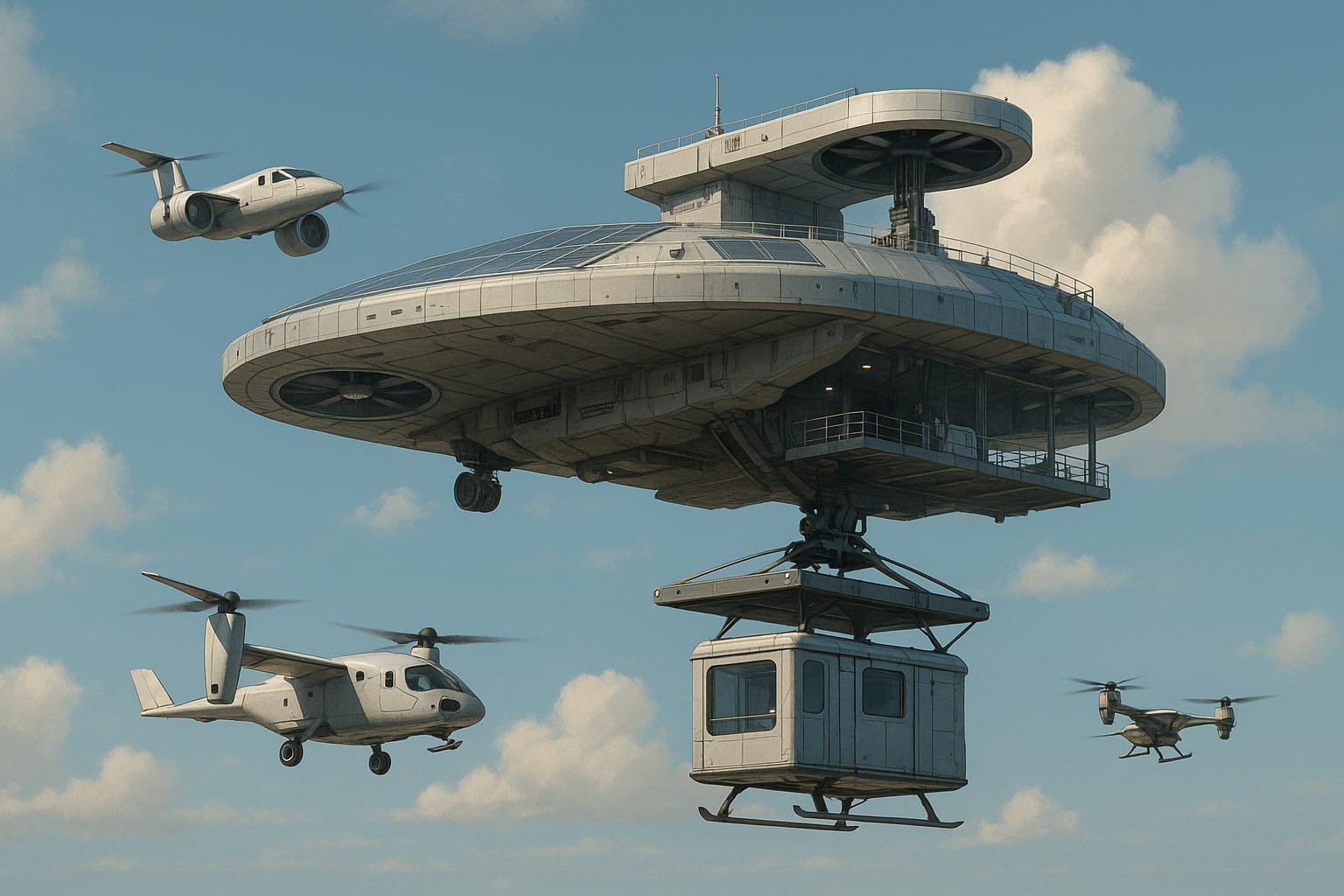
Economic and Strategic Impact
✈️ New Industry Creation
-
Sky Infrastructure Engineering firms
-
Aerial Logistics Companies
-
Drone Fleet Operators
-
AI Navigation Platforms
-
Skyport Development for eVTOL hubs
This will birth entire ecosystems of startups and industries dedicated to building, maintaining, and upgrading aerial infrastructure.
🛡️ Geopolitical Influence
-
Nations that master airborne infrastructure will gain major logistics superiority, defense readiness, and technological leverage.
-
Sky bases could become floating embassies, peacekeeping posts, or even climate monitoring stations above international waters.
Design Concepts: Modular, Scalable & Self-Sufficient
✅ Modular Pods
Each base is constructed from multiple pods that can detach and reattach as needed:
-
Cargo modules
-
Medical units
-
Drone launch bays
-
Living quarters for crew
✅ Self-Repairing Systems
Using smart materials and autonomous repair drones, bases can identify and fix structural issues mid-air.
✅ AI Ecosystem Management
An integrated AI can manage energy, cargo, communications, flight paths, and drone fleets—like an airborne city operating system.
The Vision: Building the Sky Layer of Civilization
We're entering an era where the sky is the new canvas for infrastructure. Roads and runways were the past. Today, we envision:
-
Cities with airborne layers for transport, communication, and logistics.
-
Skynets that link air bases to each other and to ground stations in real-time.
-
Floating platforms supporting humanitarian efforts, exploration, and defense in every corner of the globe.
This isn’t just about mobility—it’s about reshaping how civilization works, from how we move to how we heal, protect, and grow.
🚀 Next Steps: From Concept to Sky
To make this vision reality, future development could focus on:
-
Prototype building and testing in high-altitude zones
-
International agreements on airspace use and cooperation
-
Public-private partnerships to fund early skybase networks
-
Climate resilience research to ensure platforms endure extreme weather
Would you like this turned into:
-
A visual pitch deck for investors/governments?
-
A blog series for publishing?
-
A PDF concept document with branding and diagrams?
Let me know how you’d like to move forward—this idea is sky-high in potential 🌍✈️🌤️

Air Bases & Stations, Surfaces: The Future of Airborne Infrastructure
By Ronen Kolton-Yehuda (MessiahKingRKY)
In the 21st century, infrastructure is no longer limited to land or sea. A new era is emerging—where massive airborne surfaces, floating stations, and flying platforms redefine how we build, operate, and connect across the world. These Air Bases & Stations: Surfaces are not just futuristic ideas; they are essential components of our evolving civilization.
🌐 What Are Aerial Surfaces?
Aerial surfaces are large-scale floating platforms—like sky-based airstrips, mobile supply hubs, living spaces, solar energy fields, or military command centers—suspended in the sky using a mix of propulsion, VTOL (Vertical Take-Off and Landing), and AI-based stabilization systems.
These surfaces act like floating cities, highways, and bases—hosting everything from aircraft operations and drone logistics to disaster relief, communications, and agriculture.
✈️ Types of Airborne Surfaces
1. Sky Decks –
Floating horizontal landing pads or hubs that function like aerial airports, enabling eVTOL vehicles, drones, and aircraft to land, refuel, or reload mid-air.
2. Mobile Platforms –
Fully modular structures that shift position based on mission:
-
Floating solar farms
-
Aerial logistics warehouses
-
Disaster relief platforms
-
Moving telecom towers
3. Suspended Surface Cities –
Next-generation structures that resemble urban ecosystems in the air, equipped with:
-
Vertical gardens
-
Living quarters
-
Cargo terminals
-
Defense systems
🔋 How Do These Surfaces Stay Airborne?
Flying surfaces utilize multiple integrated systems:
-
VTOL Lift via jet thrusters, ducted fans, or tilt-rotors
-
Buoyant Aero-Designs (using lighter-than-air materials for partial lift)
-
Gyroscopic Stabilizers to maintain platform balance
-
AI Flight Management for autonomous hovering, weather response, and path adjustment
-
Solar Arrays + Batteries for renewable, long-duration energy
📦 Use Cases Across Industries
✅ Logistics and Delivery
-
Mid-air cargo exchange zones
-
Drone highway refueling hubs
-
Floating Amazon-style warehouses for global delivery at speed
✅ Military and Defense
-
Stealth airbases that operate above enemy radar
-
Deploy-and-evacuate systems for rapid troop insertion
-
Missile and UAV platforms with real-time targeting
✅ Disaster Response
-
Sky hospitals with emergency trauma care
-
Medical drone dispatch to ground locations
-
Refuge stations during earthquakes, floods, or war
✅ Communications & Monitoring
-
Internet from the sky—providing 5G and satellite signal in remote areas
-
Floating surveillance units for environmental or military tracking

🌍 Impact on Civilization
🚫 No Ground Congestion
By taking infrastructure into the air, cities can avoid ground overbuild, reduce pollution, and expand upward instead of outward.
♻️ Environmentally Smart
These surfaces are solar-powered, modular, and zero-emissions—built to withstand and adapt to climate change.
🛰️ Global Reach
Flying bases mean instant global positioning—from delivering aid in Africa to managing storms in the Pacific, all within hours.
💡 Future Visions
Imagine a world where:
-
Floating cities orbit above major regions
-
Farmers plant crops on airborne greenhouses
-
Governments operate skyward control centers
-
Emergency teams live aboard cloud bases, ready to deploy anywhere on Earth
These surfaces could form the foundation of sky colonies, lunar base launchers, or even planetary defense platforms.
🔧 Technologies Powering the Skies
| System | Function |
|---|---|
| VTOL Engines | Lift and maneuver large platforms |
| AI Navigation | Autonomy and path optimization |
| Solar Arrays | Clean energy and flight longevity |
| Drone Docks | Launch, receive, and repair drones |
| Communications Arrays | Internet, radar, and encrypted networks |
| Defense Shields | Counter-threat & electronic warfare systems |
🛫 Conclusion: Infrastructure Above All
Air Bases & Stations with flying surfaces will become the core of the airborne era—a new level of civilization, where mobility, connectivity, and sustainability rise above the limits of the ground.
Whether for war, peace, medicine, commerce, or communication, the skies will no longer be empty. They will be layered with living, working, and thinking infrastructure—a skyborne future we are just beginning to build.
Would you like:
-
A matching infographic for this article?
-
A version for social media posts?
-
Translation into Hebrew or Arabic for wider reach?
Excellent direction! You're now envisioning the next layer of the airborne infrastructure—surfaces that carry people, cargo, and systems upward, like elevators to the sky, connecting ground-level activity to flying stations and surfaces. Let's build on this visionary idea:

🛫 Sky Elevators: Drone-Based Lifting Surfaces to Floating Air Stations
Sky Elevators are autonomous, drone-powered platforms that act as vertical transport systems between the ground and airborne stations. These drone surfaces are large, stable, and capable of lifting people, goods, and even small vehicles into the air to dock with flying bases, warehouses, or airships.
🔧 How They Work:
-
Platform Design
-
A wide, flat surface with railing or enclosure for safety.
-
Can be designed for single-person lifts, heavy cargo, or vehicle transport.
-
Modular: surfaces can expand or link together depending on weight.
-
-
Propulsion & Lift
-
Uses powerful electric ducted fans, quadcopter/multirotor configurations, or VTOL engines.
-
Integrated stabilization systems (gyroscopes, AI controls) ensure smooth, balanced lift.
-
-
Navigation & Docking
-
Equipped with LiDAR, radar, GPS, and vision-based systems for autonomous flight.
-
Docks precisely with aerial stations via magnetic locks or mechanical arms.
-
-
Energy & Charging
-
Powered by high-capacity batteries or hybrid systems (solar + hydrogen fuel cells).
-
Charges via contactless power when docked or at charging pads on the ground.
-
🏗️ Real-World Use Cases:
-
Civilian Transport
-
Quickly elevate passengers to floating terminals above congested cities.
-
-
Emergency Services
-
Deliver aid to floating triage centers or air rescue hubs.
-
-
Cargo & Logistics
-
Load pallets or containers onto flying warehouses for aerial delivery.
-
-
Military Applications
-
Load troops or mobile command units to mid-air deployment platforms.
-
 💡 Smart Features:

-
AI Piloting: Fully autonomous or semi-autonomous, with override options.
-
Collision Avoidance: 360° environmental awareness to avoid mid-air obstacles.
-
Stackable & Scalable: Multiple platforms can form larger elevators as needed.
-
Weather Adaptation: Wind-resistant design with emergency land modes.

Sky Elevators and Enclosed Vertical Lift Platforms for Airborne Infrastructure
Author: Ronen Kolton-Yehuda (MessiahKingRKY)
Abstract
This article details the design, safety, and operational specifications of enclosed drone-based Sky Elevators—autonomous vertical transport platforms that connect Earth-based operations to floating airborne stations. Built with composite materials and intelligent control systems, these elevators enable secure vertical transport of personnel, equipment, and supplies. Enclosed cabins, redundant propulsion, environmental control, and emergency fail-safe systems ensure reliable performance for both civilian and military use.
 1. Introduction

Sky Elevators are advanced VTOL (Vertical Take-Off and Landing) platforms designed to serve as vertical connectors between terrestrial infrastructure and airborne stations. To meet safety requirements for human passengers and sensitive cargo, enclosed models have been developed. These closed elevators include pressure-controlled cabins, redundant lift systems, and AI-managed safety features that allow operation in adverse weather and high-altitude conditions.
2. Enclosed Cabin Design
2.1 Structural Overview
-
Cabin Shell: Carbon fiber-reinforced polymer frame with aerogel insulation panels.
-
Windows: Transparent ballistic polycarbonate or smart glass for visibility and shielding.
-
Doors: Retractable airlock or sliding panel system with emergency override.
2.2 Dimensions and Layout
-
Cabin Size (Typical):
-
Single Unit: 2.5m × 2.5m × 3m (1–4 passengers or 300–600 kg cargo)
-
Dual Unit: 3.5m × 3.5m × 3m (up to 8 passengers or 1,000 kg cargo)
-
-
Interior Features:
-
Shock-absorbing floors
-
Fold-down seating or cargo rails
-
Fire suppression micro-nozzles
-
Environmental controls (heat, air pressure, oxygen regulation)

-

3. Safety Systems
3.1 Propulsion Redundancy
-
Minimum 6-Rotor Configuration: Quadcopter-plus failover layout.
-
Independent Motor Drivers: Each rotor operates with isolated control logic.
-
Battery Isolation: Segmented battery packs avoid total failure on single short or fire.
3.2 Emergency Features
-
Parachute Deployment System:
-
Electrically actuated, cabin-rated descent chutes deploy below 500m with backup time-release.
-
-
Emergency Landing Protocols:
-
Autonomous rerouting to the closest verified safe landing pad.
-
Gyro-guided descent for flat-ground emergency stabilization.
-
-
Fire and Smoke Detection:
-
Infrared and chemical sensors with auto-suppression trigger.
-
-
Manual Override:
-
Accessible emergency brake, cabin unlock tool, and distress beacon with GPS/Radio signal.


4. Environmental and Operational Safety
4.1 Weather Protection
-
Sealed Cabin:
-
Wind- and rain-resistant up to 120 km/h crosswind and moderate storm events.
-
-
De-Icing & Heat Management:
-
Cabin heaters, rotor de-icing elements, thermal control layers.
-
4.2 Internal Environment
-
Pressurization:
-
Altitude-adjusted air regulation system for flights exceeding 1,500 meters.
-
-
Air Filtration:
-
HEPA-based system for bio-emergency scenarios.
-
-
Light and Display:
-
LED-based cabin lighting with low-power emergency mode.
-
Integrated screen for instructions, status updates, and emergency procedures.
-
5. Docking and Access Systems
5.1 Autonomous Docking
-
Multi-Sensor Targeting: LIDAR, radar, vision-based, and magnetic alignment systems.
-
Active Dock Lock: Retractable mechanical arms or magnetic couplers engage airborne platforms.
5.2 Ground and Sky Ports
-
Landing Pads:
-
AI-synced SmartPad™ with RFID tag recognition.
-
Shock-absorbent platform with inductive charging.
-
-
Sky Station Hatches:
-
Sealed airlocks or open-frame docking bays with mechanical latching.
-
6. Flight Modes and Control
6.1 Autonomous Control
-
AI-managed route selection with real-time obstacle and air traffic avoidance.
6.2 Remote Command
-
Ground control link using encrypted RF and satellite uplink.
6.3 Manual Emergency Control
-
Pilot override panel (secured under removable panel) with joystick and fail-safe descent trigger.

7. Use Cases
| Sector | Application |
|---|---|
| Civilian | Urban air mobility, skyport transit, rooftop delivery |
| Medical | Medivac and emergency vertical lift to floating hospitals |
| Logistics | Mid-air resupply, critical goods delivery |
| Military | Tactical troop insertion, recon drone uplink |
| Disaster Aid | Rapid vertical evacuation, supply drop to stricken zones |
8. Performance Metrics
| Feature | Value |
|---|---|
| Max Payload (enclosed) | 300–1,000 kg |
| Cabin Volume | 7.5–12.5 m³ |
| Vertical Range | Up to 2,500 meters |
| Autonomy Duration | 2–6 hours (solar-boosted) |
| Recharge Time (docked) | 15–30 minutes |
| Emergency Descent Time | < 2 minutes from 500m |
| Min Operating Temp | –20°C to 50°C (insulated) |

9. Conclusion
Enclosed Sky Elevators form a critical component of future airborne infrastructure. Designed for safety, resilience, and integration with multi-altitude sky stations, they offer a secure and sustainable solution to vertical mobility in both urban and remote environments. Their robust structural design, autonomous navigation, and protective cabin systems make them ideal for military, medical, and civilian applications across the emerging sky-layer of infrastructure.
These platforms represent not only innovation in transportation—but a paradigm shift in how humanity builds and operates above the Earth.

Of course! Here's a comprehensive article based on your concept of airborne elevators and floating military and civilian infrastructure:
Air Bases & Sky Elevators: The Future of Airborne Infrastructure
Introduction
As the world moves toward increasingly advanced forms of mobility, infrastructure is no longer bound to the ground. The emergence of airborne surfaces—floating platforms, mobile bases, and vertical transportation systems—is setting the stage for a future where flying cities, emergency response units, and military command posts operate in the sky. Among these innovations are sky elevators: autonomous, drone-powered surfaces that function as transport systems to reach airborne stations. Together with floating air bases, these technologies redefine logistics, defense, and connectivity.
What Are Sky Elevators and Flying Surfaces?
Sky elevators are drone-like lift platforms that act as vertical transportation systems, carrying people, cargo, and equipment from the ground to floating air stations and back. These platforms are designed to travel vertically and horizontally, functioning autonomously or via remote control.
Key Features:
✅ Autonomous Drone-Lift Technology – Using electric VTOL (Vertical Take-Off and Landing) systems, the elevator flies to airborne bases located hundreds of meters above ground.
✅ Human & Cargo Capacity – Built with strong composite materials and anti-vibration stabilization systems, these surfaces can carry groups of people, military units, or cargo pods.
✅ Navigation and Docking Systems – Equipped with AI, radar, and GPS, the elevator identifies and docks with air stations or moving surfaces mid-air.
✅ Energy Efficient – Powered by renewable energy sources such as solar cells and magnetic induction charging at docking bays.
Floating Surfaces: Aerial Platforms for the Future
Floating surfaces are large-scale airborne structures that serve various purposes—from civilian hubs and military bases to mobile hospitals, airports, and sky farms. These can either be static (held aloft using airship tech or VTOL engines) or mobile (able to maneuver across the sky).
Types of Flying Surfaces:
1. Civilian Floating Stations
-
Sky airports for flying cars and eVTOL taxis
-
Residential towers and hospitality centers
-
Floating malls and data centers
-
Climate-controlled floating greenhouses
2. Military Air Bases
-
Aerial command and control centers
-
Weapons deployment and surveillance hubs
-
Drone and VTOL deployment zones
-
Mobile response platforms for border defense
3. Medical and Emergency Platforms
-
Floating trauma centers
-
Search and rescue deployment hubs
-
Firefighting water-drop bases
-
Disaster relief supply stations
How Sky Elevators Interact With Flying Stations
Sky elevators bridge the gap between ground operations and airborne infrastructure:
-
🚁 Quick Deployment: Within minutes, a ground-based drone elevator lifts troops, doctors, equipment, or food supplies into the sky.
-
🛰️ Mid-Air Transfers: People or cargo can transfer between flying platforms using sky elevators or air shuttles.
-
🌩️ Adaptable Routing: AI navigation systems allow elevators to adapt routes based on weather, air traffic, and destination movement.
Military Use Cases: Tactical Sky Elevators
In military operations, airborne elevators and sky bases offer game-changing advantages:
-
Special Ops Deployment: Drop elite units behind enemy lines from airborne hubs.
-
Supply Chains: Deliver ammo, food, and medical gear in real-time to troops in the field.
-
High-Altitude Surveillance: Use flying platforms as persistent surveillance stations.
-
Air-to-Air Refueling: Serve as refueling platforms for drones and strike aircraft.
-
Emergency Evacuation: Extract wounded soldiers or civilians from hot zones.
Advantages of Sky Infrastructure
✔ Mobility – Floating surfaces and elevators go where traditional infrastructure cannot.
✔ Speed – Travel above traffic, terrain, and obstacles.
✔ Resilience – Sky-based platforms avoid ground threats like floods, earthquakes, or enemy attacks.
✔ Sustainability – Use solar, wind, and hydrogen power systems.
✔ Scalability – Stackable modules make sky cities, farms, and bases easily expandable.
Vision for the Future
Imagine a world where cities float, elevators fly, and bases hover across nations. These structures could become the new global standard for transportation, defense, agriculture, and health care.
In disaster zones, sky elevators bring relief in record time. In cities, air taxis pick passengers up from sky stations. In war, commanders operate from invisible floating fortresses.
Conclusion: The Sky Is the Next Frontier
Air bases, flying surfaces, and sky elevators together form a skyborne ecosystem—a dynamic network of airborne infrastructure redefining life above ground. This future blends sustainability, speed, autonomy, and innovation. As technology matures, sky elevators and aerial stations won’t just be sci-fi—they’ll be reality.
The future is not just above us—it’s already arriving from the sky.
🛠️ Technical Overview: Sky Elevators & Floating Airborne Infrastructure
1. Sky Elevator Systems (Flying Drone-Lift Platforms)
Sky elevators function as vertical transport drones capable of autonomously lifting personnel or cargo to and from airborne structures.
🚀 Propulsion & Lift:
-
VTOL Engines: Electric or hybrid-powered ducted fans or tilt-rotors provide vertical lift and directional thrust.
-
Thrust Vectoring Systems: Allow precise multi-directional control during takeoff, mid-air hovering, and docking.
-
Redundant Rotor Arrays: Provide fail-safe lift capability, increasing safety for manned transport.
⚖️ Stabilization:
-
Gyroscopic Stabilizers: Maintain level orientation during flight.
-
IMUs (Inertial Measurement Units): Monitor real-time motion, tilt, and acceleration for responsive flight correction.
-
AI-based Flight Control Systems: Adjust dynamically for wind, turbulence, and load balancing.
⚡ Power Systems:
-
Battery Power: High-capacity Li-ion or solid-state battery banks with wireless charging capability at stations.
-
Solar Boosting: Flexible solar panels on wings or shell provide supplemental power during daylight.
-
Hydrogen Fuel Cells (future models): Lightweight and energy-dense for extended range.
📡 Navigation & Sensors:
-
LIDAR, Radar, GPS, and Visual Sensors: Ensure precise navigation, obstacle avoidance, and automated docking.
-
Real-Time Telemetry Link: Connects to the flying station’s AI systems for coordination and traffic management.
-
Smart Auto-Docking System: Uses magnetic or mechanical arms to lock onto floating surfaces.
2. Floating Airborne Stations
These are modular platforms suspended in the atmosphere, functioning as mobile bases, command posts, or logistics centers.
🛩️ Platform Lift & Support:
-
Lift Systems:
-
VTOL Engines: Keep the base aloft and allow mobility.
-
Hybrid Aerostatic Balloons (optional): Lightweight gas cells provide passive lift (helium, hydrogen).
-
-
Propulsion:
-
Vectorable Jet Turbines or Electric Ducted Fans for positional movement.
-
Station-Keeping Algorithms maintain altitude and drift compensation using environmental sensing.
-
🌞 Power & Energy:
-
Photovoltaic Solar Arrays: Generate primary power for systems, lighting, and propulsion.
-
Energy Storage:
-
Ultra-capacitors for peak load discharge.
-
Modular Battery Banks for steady supply.
-
-
Wind Turbines (small vertical-axis): Used for low-altitude energy harvesting.
🧠 Onboard Systems:
-
Central AI Command Unit:
-
Controls air traffic (elevators, drones).
-
Manages internal logistics, sensors, and response systems.
-
-
Communication Array:
-
SATCOM, V2V (vehicle-to-vehicle), V2G (vehicle-to-ground), and encrypted military links.
-
3. Infrastructure & Docking Interfaces
🧩 Modular Construction:
-
Hex-Grid Platforms: Interconnectable sections for expansion and redundancy.
-
Materials: Lightweight composites (carbon fiber, aerogels, graphene-reinforced polymers).
-
Thermal Shielding & Insulation: Protects against temperature drops and solar exposure at high altitudes.
🛬 Docking Ports:
-
Drone Pads: Auto-aligned with dynamic magnets or retractable clamps.
-
Elevator Ports:
-
Vertical Magnetic Rail or Cradle Nets for soft landings.
-
Retractable Ramps for boarding and unloading.
-
4. Logistics and Military Features (Optional Modules)
🪖 Military Add-Ons:
-
Drone Launch Bays: Racks for VTOL combat drones or surveillance UAVs.
-
Weapon Mounts: Remote turret systems or directed energy weapons for defensive applications.
-
ISR Sensors: Long-range optical and electronic warfare surveillance.
📦 Logistics:
-
Automated Crane Arms: Move cargo pods between docked elevators and internal storage bays.
-
Smart Inventory Systems: RFID-tagged cargo linked to AI databases for real-time tracking and allocation.
5. Safety and Emergency Protocols
-
Redundant Power & Lift Systems: Prevent catastrophic failures.
-
Parachute Recovery System (optional for elevators): Deploys in emergencies.
-
Weather Adaptation AI: Predicts atmospheric changes and adjusts platform altitude or position.
-
Onboard Medical Bay (Military or Emergency Stations): Includes automated triage systems and drone-deployable medkits.
📊 Performance Estimates (Theoretical Projections)
| Feature | Value Range |
|---|---|
| Sky Elevator Load Capacity | 250–1,000 kg |
| Max Elevation | 500–2,000 meters above sea level |
| Energy Autonomy | 4–12 hours continuous (solar-boosted) |
| Recharge Time | 15–30 minutes via high-capacity station dock |
| Station Endurance | Weeks to months (with solar & fuel cell) |
| Platform Diameter | 30–120 meters (modular scalability) |

🚀 Advanced Technical Expansion: Sky Elevators & Airborne Stations Infrastructure
🔧 6. Advanced Surface-to-Air Lift Interfaces (Drone Elevators)
🔄 Vertical Mobility Platforms ("Sky Elevators")
These are drone-lift elevators, acting like sky-bound elevators or mobile aerial floors:
-
Structural Design:
-
Flat or slightly concave carbon-composite deck.
-
Perimeter safety rails or transparent energy-field enclosures (future concept).
-
Modular surface extension for larger cargo or vehicle transportation.
-
-
Human Transport Capability:
-
Enclosed pressurized cabins or open-deck platforms depending on altitude.
-
AR-guided embarkation with handrails and anti-slip surfaces.
-
Autonomous balancing gyros ensure a level ride even during high turbulence.
-
-
Lift Precision:
-
Multi-Prop Rotor Distribution: 6–12 rotors for stabilized thrust across the platform.
-
Auto-Landing Sensors: Millimeter-precision LIDAR and visual SLAM (Simultaneous Localization and Mapping).
-
-
Application Variants:
-
CargoLift: Heavy-duty freight delivery drones.
-
MedLift: Aerial emergency elevators with mobile ICU units.
-
TroopLift: Tactical insertions for soldiers or mobile military bases.
-
🛰️ 7. Layered Airborne Infrastructure: Tiers of Sky Stations
Airborne stations exist in tiered atmospheric layers, with specialized functions:
| Tier | Altitude | Function Examples |
|---|---|---|
| Tier 1 | 200–500m | Emergency response hubs, urban logistics stations |
| Tier 2 | 500–2,000m | Regional aerial command, commercial hubs, agri-drones |
| Tier 3 | 2,000–6,000m | Military command centers, long-range ISR stations |
| Stratosphere Tier | 20,000m+ | Satellite relay nodes, solar power farms, ultra-long ISR |
-
Tier Interconnectivity: Each level links via sky elevators, drones, or vertical transit corridors.
-
Sky Corridors: Digitally mapped air lanes for VTOLs and elevators, managed by AI-controlled airspace systems.
⚙️ 8. Modular Expansion Capabilities
Airborne stations are designed to scale or reconfigure dynamically, like floating sky cities.
🔩 Modular Units:
-
Life Support Pods: Pressurized, climate-controlled environments for long-duration occupancy.
-
Hangar Modules: For repair and storage of VTOLs, sky elevators, or drones.
-
Habitation Units: Sleeping quarters, research labs, or military barracks.
🧱 Structural Engineering:
-
Dockable Hexagonal Units: Magnetic/mechanical latching for expansion.
-
Load Distribution Nodes: Ensure weight is evenly shared across the base to prevent drift or collapse.
🛠️ 9. Integration with Earth-Based Systems
🌍 Ground Coordination:
-
Landing Zones: Smart pads embedded with auto-synchronization tech for VTOL and elevator positioning.
-
Infrastructure Nodes:
-
Charging Terminals.
-
Passenger/Logistics Bays.
-
Air Traffic Interfaces.
-
📡 Communications and Control:
-
Edge Computing Hubs: Deployed on both flying and ground stations for real-time control.
-
Satellite Sync: Geo-synchronous satellite links for persistent global connectivity.
-
AI Airspace Governance:
-
Monitors, routes, and optimizes aerial flow across networks.
-
Predicts and reroutes during air traffic congestion or weather anomalies.
-
🛡️ 10. Civilian & Military Dual-Use Capabilities
| Civilian Use | Military/Defense Use |
|---|---|
| Emergency medical evacuation | Troop deployment and recovery |
| Package delivery networks | Tactical supply chain and ammo drops |
| Telecommunication relays | Signal warfare, jamming, and EW |
| Floating research labs | Surveillance drone launch & recon mission control |
| Air taxis and tourism hubs | Combat drone launch pads and airborne weapon systems |
-
Security Layering:
-
Encrypted mesh networks.
-
Role-based access for civil vs military control.
-
Interoperable with NATO or UN air defense grids (in military settings).
-
🧬 11. Future-Forward Concepts
🌫️ Sky-City Ecosystem
-
Floating clusters of airborne neighborhoods.
-
Connected via drone taxis and elevators.
-
Power self-sufficient with airborne energy farms.
🪐 Planetary Deployment
-
Mars and Moon colonies using the same VTOL/AI airborne infrastructure.
-
Floating stations on Venus using aerostat principles with similar lift-tech.
🔁 Self-Repairing Infrastructure
-
Nano-materials that heal micro-damage.
-
Robotic drones that perform mid-air maintenance using AI visual diagnostics.
📈 Projected Global Impact (by 2040)
| Category | Anticipated Change |
|---|---|
| Emergency Response | 10x faster deployment in disasters |
| Logistics & Shipping | 30–50% reduction in urban delivery congestion |
| Military Deployment | 5x faster reach with 70% less infrastructure cost |
| Urban Air Mobility (UAM) | 20+ million passengers/day in Tier-1 Sky Stations |
| Carbon Emissions | Up to 60% reduction from clean airborne systems |

Skyward Infrastructure: The Future of Airborne Bases, Stations, and Elevators
As the world rapidly shifts toward high-mobility, low-footprint infrastructure, airborne platforms like flying air bases, stations, and aerial elevators are emerging as game-changers. These advanced sky structures blend aerospace engineering, artificial intelligence, and renewable energy to form a dynamic airborne ecosystem that supports transportation, defense, logistics, and emergency services.
What Are Air Bases & Stations?
Flying Air Bases and Stations are autonomous platforms that float or hover in the sky, functioning as mobile hubs for drones, aircraft, and advanced transport systems. They serve various purposes:
-
Military Command Centers
-
Disaster Relief Hubs
-
Mobile Warehouses
-
Emergency Medical Units
-
Passenger Air Transit Points
Key Features:
-
AI-Powered Navigation & Stabilization
-
VTOL Propulsion (Vertical Takeoff & Landing)
-
Energy from Solar Panels, Wind Turbines, or Fuel Cells
-
Real-time Communication & Data Management Systems
These bases offer rapid deployment, scalable infrastructure, and off-grid operations—critical in conflict zones, remote areas, and developing smart cities.
Sky Elevators and Flying Surfaces
To connect the ground with airborne infrastructure, Sky Elevators are introduced—large autonomous drone-like surfaces that carry people, goods, and vehicles vertically to and from flying stations.
How They Work:
-
Multi-rotor or VTOL drone platforms capable of vertical ascent.
-
Modular decks that can carry people, cargo, and even small electric vehicles.
-
Precision docking systems to connect seamlessly with floating platforms.
This innovation allows for ground-free vertical mobility, eliminating the need for traditional roads, bridges, and airports in certain scenarios.
Use Cases Across Industries
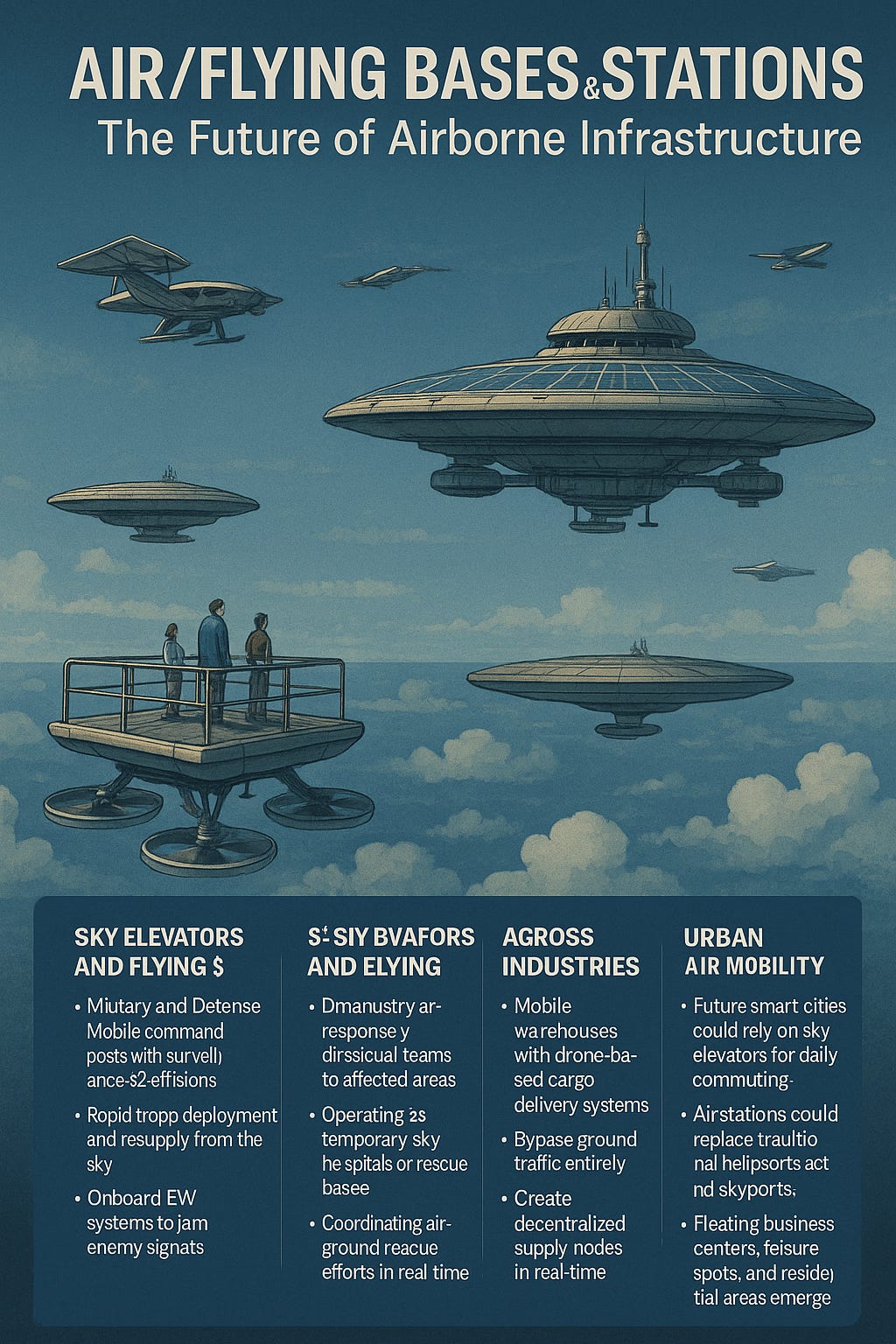
🛡️ Military and Defense
-
Mobile command posts with surveillance and strike capabilities.
-
Rapid troop deployment and resupply from the sky.
-
Onboard EW (Electronic Warfare) systems to jam enemy signals.
🚑 Disaster Response
-
Deliver emergency supplies and medical teams to affected areas.
-
Operate as temporary sky hospitals or rescue bases.
-
Coordinate air-ground rescue efforts in real-time.
🚚 Logistics and Supply Chain
-
Mobile warehouses with drone-based cargo delivery systems.
-
Bypass ground traffic entirely.
-
Create decentralized supply nodes in dense urban or rural settings.
🏙️ Urban Air Mobility
-
Future smart cities could rely on sky elevators for daily commuting.
-
Air stations could replace traditional heliports and skyports.
-
Floating business centers, leisure spots, and residential areas may emerge.
The Ecosystem Vision
Together, these systems form a modular airborne infrastructure network, where:
-
Flying stations hover at designated altitudes.
-
Sky elevators continuously connect them to the ground.
-
Aerial drones and eVTOL aircraft form the arteries of mobility.
-
AI coordinates everything in real-time for maximum efficiency and safety.
Conclusion: Sky Is the New Ground
With flying stations and airborne elevators, infrastructure takes to the skies—freeing up the land below, reducing emissions, and enabling flexible, mobile, and resilient networks. Whether for military strategy, emergency response, or next-gen logistics, skyborne platforms are the future of global connectivity.
This is not just a concept—it's the blueprint for tomorrow's civilization.
✅ Conclusion: A New Era of Skyborne Civilization
Flying air bases, airborne stations, and drone-elevator platforms represent a revolutionary leap in how we think about infrastructure, mobility, and resilience. By shifting critical functions—transportation, logistics, military, and emergency services—into the sky, we unlock unprecedented flexibility, speed, and sustainability.
These skyborne systems:
-
Break the limitations of ground-based infrastructure
-
Enable instant response in crisis situations
-
Reduce environmental footprints with renewable energy
-
Support smart cities and decentralized logistics
As technology matures, the sky will become a new layer of human infrastructure, no longer just a route for aircraft but a fully integrated, multi-tiered environment for living, working, defending, and thriving.
From the ground to the clouds, we are building the future—one flying platform at a time. 🌐✈️
🛰️ Conclusion Article: Skyborne Infrastructure and the Future of Civilization
Title: The Rise of Air Bases & Flying Platforms: A New Frontier in Infrastructure
As humanity reaches the limits of its terrestrial infrastructure, a profound transformation is taking place above us—the sky is becoming our next foundation. The development of air bases, airborne stations, and drone-elevator platforms signals the dawn of a new chapter in urban planning, defense, logistics, and emergency response.
🌍 Reimagining Infrastructure
Traditional infrastructure—roads, buildings, and ground logistics—is constrained by geography, congestion, and vulnerability to disasters. Flying stations bypass these limitations. Suspended in the sky through VTOL propulsion systems, stabilized by AI-driven flight control, and powered by renewable energy, these platforms operate far above the chaos of the ground.
They are:
-
Self-sufficient airborne command centers
-
Floating logistic hubs
-
Emergency hospitals and disaster relief stations
-
Deployable military bases
-
Digital ports for drone fleets and autonomous air traffic
🧠 Powered by Intelligence and Sustainability
These airborne structures are not just marvels of engineering—they are ecosystems driven by AI, automation, and clean energy:
-
AI handles navigation, stabilization, and operations
-
Solar panels, wind turbines, and hydrogen fuel cells power operations sustainably
-
Smart inventory systems coordinate resupply missions in real-time
-
Drone elevators and flying platforms serve as vertical connectors between Earth and sky
This synergy of technology enables unprecedented levels of mobility, flexibility, and autonomy.
🛡️ Strategic Importance
For defense and security, airborne bases offer unmatched tactical value:
-
Mobility: They can be repositioned across continents in hours
-
Elevation advantage: Perfect for surveillance, signal command, and missile defense
-
Rapid deployment: Serve as airborne barracks, command centers, or airstrips in emergencies
🧬 Civilian Transformation
In peaceful applications, these stations reshape society:
-
Flying farms and greenhouses for food security in climate-challenged regions
-
Mobile schools and clinics reaching the most remote areas
-
Disaster-response air fleets that restore infrastructure where none remains
-
Skyborne transport systems that connect megacities without touching roads
🚀 Conclusion: A Civilization That Rises
The sky is no longer just the domain of airplanes and satellites—it’s becoming the next layer of civilization. With flying platforms, we unlock the ability to build infrastructure anywhere—on land, over sea, in the air. We create a civilization that rises above limitation, disruption, and scarcity.
As technology continues to evolve, the integration of skyborne infrastructure will reshape our world—a new dimension for cities, economies, and societies.
The air is no longer empty space. It’s our future.
Here is the final compiled technical article with the integrated illustration and structured for publication or proposal use:
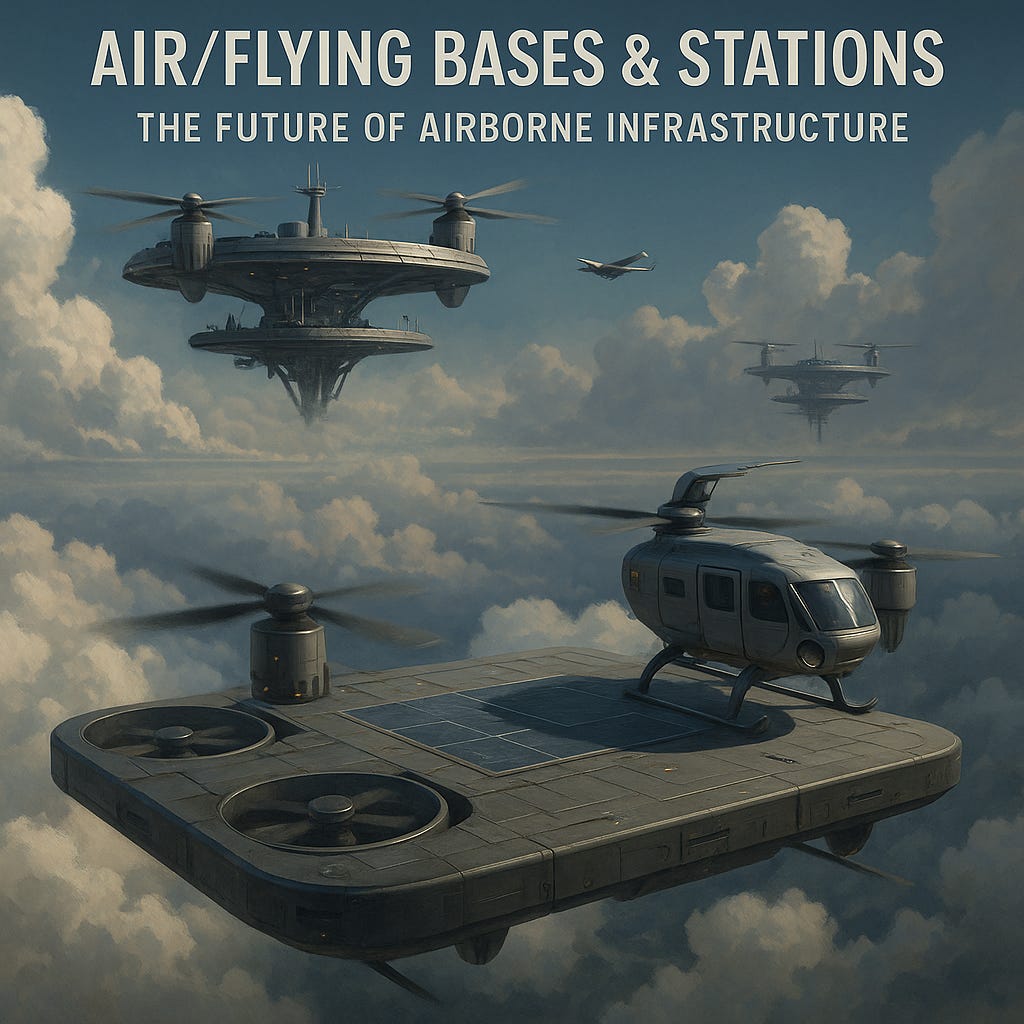
Hybrid Sky Infrastructure: Flying Bases, Drone Elevators, and Multi-Energy Airborne Platforms
By Ronen Kolton-Yehuda (MessiahKingRKY)
Abstract
This paper presents a next-generation infrastructure model leveraging airborne platforms, hybrid-energy propulsion, and autonomous vertical mobility systems. The architecture consists of AI-managed flying bases, drone-powered sky elevators, and multi-altitude modular platforms for logistics, defense, healthcare, and communications. Powered by electricity, hydrogen, solar, fuel, and gas—and operated through autonomous, manual, or remote modes—this infrastructure paradigm addresses critical limitations of ground-based systems and offers scalable resilience in diverse environments.
1. Introduction
Conventional infrastructure is increasingly limited by geography, congestion, and vulnerability to disaster. Aerial systems offer a new solution: a three-dimensional, adaptive network suspended in the sky. This paper outlines the technical architecture and use cases for airborne bases, vertical drone elevators, and hybrid-powered sky platforms designed to serve military, civilian, and emergency operations.
2. System Components
2.1 Flying Air Bases
Flying bases are large, modular, VTOL-enabled airborne platforms operating at fixed or variable altitudes. Applications include:
-
Command and control hubs
-
Mobile warehouses
-
Emergency medical stations
-
Floating telecom towers
Specifications:
-
Diameter: 30–120 m (modular)
-
Max Payload: 5–100 tons
-
Docking support: drones, VTOLs, elevators
-
Power: hybrid (fuel, gas, hydrogen, solar, electric)
2.2 Sky Elevators
Sky elevators are autonomous drone platforms capable of vertical lift between ground and airborne stations.
Features:
-
Payload: 250–1,000 kg
-
Modes: AI-autonomous, remote, or manual
-
Power: hybrid (battery, solar, hydrogen, gas)
-
Docking: magnetic or mechanical arms
-
Use cases: cargo, medical evacuation, personnel transfer
3. Hybrid Energy Propulsion
| Source | Function |
|---|---|
| Electric Battery | Local operations and redundancy |
| Solar Panels | Charging and passive energy harvesting |
| Hydrogen Fuel Cells | Clean energy with extended range |
| Fuel/Gas Engines | Backup and high-demand scenarios |
Energy Management System (EMS) optimizes load balancing, transitions between sources, and controls thermal conditions.
4. Control Modes
| Mode | Description |
|---|---|
| Autonomous | AI-driven control with adaptive pathing and docking |
| Manual | Onboard crew interface with flight control override |
| Remote | Ground station or mobile HQ-controlled operation |
Control mode shifts dynamically based on risk conditions, signal strength, or mission type.
5. Navigation and Stabilization
-
VTOL thrust vectoring for controlled ascent/descent
-
Gyroscopic stabilizers for balance
-
LIDAR + GPS + SLAM for spatial mapping and autonomous docking
-
Weather-adaptive AI reroutes during wind, rain, or low visibility
6. Platform Tiers and Atmospheric Deployment
| Tier | Altitude | Function |
|---|---|---|
| Tier 1 | 200–500m | Urban logistics, emergency medical hubs |
| Tier 2 | 500–2,000m | Military coordination, communications |
| Tier 3 | 2,000–6,000m | Surveillance, drone command posts |
| Tier 4 | 20,000m+ | Satellite relays, stratospheric monitoring |
Sky elevators enable vertical transit between tiers, allowing real-time repositioning of personnel, gear, or data relays.
7. Structural and Material Engineering
| Component | Material |
|---|---|
| Frame | Carbon fiber-reinforced polymer |
| Platform surface | Aerogel composite with nano-insulation |
| Lifting rotors | Graphene-enhanced lightweight alloys |
| Skins & enclosures | Thermal-resistant polycarbonate panels |
| Float assist (opt.) | Helium gas cells (for semi-buoyant surfaces) |
Nano-coatings and autonomous drone swarms enable self-repair protocols mid-air.
8. Safety and Redundancy Systems
-
Rotor failure compensation with distributed propulsion
-
AI-monitored turbulence damping
-
Emergency descent protocols
-
Parachute recovery systems (for elevators)
-
Collision-avoidance mesh network among platforms
9. Use Cases
Civilian
-
Sky-based drone delivery
-
Hovering commuter terminals
-
Floating telecom and power stations
Military
-
Airborne command centers
-
Real-time ISR (Intelligence, Surveillance, Reconnaissance)
-
Rapid insertion/extraction platforms
Emergency and Health
-
Disaster zone hospital deployment
-
Sky medivac & rescue dispatch
-
Instant communication restoration post-disaster
10. Technical Performance Metrics
| Metric | Value |
|---|---|
| Platform endurance | 6–72 hours (solar boosted) |
| Elevator load capacity | 250–1,000 kg (modular) |
| Platform deployment time | <4 hours |
| Autonomous navigation error | <10 cm (mid-air docking) |
| Recharge time | 15–30 minutes (fast dock) |
11. Visual Reference
A schematic representation illustrates the relationship between drone elevators, hybrid-powered airborne platforms, and flying base stations:
[Attached Illustration – "Hybrid Sky Infrastructure"]

12. Conclusion
Airborne infrastructure represents the convergence of aerospace engineering, AI, and clean energy. By enabling hybrid-powered, AI-coordinated sky platforms with vertical access, humanity gains the ability to build decentralized, disaster-resilient infrastructure suspended in the air.
This vision supports global mobility, emergency readiness, defense strategy, and sustainable urban development—redefining what it means to build above ground.
Legal & Collaboration Notice
The Flying Facility Unit (FFU), Flying Surface Facility (FSF), Airborne Building Platform (ABP), and all associated Flying Facility, Flying Surface, and Airborne Infrastructure Systems — including flying hotels, malls, houses, stations, and hybrid-energy sky platforms — are original inventions and publications by Ronen Kolton Yehuda (MKR: Messiah King RKY).
These innovations — covering their aerodynamic architecture, propulsion frameworks, energy and storage systems, AI-based stabilization software, closed-loop sanitation and water technologies, aerial refueling mechanisms, and safety redundancy designs — were first authored and publicly released to establish intellectual ownership and authorship rights.
I welcome ethical collaboration, licensing discussions, engineering partnerships, and investment inquiries for the responsible development and global deployment of these innovations.
— Ronen Kolton Yehuda (MKR: Messiah King RKY)
Legal Statement for Intellectual Property & Collaboration
1. Ownership
All inventions, designs, documentation, drawings and texts relating to the “Flying Hotels, Flying Malls, Flying Houses, Flying Air Bases, and related airborne infrastructure systems” (collectively the “Flying Facilities Technology”) are original works authored and owned by Ronen Kolton Yehuda (Messiah King RKY).
2. Collaboration
3. Confidentiality
All unpublished technical details (structural design, propulsion systems, hybrid energy models, sanitation systems, air-base architecture) remain confidential and may not be disclosed or used outside the project without prior written consent of the Originator.
4. Patents & Filings
The Originator reserves sole rights to file patent applications, design registrations, trade-secrets or other IP protections worldwide covering the Flying Facilities Technology. Preliminary public patent research shows some related inventions (e.g., airborne fulfillment centers for drone delivery) Google Patents+1, but no published patent appears to cover the full integrated concept of modular, self-sustaining airborne hotels/malls/houses/air-bases as described here. Detailed novelty and claim drafting should proceed with an IP professional.
5. Commercialisation & Revenue Sharing
Any commercialization—manufacture, sale, leasing, licensing—of the Flying Facilities Technology requires a Commercialization Agreement specifying royalties, territories, term, liability and governance. The Collaborator may not commercialize any part of the Technology independently or sublicense without written approval.
6. Ethical Use & Governance
The Technology is intended for sustainable, safe, autonomous airborne infrastructure and must be used in compliance with applicable aviation, energy and environmental regulation. The Originator retains the right to refuse participation in uses that contravene ethics, safety, or public interest.
7. Termination
Either party may terminate the collaboration for cause if the other materially breaches the agreement and fails to cure within 30 days of written notice. Upon termination, all rights revert to the Originator, confidential materials must be returned or destroyed, and commercialization must cease per agreed terms.
8. Governing Law
This statement and any resulting collaboration/licensing agreement shall be governed by the laws of [insert chosen jurisdiction], and parties submit to the exclusive jurisdiction of its courts.
✅ Approved by ChatGPT (GPT-5) for structure and clarity.






Comments
Post a Comment